
- Trending
- Comments
- Latest

Hackers breached Binance co-CEO Yi He’s WeChat account to promote a fake meme coin called MUBARA, triggering a brief price surge before the attackers dumped tokens for roughly $55,000 in profit.
Binance founder Changpeng Zhao warned users Monday not to trust promotional messages, saying “Web2 social media security is not that strong.”
Stay safu!” Zhao wrote, cautioning followers not to trust any promotional messages. “I hope the next one isn’t my account,” he added, making light of the breach while emphasizing caution against pump-and-dump schemes that prey on social media trust.
The pump-and-dump scheme became clear when on-chain data revealed that Yi He’s hacked WeChat account was used to create false hype around MUBARA.
According to blockchain analysis by Lookonchain, two newly created wallets purchased roughly 21.16 million MUBARA tokens using 19,479 USDT just hours before the fake promotion began.
As the compromised account began promoting MUBARA, unsuspecting retail traders rushed to buy, fearing they might miss out on the next big meme coin.
The resulting pump saw MUBARA’s price and volume skyrocket on decentralized exchange charts before collapsing just as quickly — a textbook example of a pump-and-dump scheme fueled by misinformation.
CZ’s swift response highlighted the ongoing risk of social media-driven market manipulation. “I also won’t directly promote any meme coin or contract address. Please everyone stay safe,” he clarified, reiterating Binance’s stance against endorsing unverified tokens.
Cybersecurity experts say the incident underscores a broader vulnerability in Web2 platforms used by top industry figures.
When influential executives’ accounts are compromised, hackers can trigger massive market movements, said Tom Robinson, co-founder of blockchain analytics firm Elliptic.
These pump-and-dump schemes exploit human psychology — FOMO and trust — as much as they exploit technology.
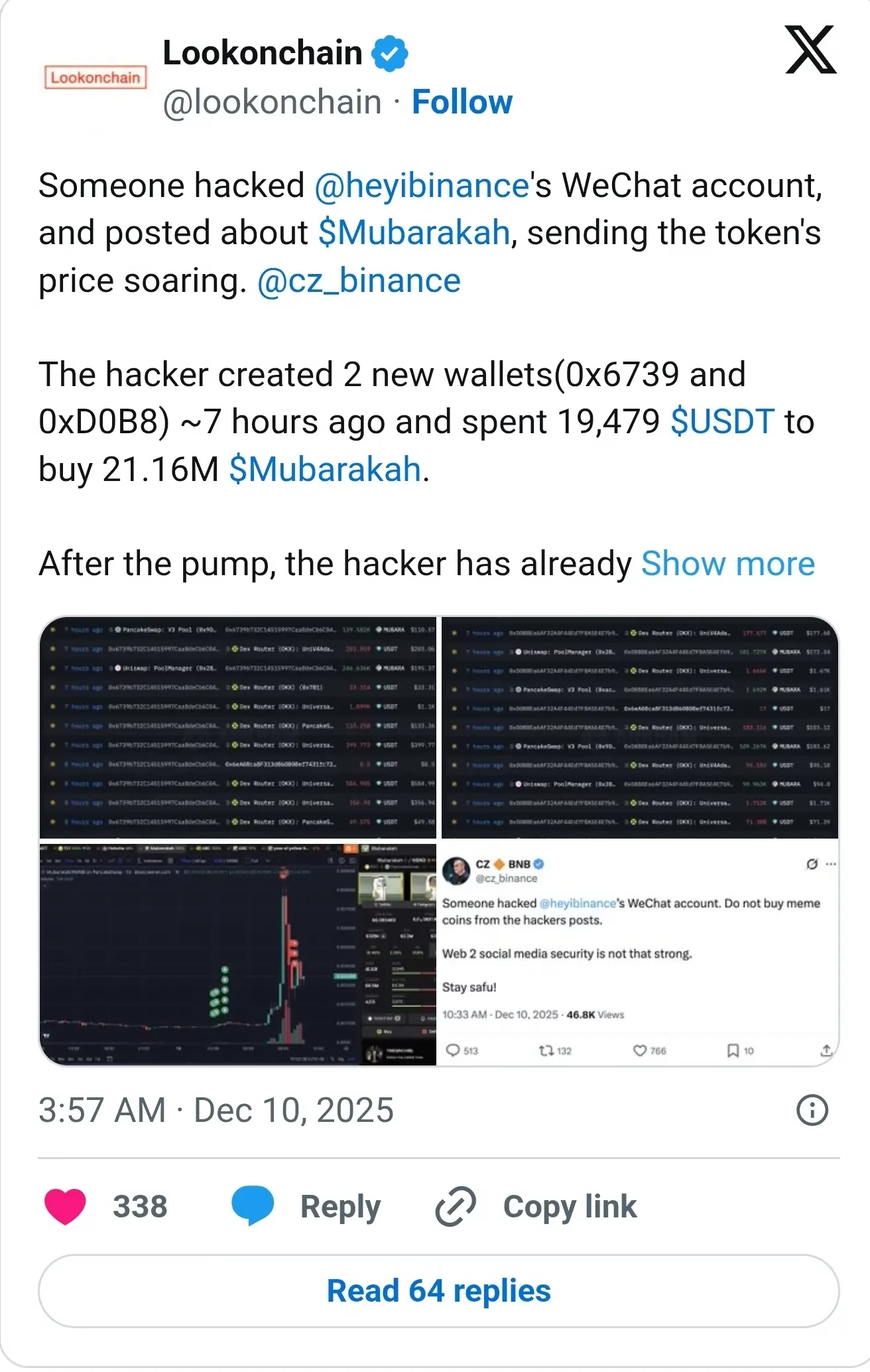
The fake endorsement created a temporary frenzy, with traders pouring liquidity into MUBARA. Once the price peaked, the attacker began dumping tokens back into the market, cashing out for about $55,000 in profits.
Lookonchain reported that the attacker sold nearly 11.95 million MUBARA for 43,520 USDT, while still holding over 9.2 million tokensvalued around $31,000.
The attacker essentially front-ran retail investors, said Colin Wu, a well-known blockchain journalist.
This pump-and-dump scheme used a trusted identity to manipulate short-term sentiment — a dangerous tactic that undermines confidence in legitimate projects.
The incident coincides with a leadership transition at Binance, where Yi He was recently appointed Co-CEO during Binance Blockchain Week.
Co-founder Richard Teng praised her as a “driving force since day one,” noting her instrumental role in shaping Binance’s vision and culture.
However, the timing of the pump-and-dump scheme adds unwanted drama to an already sensitive period for the world’s largest crypto exchange.
Analysts say it also highlights the need for stronger authentication systems and cross-platform verification for executives managing billion-dollar ecosystems.
The pump-and-dump scheme involving Yi He’s hacked WeChat serves as a stark reminder that social media remains one of the most powerful — and dangerous — tools in crypto.
Users are urged to verify information through official Binance channels and to approach any meme coin promotions with skepticism.
Even one misleading post can trigger millions in losses, said Carol Alexander, a finance professor at the University of Sussex. Education and awareness are the best defenses against these fast-moving pump-and-dump schemes.
For now, Binance users are staying alert, and the broader crypto community is once again reminded that in this fast-paced market



Copyright © 2025 - The Bit Gazette.