






- Trending
- Comments
- Latest

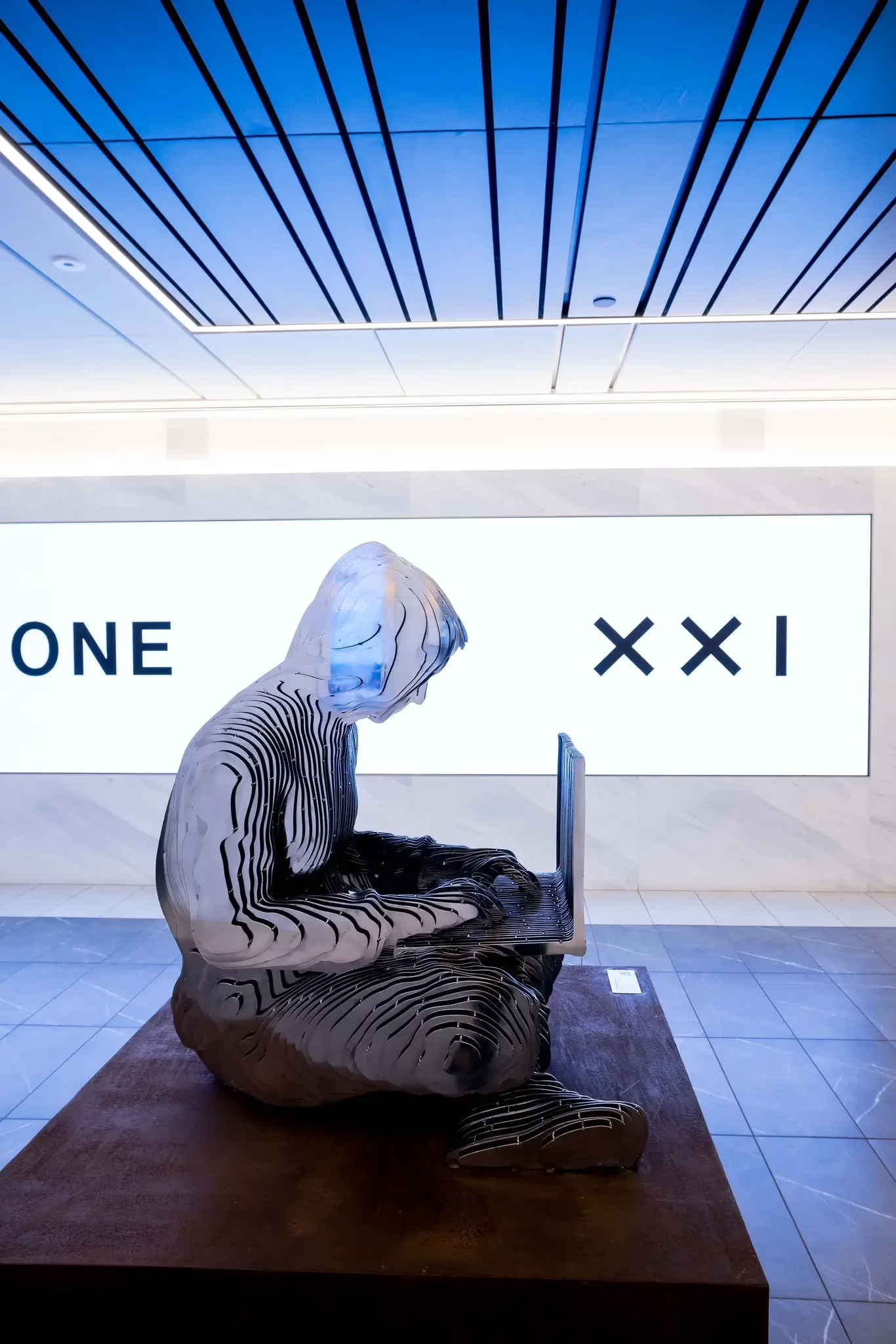
The New York Stock Exchange has installed a statue honoring Bitcoin’s pseudonymous creator Satoshi Nakamoto—a striking signal of Wall Street’s transformation from crypto skeptic to enthusiastic participant in digital asset markets.
The installation, placed by Bitcoin firm Twenty One Capital as it began trading this week, marks the sixth location worldwide for artist Valentina Picozzi’s “disappearing” Nakamoto statue series. The NYSE called it “shared ground between emerging systems and established institutions” in a Wednesday post on X.
“This is such an achievement, even in our wildest dream we wouldn’t think about placing the statue of Satoshi Nakamoto in this location!” Picozzi wrote on X under her Satoshigallery handle. “The 6th/21 statues of Satoshi Nakamoto found its home in the NYSE.”
The installation coincides with the 17th anniversary of the Bitcoin mailing list, which Nakamoto launched on Dec. 10, 2008—just weeks before mining the genesis block that created the first 50 Bitcoin on Jan. 3, 2009.
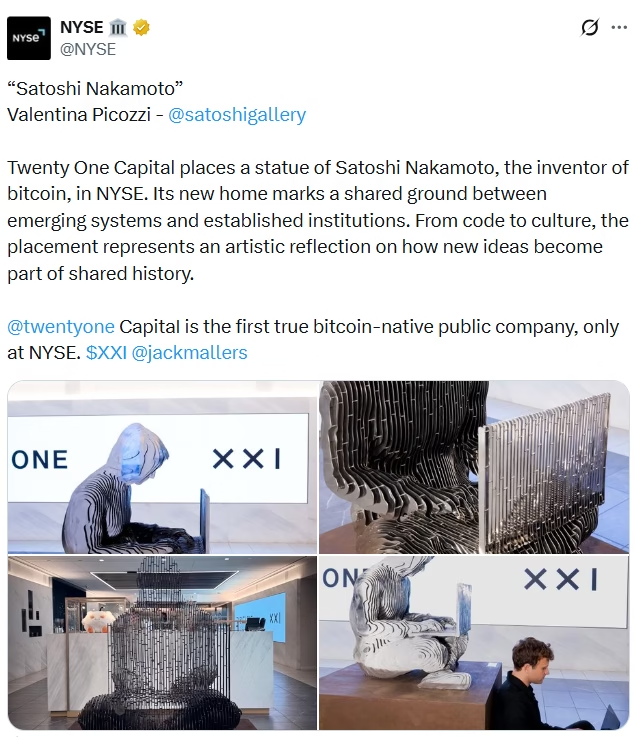
The statue’s placement at the NYSE—long considered a bastion of traditional finance—underscores Bitcoin’s remarkable journey from fringe technology to institutional asset class.
Just a few years ago, cryptocurrency remained largely taboo on Wall Street. Banks and financial institutions shunned digital assets, and critics alleged government efforts such as Operation Chokepoint 2.0 attempted to suppress crypto-related businesses through regulatory pressure on banks.
That resistance has crumbled. Prominent skeptics including BlackRock CEO Larry Fink have reversed course, with Fink calling Bitcoin a “legitimate financial instrument” after years of dismissing it.
Major institutions have rushed to offer Bitcoin exposure through exchange-traded funds, while an increasing number of public and private companies hold Bitcoin in their corporate treasuries.
Public and private companies, nation-states, and ETFs now collectively hold more than 3.7 million Bitcoin worth over $336 billion, according to data from Bitbo.
The shift reflects Bitcoin’s maturation from a programmer’s experiment into an asset class that commands serious attention from the world’s largest financial institutions—institutions that once viewed cryptocurrency as a threat to the established order.
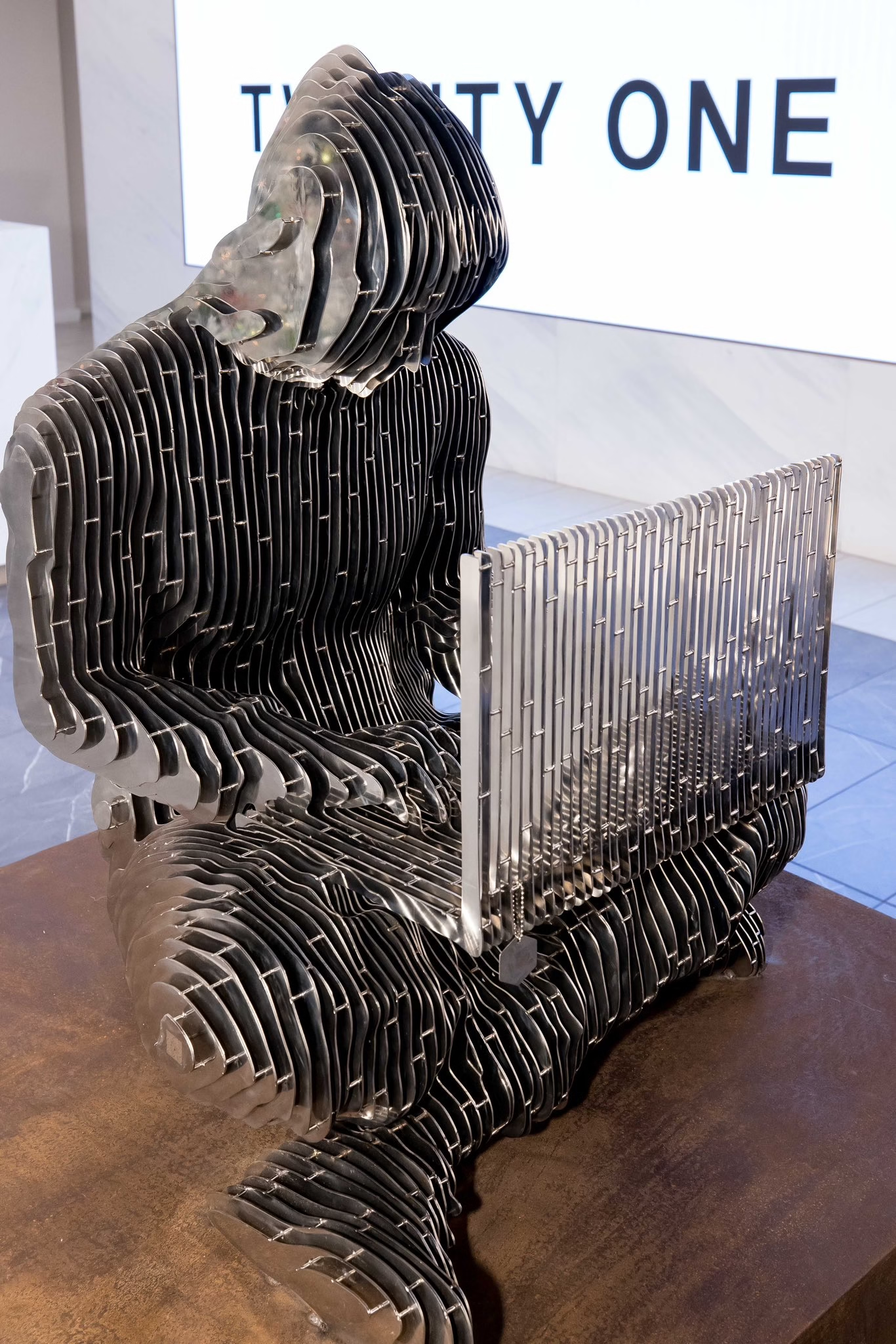
Picozzi has created a series of 21 Nakamoto statues, a number that references Bitcoin’s theoretical maximum supply of 21 million coins. Five other statues are located in Switzerland, El Salvador, Japan, Vietnam, and Miami, Florida.
The sculptures depict a hooded figure seated with a laptop, slowly dissolving into abstraction—a visual metaphor for Nakamoto’s anonymity and gradual disappearance from public view after launching Bitcoin.
“The statue itself wants to give to the viewer this feeling of disappearance, and the sense that the inventor stays between the lines,” Picozzi told Cointelegraph in 2024. “As of today, Satoshi exists in the lines of the Bitcoin code, allowing humanity to have the first decentralized payment system.”
She described the work as a tribute not just to Nakamoto, but to all developers and programmers who built the Bitcoin ecosystem “fighting for transparency and freedom.”
The artist said Nakamoto stands as “one of the most intriguing and fascinating figures of this era,” noting that the true identity behind the pseudonym remains unknown despite extensive speculation and investigation.
After mining the genesis block in January 2009, Bitcoin remained obscure for over a year. The first documented purchase using Bitcoin occurred on May 22, 2010, when programmer Laszlo Hanyecz paid 10,000 Bitcoin—now worth approximately $900 million at current prices—for two Papa John’s pizzas.
That transaction, now commemorated annually as “Bitcoin Pizza Day,” demonstrated Bitcoin’s potential as a medium of exchange, even as the cryptocurrency struggled for recognition and legitimacy in its early years.
In the intervening 15-plus years, Bitcoin has evolved from a hobbyist project into a globally recognized asset, weathering multiple boom-and-bust cycles, regulatory crackdowns, exchange collapses, and persistent skepticism from traditional finance.
The installation of Nakamoto’s statue at the NYSE—the world’s largest stock exchange by market capitalization of listed companies—represents a symbolic endpoint to that journey: full acceptance by the financial establishment Bitcoin was designed to circumvent.



Copyright © 2025 - The Bit Gazette.