



- Trending
- Comments
- Latest

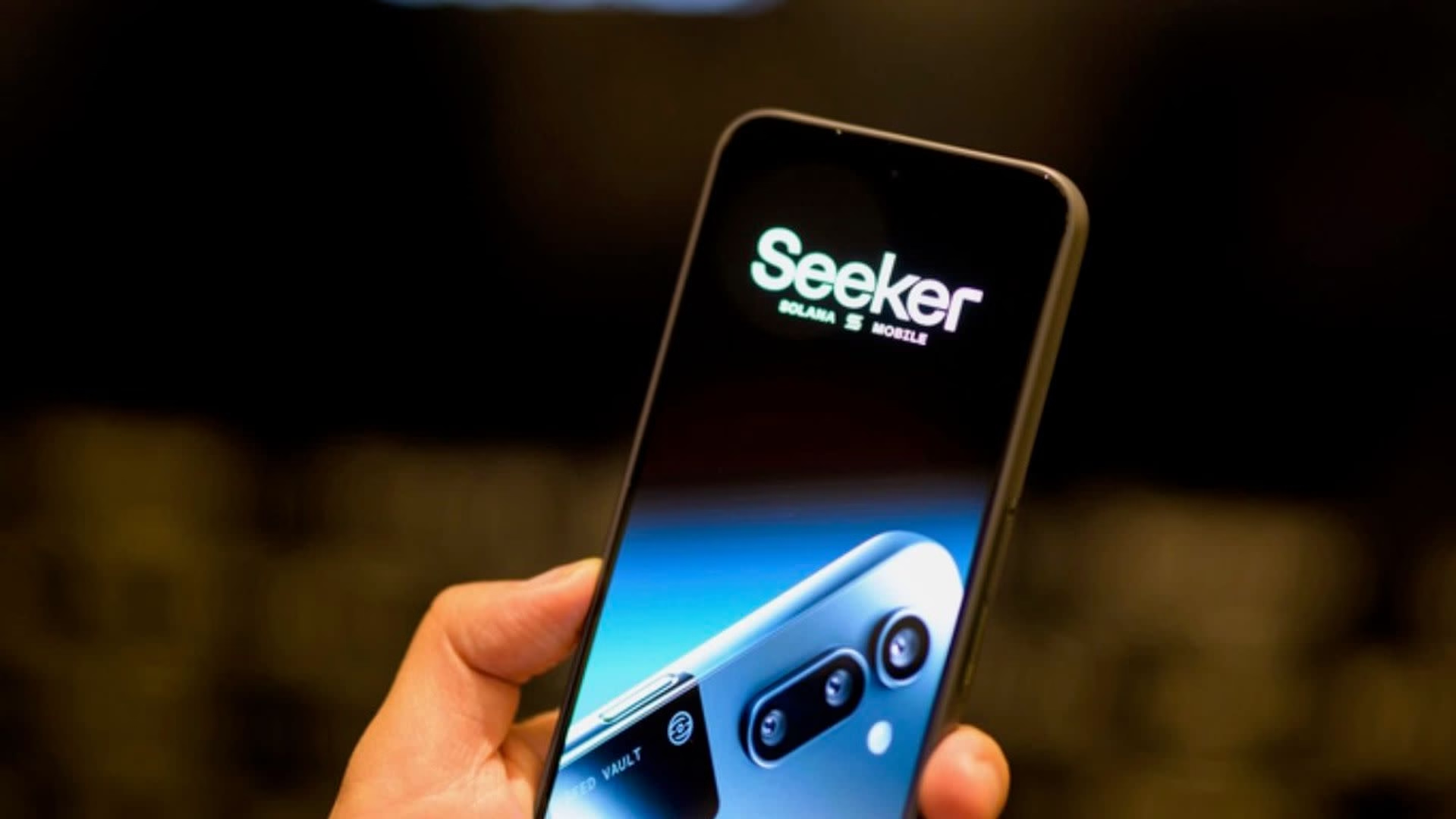
Solana Mobile launched its SKR governance token on January 21, distributing 2 billion tokens—30% of total supply—to Seeker smartphone users and developers in one of crypto’s largest mobile-focused airdrops. Eligible users have 90 days to claim tokens before allocations return to the airdrop pool.
SKR, issued as an SPL token on the Solana blockchain, serves as the native asset of the Solana Mobile ecosystem, powering governance, staking, app curation, and incentives tied to the company’s Seeker smartphone.
The launch caps months of development and outreach by Solana Labs and Solana Mobile, targeting tens of thousands of mobile Web3 adopters.
At its core, SKR is intended to distribute control over mobile app standards and platform mechanics traditionally held by centralised app stores.
“Seeker and SKR are a bet that there’s another way for mobile: that the people who use the network should own the network.”
A Solana Mobile spokesperson said in an announcement shared with the press.
The SKR token launch was accompanied by a major airdrop event that allocated tokens to users of the Seeker smartphone and developers actively contributing to the Solana Mobile dApp ecosystem.
According to community tracking and official disclosures, approximately 2 billion SKR, roughly 30 per cent of the total 10 billion token supply, was earmarked for these airdrops, rewarding early adopters and incentivising continued engagement.
Recipients must claim their allocations within 90 days via the Seeker’s Seed Vault Wallet, where the activity tracking feature reflects user eligibility based on past app usage and interactions. After the claim period ends in April, any unclaimed tokens are set to return to Solana Mobile’s airdrop pool.
Beyond distribution, SKR introduces a governance and staking framework tied to a novel Guardian architecture, independent operators tasked with securing the Solana Mobile ecosystem.
Guardians perform functions akin to network validators, including verifying device identities, reviewing dApp submissions, and enforcing community-set standards.
Token holders can stake SKR by delegating to Guardians to support network security and participate in decision-making, earning rewards in the process. This mechanism aims to replace centralised oversight with a decentralised incentive structure anchored in user activity and delegation.
“SKR and its governance model are designed to align incentives across users, builders, and hardware partners, making governance participatory and economically meaningful.”
A blockchain governance expert at a recent industry panel noted. Independent operators like Helius and Jito are among those confirmed to serve as Guardians, helping to uphold protocol integrity.
The launch of SKR represents a significant step for mobile-first Web3 adoption, positioning Solana Mobile as more than a device maker but as a crypto ecosystem builder.
Early rollouts of the Seeker smartphone have reportedly driven engagement across hundreds of decentralised applications, suggesting a growing appetite for on-chain mobile interactions.
Market observers have also linked the anticipation of SKR’s launch with broader interest in Solana-related assets, noting price movements in SOL and related tokens in recent weeks.
The introduction of a native economic layer for mobile use cases may draw new users and developers who previously focused on desktop or browser-based Web3 access.
Still, experts caution that actual long-term value will hinge on sustained adoption, real-world utility of the token beyond initial airdrops, and competitive responses from traditional app store ecosystems.
As Solana Mobile transitions toward a more decentralised mobile future, the effectiveness of SKR’s governance model will be watched closely by investors and industry stakeholders alike.



Copyright © 2025 - The Bit Gazette.