





- Trending
- Comments
- Latest

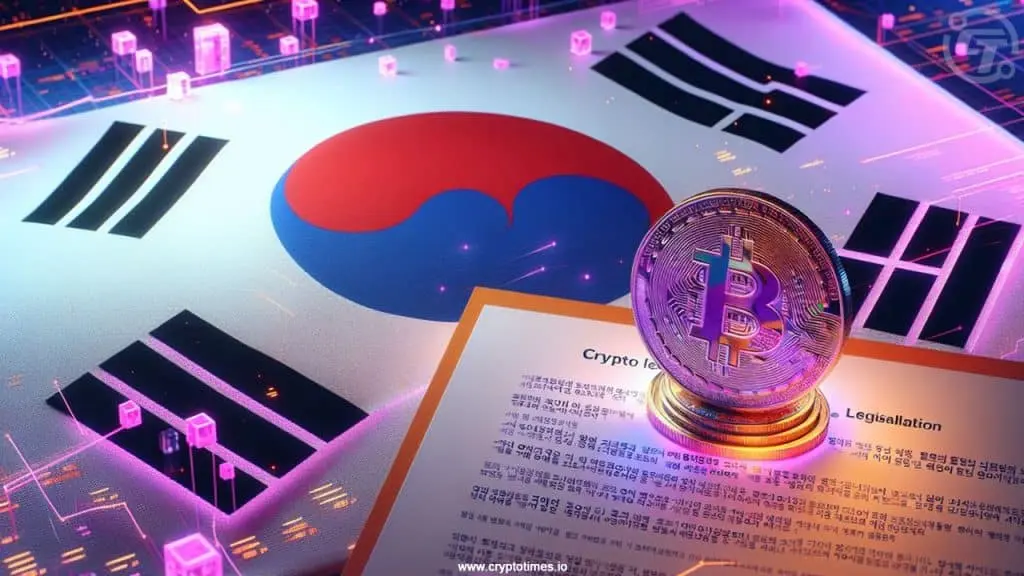
South Korea’s ruling and opposition parties agreed to fast-track legislation requiring banks to control at least 51% of any stablecoin issuance consortium, targeting passage by January 2026 after months of stalled negotiations, according to local media reports.
The target date, set after months of stalled negotiations, marks the most decisive move yet toward establishing a national framework for stablecoins and broader digital asset oversight.

According to the sources, lawmakers agreed on a unified framework defining a “Korean-style stablecoin” issued through a consortium in which banks hold at least 51% equity. Technology firms may participate as minority partners. This structure—embedded in the South Korea digital asset act—is designed to ensure bank-level stability while allowing space for innovation.
The consortium model was shaped during a November 1 party-government council meeting. Representative Kang Jun-hyeon emphasized that the discussions centered on equity distribution and risk mitigation across financial institutions. His office reiterated that negotiations examined “both monetary policy stability and industrial innovation,” reflecting concerns raised by the Bank of Korea and the Financial Services Commission (FSC).
Professor Hyun Jung-hwan of Dongguk University, formerly with the Bank of Korea, assessed the bank-centered approach as a cautious but necessary choice. He noted that banks already handle deposit currency and that “stablecoin operations are complex,” referencing how reserve requirements differ from traditional banking and how limitations on loan-based usage reduce profit incentives.
The same considerations have informed revisions to the South Korea digital asset act, which aims to reconcile regulatory oversight with the country’s competitive fintech ecosystem.
The urgency surrounding the South Korea digital asset act intensified when Representative Kang issued a firm deadline of December 10 for the government to submit its official proposal. He warned that if financial authorities fail to meet the schedule, lawmakers will pursue an independent bill through the National Policy Committee.
Kang stated that the bill should ideally pass during an extraordinary National Assembly session in January 2026, insisting that cooperation between political blocs is essential due to potential “large market ripple effects.” Multiple related bills from various legislators—including Kim Eun-hye, Ahn Dogul, and Min Byeong-deok—have already been introduced, but none have gained unified backing.
Behind closed doors at the National Assembly building in Yeouido, members of the Democratic Party’s political affairs committee met with the FSC to finalize the framework’s direction. After the meeting, it was confirmed that the consortium model would integrate positions from the central bank, financial regulator, and banking institutions.
Market participants reacted positively as progress on the South Korea digital asset act broke a prolonged stalemate. Observers noted that the United States, Japan, and the European Union have already completed major regulatory updates, adding pressure on South Korea to finalize its own system.
As part of broader preparations for the South Korea digital asset act, the FSC announced on November 28 that it would expand the country’s “travel rule” to all transaction sizes. Previously, transfers under 1 million won—approximately $680—had been exempt, creating a loophole exploited through smurfing strategies. The new rule ensures comprehensive monitoring, regardless of transaction value.
The FSC also signaled that high-risk offshore exchanges may be blocked from serving South Korean users, citing the need to protect domestic investors from platforms operating outside local regulations. The regulator further tightened criteria for virtual asset service providers, requiring stronger financial reserves, improved internal controls, and enhanced compliance systems.
Professor Hyun emphasized the importance of these measures, noting that “strengthening supervision is necessary if large banks handle substantial volumes of stablecoins.” His argument aligns with the growing scale of issuances anticipated under the South Korea digital asset act, making coordinated oversight between the FSC and Bank of Korea a core regulatory priority.
After months of stalled negotiations and political friction, the January 2026 target represents a pivotal point in the evolution of South Korea’s digital economy. The South Korea digital asset act is now positioned as the country’s most significant step toward integrating stablecoins into its formal financial system while addressing risks related to monetary policy, consumer protection, and cross-border compliance.
If passed as planned, the South Korea digital asset act would align the country with global regulatory leaders, cementing a structured environment for fintech growth while reinforcing safeguards for the broader financial system.



Copyright © 2025 - The Bit Gazette.