





- Trending
- Comments
- Latest

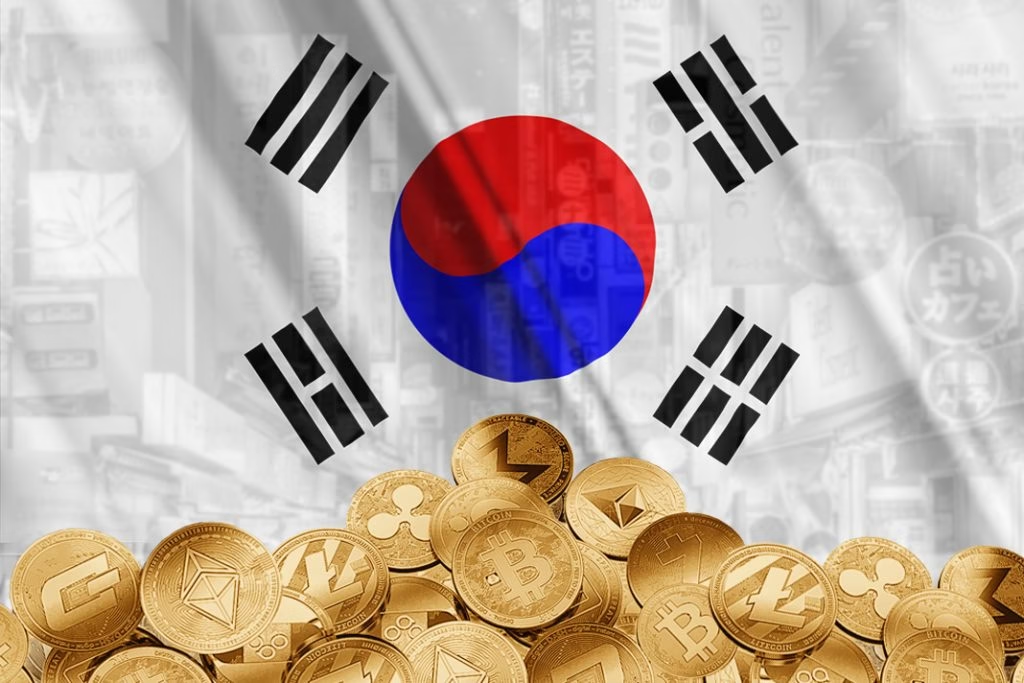
South Korea’s National Assembly has passed sweeping amendments to its Capital Markets Act and Electronic Securities Act that officially recognize and regulate the issuance and trading of tokenized securities, lawmakers confirmed on Jan. 15, 2026.
The legislation marks a major shift in the country’s approach to digital assets, embedding distributed ledger technology into the heart of its financial legal framework.
Once signed into law by the president and promulgated, the rules are scheduled to take effect in January 2027 after a one-year implementation period.
Under the new framework, eligible issuers will be able to create tokenized securities, digital representations of financial or real-world assets, and distribute them through regulated channels.
Trading will be allowed through licensed brokerages and intermediaries, bringing previously informal blockchain offerings within the purview of traditional capital markets.
“This legislation introduces legal certainty for both issuers and investors by clearly defining how tokenized securities are issued, recorded and managed under Korean law,” – Financial Services Commission (FSC),
Tokenized securities, also known as security tokens, are digital tokens that represent ownership rights or economic interests in traditional assets, such as equities, debt, real estate, art, or agricultural projects, but are recorded on a blockchain.
By integrating these instruments into existing legal frameworks, regulators aim to protect investors while fostering innovation.
The amendments allow distributed ledger technology to be used for issuing, maintaining and transferring electronic securities accounts.
A new category of issuance account management institutions will be established to oversee the registration and custody of tokenized securities under regulatory supervision.
According to industry projections, the broader global market for tokenized real-world assets could reach trillions in value by the end of the decade.
Standard Chartered has previously forecast that tokenized real-world assets could hit a $2 trillion market capitalization by 2028, while local estimates suggest South Korea’s own tokenized securities segment could grow to roughly 367 trillion won by 2030.
“By opening legal doors for fractional ownership of traditionally illiquid assets, this law enables smaller investors to participate in markets that were once accessible only to large institutions,” – Lee Se-il.
Also Read: Worldcoin hovers near $0.50 as $250M institutional buy clashes with regulatory crackdowns
The move follows three years of preparatory work by regulators. In 2023, the FSC issued the country’s first technical guidelines on security token offerings, laying the groundwork for the formal legal framework now approved by legislators.
Industry groups and major financial institutions have since been preparing to engage with the emerging market.
Major banks and brokerages have expressed interest in participating in the tokenized securities ecosystem, anticipating that regulated security tokens could unlock new business lines and investment products. Some institutions have already begun pilot projects and infrastructure builds in anticipation of the regulatory change.
“This framework positions South Korea as a forward-looking financial hub in Asia; it aligns our capital markets with global trends while maintaining robust investor protection.” – Kim Jae-sub.
With the parliamentary vote completed, the bills now proceed to the State Council for administrative review before being signed by the president, which is a step widely expected to conclude without major alterations.
Once enacted, regulatory authorities, including the FSC, the Financial Supervisory Service, and the Korea Securities Depository, will work with industry stakeholders to build the supporting systems needed to operate the tokenized securities market.
A consultation body is slated to convene as early as next month to coordinate the development of blockchain-based account management systems, additional investor safeguards, and enforcement protocols.
These efforts are critical to ensuring a smooth rollout and compliance with both domestic and international regulatory standards.
As tokenized markets come into legal force, South Korea joins a growing list of jurisdictions seeking to harmonize blockchain innovation with established financial laws, a trend that could reshape capital formation and asset trading in the digital era.



Copyright © 2025 - The Bit Gazette.

