





- Trending
- Comments
- Latest

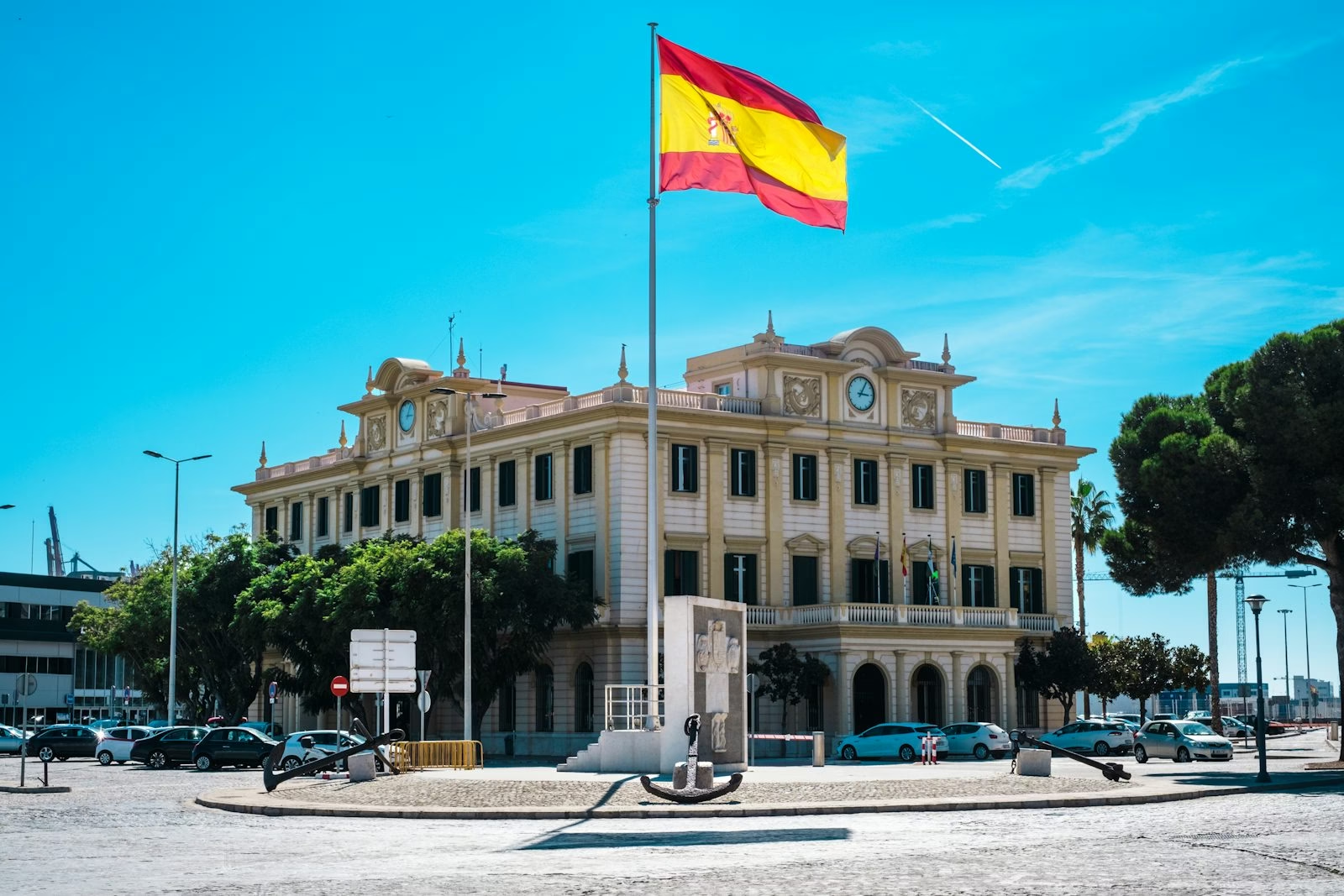
Spain is moving toward a decisive regulatory shift as Spain crypto regulations aligned with the European Union’s MiCA and DAC8 frameworks are set to be fully implemented in 2026.
The changes, confirmed by Spanish authorities in late December 2025, will reshape how crypto assets are issued, traded, supervised, and taxed, affecting investors, service providers, and regulators nationwide.
The move answers five core questions facing the Spanish crypto market: who can legally operate, what assets fall under regulation, when firms must comply, where oversight authority resides, and why tax transparency has become a central policy priority.
Together, MiCA and DAC8 form the backbone of Spain crypto regulations, expanding supervisory powers while reducing anonymity in regulated crypto activity.
At the heart of Spain crypto regulations is the delayed but deliberate rollout of the EU’s Markets in Crypto-Assets Regulation (MiCA). Although MiCA became fully applicable across the EU in December 2024, Spain opted to use the maximum transitional period allowed under European law. Regulators now expect full enforcement by mid-2026.
MiCA standardizes how crypto assets are issued and marketed across the EU, introducing uniform classifications for utility tokens, security tokens, and stablecoins. Under Spain crypto regulations, crypto firms will be required to obtain full MiCA authorization to continue operating after July 1, 2026.
Oversight responsibility has been assigned to Spain’s National Securities Market Commission (CNMV).
More than 60 companies are currently registered with the watchdog, including major financial institutions such as Cecabank, Banco Bilbao Vizcaya Argentaria, and Renta 4 Banco. The CNMV has already published updated guidance and a public Q&A to explain how MiCA will function in practice.
According to the CNMV, only companies that meet MiCA’s authorization and compliance standards will be permitted to offer crypto services in Spain once the transitional window closes. This requirement is a cornerstone of Spain crypto regulations, signaling a shift from provisional registration to full regulatory licensing.
While MiCA governs market structure, DAC8 addresses taxation and transparency—another critical pillar of Spain crypto regulations. Approved by the Spanish parliament in October 2025, the Administrative Cooperation Directive (DAC8) is scheduled to enter into force on Jan. 1, 2026.
DAC8 requires crypto exchanges and virtual asset service providers to automatically report detailed user information to tax authorities. This includes transaction histories, balances, and asset movements, covering sales, swaps, and transfers. The directive effectively removes anonymity from regulated crypto operations under Spain crypto regulations.
Spain’s tax authority, the Agencia Tributaria, will also gain the power to seize crypto assets to settle outstanding tax liabilities. The European Commission estimates that DAC8 could generate an additional €2.4 billion in tax revenue across EU member states.
Implementation in Spain means data collected during the 2026 fiscal year will begin flowing to tax authorities in 2027. “We will have information on all the movements that have been made during 2026 … It will be almost complete information,” said José Antonio Bravo Mateu, a tax law consultant, in a recent interview.
He added that crypto reporting will exceed traditional banking disclosures, noting: “This information will be much greater than that requested from a bank.”
Bravo Mateu further explained that while banks typically report balances above €250,000, Spain crypto regulations under DAC8 will track virtually all crypto activity, “even an exchange of two euros for a digital coin.”
The expansion of Spain crypto regulations has sparked criticism from analysts and economists who argue the country is adopting a more restrictive approach than some global peers. Critics say the combined force of MiCA and DAC8 risks discouraging innovation by imposing heavier compliance and surveillance burdens.
José Luis Cava, author of The Art of Speculating, criticized Spanish policymakers for what he described as regulatory overreach. He contrasted Spain’s approach with developments in the United States, citing a proposal that would allow taxpayers to pay federal taxes in bitcoin without triggering capital gains taxes.
According to Cava, such initiatives highlight alternative policy paths that Spain has chosen not to follow under its current Spain crypto regulations.
Parliamentary debates also reflected internal divisions. Between October and November, the Sumar Parliamentary Group proposed amendments to the Measures for the Prevention and Fight against Tax Fraud bill, calling for higher taxes on crypto earnings.
These discussions underscored broader tensions between fiscal enforcement and market competitiveness within Spain crypto regulations.



Copyright © 2025 - The Bit Gazette.