






- Trending
- Comments
- Latest

Britain’s financial regulator has opened applications for a sandbox program allowing firms to test pound-backed stablecoins, making digital currency regulation a top priority for 2026 as the UK seeks to cement its position as a global crypto hub.
The Financial Conduct Authority announced Wednesday it will fast-track rules governing sterling stablecoins and related payment systems, with applications for the testing program open until January 18, according to a letter from FCA Chief Executive Nikhil Rathi to Prime Minister Keir Starmer.
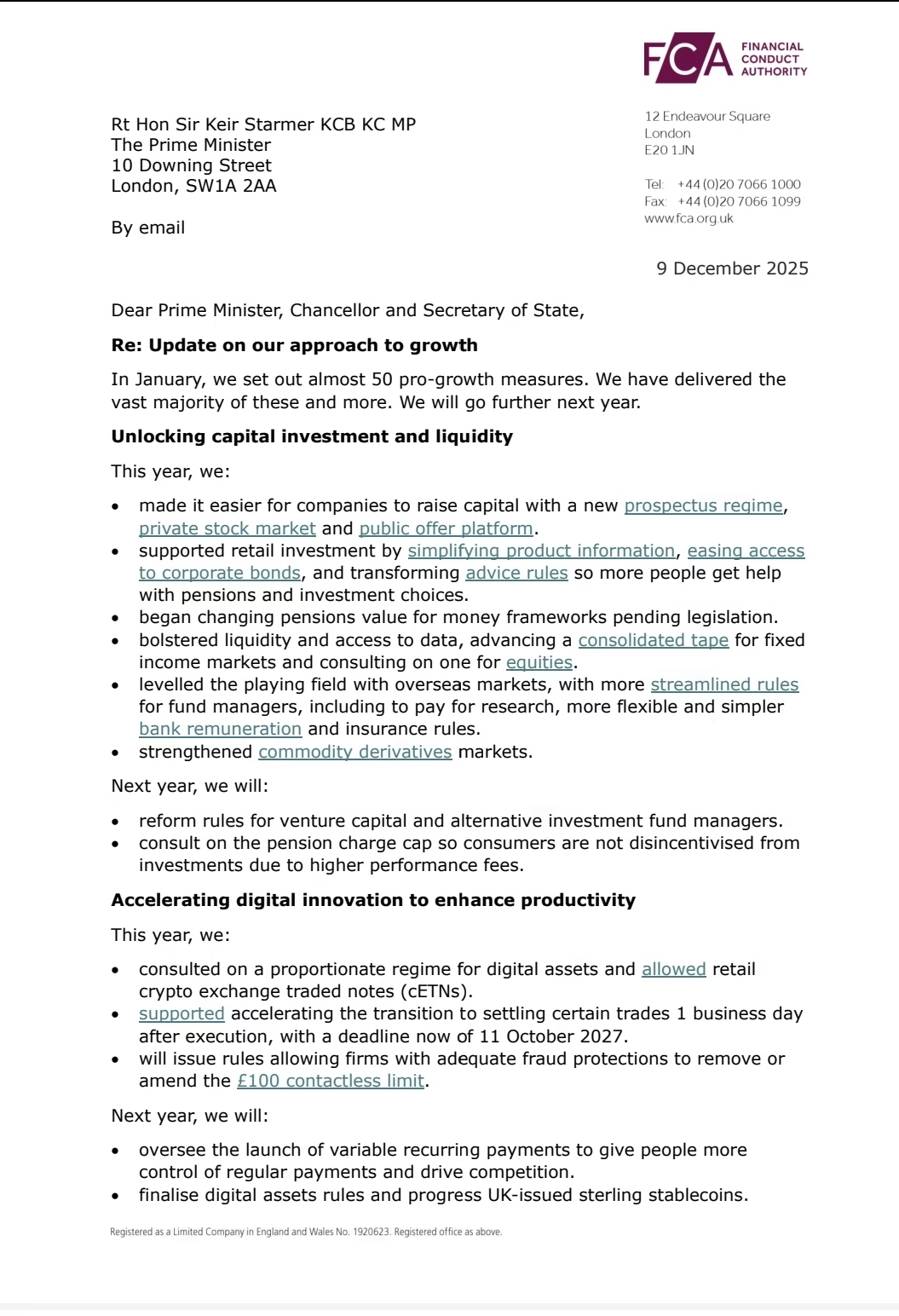
In a formal letter to Prime Minister Keir Starmer, FCA Chief Executive Nikhil Rathi set out the agency’s strategic objectives for the coming year, with a major emphasis on facilitating pounds sterling stablecoin payment mechanisms for UK-based issuers.
The statement marks one of the clearest indications yet that regulators intend to bring stablecoins into the mainstream financial architecture.
“Our reforms help the UK maintain its global competitive edge in our world-leading wholesale markets, attract international investment, and lead on innovation in financial services,” — Nikhil Rathi, Chief Executive, FCA.
The FCA’s strategy aligns with a broader initiative to finalize comprehensive digital asset regulations in 2026. These include new rules for trading platforms, custody providers, lending services, staking frameworks, and — critically — pounds sterling stablecoin payment oversight.
While the United States has pushed forward with more rapid regulatory rollouts, the UK continues to favor a phased, safety-first model. Officials argue this approach is essential for consumer protection, although some firms say it has slowed progress in the pounds sterling stablecoin payment landscape.
As part of its digital finance agenda, the FCA has opened a regulatory sandbox tailored for domestic stablecoin issuers. The initiative allows companies to test new pounds sterling stablecoin payment systems in a controlled environment, including settlement mechanisms, integrations with financial institutions, and cross-platform interoperability.
The sandbox is now accepting applications from issuers until Jan. 18, providing what many see as a critical opportunity for innovation ahead of the 2026 rulemaking window. Market observers say participation could be particularly important for companies aiming to future-proof their pounds sterling stablecoin payment infrastructure.
The FCA emphasized that the sandbox is part of a broader push to modernize the UK’s financial system, especially following the passage of the Property (Digital Assets etc.) Act 2025, which formally recognized digital assets as a new and distinct property class.
This legal clarity is expected to support the growth of pounds sterling stablecoin payment systems by giving issuers and custodians a firmer basis for enforcement and consumer protection.
Despite the apparent momentum, the FCA’s cautious, layered approach has drawn criticism from some industry stakeholders.
Firms such as Consensys have argued that applying existing financial rules too strictly has caused the UK to fall behind the United States in developing digital asset infrastructure — including pounds sterling stablecoin payment capabilities.
Still, regulators maintain that measured progress is essential, especially as digital markets evolve at unprecedented speed.
“Rapid technological change means we must focus on outcomes, not prescriptive rules,” — Nikhil Rathi, FCA, in his letter to the prime minister.
He added that the regulator will continue refining its supervisory framework “with more tailoring to firms’ size and type,” acknowledging that innovation carries inherent risk but stressing that oversight will focus on the most significant harms.
This tension between innovation and regulation lies at the heart of the ongoing debate over pounds sterling stablecoin payment adoption.
For many market participants, the FCA’s new direction signals a willingness to strengthen the UK’s role as a global hub — provided that consumer protection and systemic stability remain intact.
With a growing digital asset ecosystem and increasing global competition, the UK appears determined to build a robust foundation for pounds sterling stablecoin payment integration.
Collaboration with the Bank of England is expected to accelerate the development of operational standards and ensure interoperability with existing financial systems.
For investors and policy makers, the framework could offer a clearer path for assessing systemic risks, capital requirements, and potential market efficiencies tied to pounds sterling stablecoin payment innovations.
For the general public, the reforms serve as an early blueprint for how digital money may circulate safely within a regulated financial system.
By placing pounds sterling stablecoin payment infrastructure at the center of its 2026 agenda, the FCA is signaling a major step toward aligning regulation with the speed of technological change — a move designed to strengthen market trust while enhancing Britain’s appeal as a modern financial hub.



Copyright © 2025 - The Bit Gazette.


