

- Trending
- Comments
- Latest

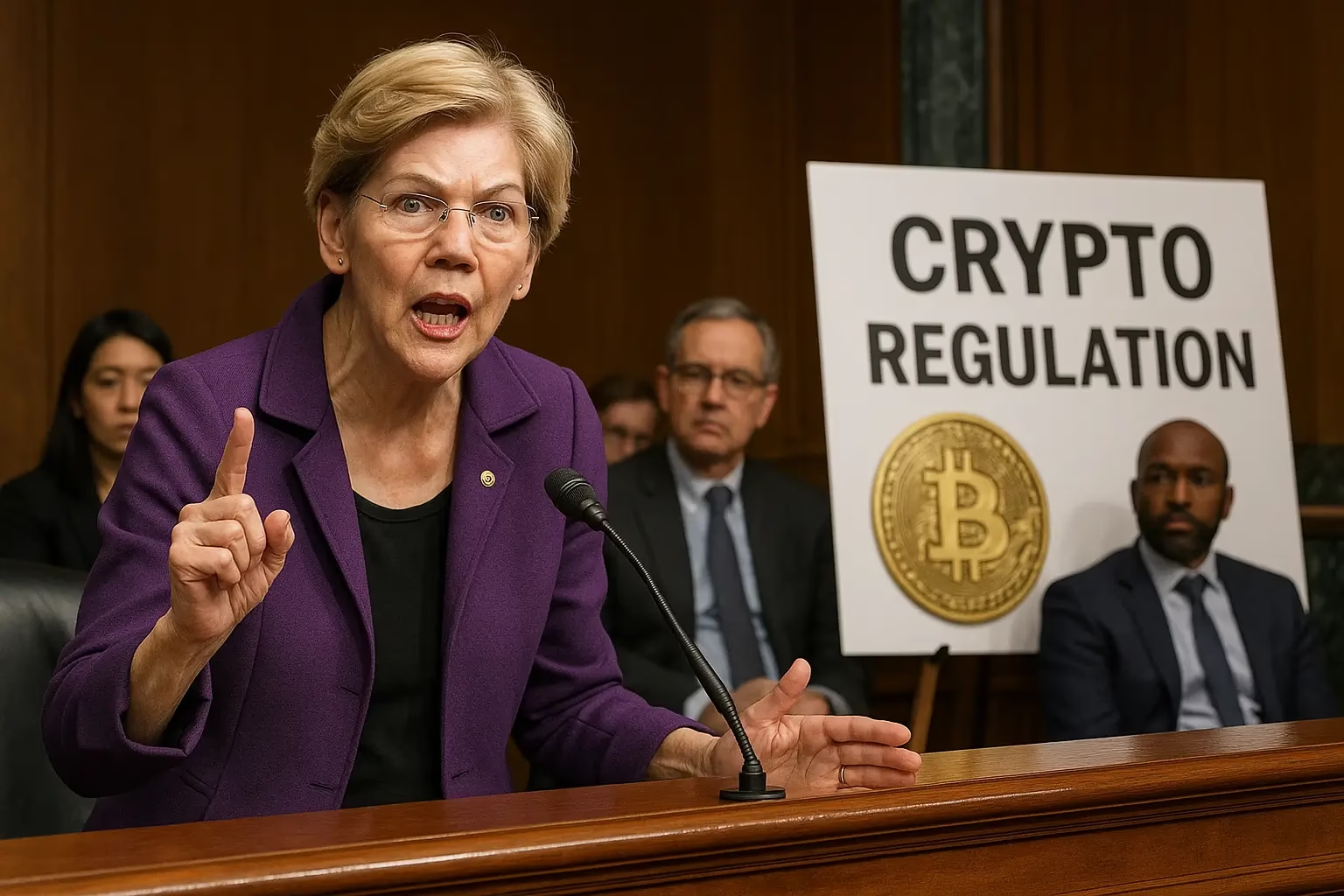
Senator Elizabeth Warren has asked the Office of the Comptroller of the Currency to halt its review of a bank charter application from World Liberty Financial, a cryptocurrency firm co-founded by President Donald Trump.
In a letter sent Monday, Warren argued that approving the application before Trump fully divests from the company would create an unprecedented conflict of interest, with federal regulators overseeing an entity tied to the president’s personal financial interests.
The potential conflict stems from the fact that the OCC, an independent bureau within the Treasury Department, would regulate a company in which the sitting president maintains a financial interest. Warren argues this arrangement could allow Trump to benefit financially from regulatory decisions made by his own administration.
In a January 13 letter to OCC Comptroller Jonathan Gould, Senator Warren, the ranking member of the Senate Banking, Housing and Urban Affairs Committee, argued that approving WLFI’s bank charter before President Trump fully divests from the company would place the regulator in a historically problematic position.
WLFI, through its subsidiary WLTC Holdings LLC, applied for a national trust bank charter that would allow the proposed World Liberty Trust Company to provide stablecoin issuance, redemption, custody and conversion services for its USD1 stablecoin.
Under the 2025 GENIUS Act, the OCC gained authority to oversee federally chartered entities issuing stablecoins, positioning it as the primary regulator of a burgeoning segment of the crypto market.
“If the application is approved, you would promulgate rules that influence the profitability of the President’s company,” – Warren wrote.
Warren’s letter warns that without clear divestment, the OCC could be tasked with regulating an entity tied to the U.S. president’s personal financial interests, a scenario she says risks undermining both regulatory credibility and public confidence.
Warren’s demand comes amid broader congressional debates over how to regulate digital assets. Lawmakers are preparing to vote on sweeping crypto market structure legislation that would reshape federal oversight of stablecoins and related activities.
Critics including Warren argue that current drafts of the bill fail to sufficiently address ethical risks posed by government officials’ ties to private crypto ventures.
In her letter, Warren also noted that Congress missed an opportunity to address these conflicts when passing the GENIUS Act, urging that new legislation explicitly include safeguards against such situations.
Supporters of the OCC’s authority under GENIUS argue that federal chartering could bring clarity and stability to the nascent stablecoin sector, which has grown rapidly in recent years.
However, Warren’s intervention places the spotlight on how political and financial interests intersect at the highest levels of U.S. crypto policy.
While direct reactions from the OCC and World Liberty Financial were not immediately available, the pushback from Warren has already reverberated in policy and industry circles.
Crypto industry stakeholders are divided: some see federal charters as necessary for mainstream adoption and integration with traditional financial services, while others worry that increased regulatory involvement, particularly one entangled with political controversy could chill innovation.
Political analysts suggest Warren’s stance may galvanize lawmakers wary of perceived conflicts in crypto regulation, especially as stablecoins become more integral to trading, payments and institutional finance.
The stability and transparency of the regulatory framework are top concerns for many investors and policymakers alike.
“Regulators must make decisions that benefit the American public not President Trump’s pocketbook,” – Warren wrote.
Approval of WLFI’s charter could set a precedent for how crypto firms operate especially those with deep political ties, which are integrated into the U.S. banking system.
Proponents argue that federally chartered crypto banks can enhance consumer protections and bring digital assets into a regulated environment that supports growth and stability.
While critics fear regulatory capture and ethical lapses if oversight is perceived as biased or inadequately insulated from political influence.
The outcome may influence perceptions of regulatory risk and confidence in the U.S. market’s governance. While the debate shows the challenge of crafting rules that balance innovation with ethics and financial stability.



Copyright © 2025 - The Bit Gazette.