





- Trending
- Comments
- Latest

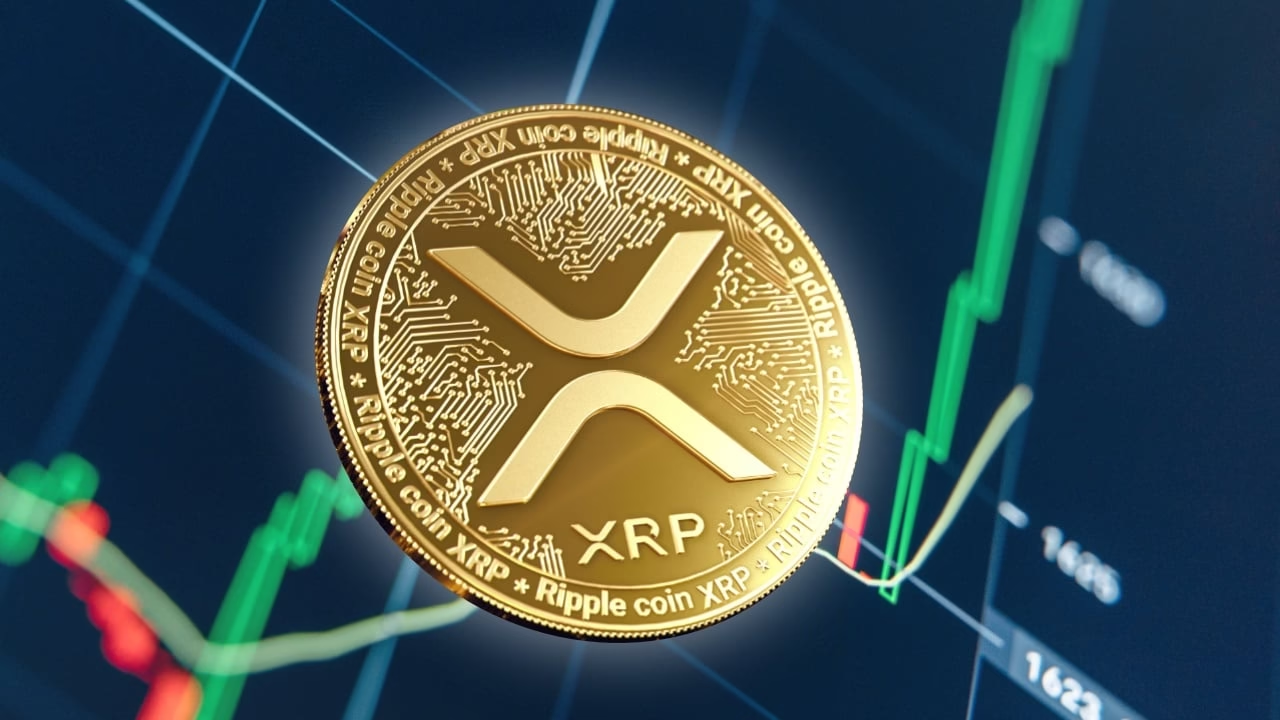
The XRP Ledger processed nearly 3 million transactions per day in early 2026, nearly doubling from an average of 1.8 million daily transactions in late 2025, according to on-chain data from Dune Analytics and Messari.
The surge is driven primarily by cross-border payments—which account for 60% of all XRPL activity—and suggests growing institutional adoption of the blockchain as tokenization experiments and stablecoin development accelerate on the network.
The increase has been gradual but consistent. Data from multiple analytics reports shows that the network averaged roughly 1.8 million daily transactions during the second half of 2025.
However, more recent figures suggest activity has climbed significantly beyond that baseline, with analysts noting a surge toward 2.5–3 million transactions per day in early 2026.
The trend signals expanding usage rather than speculative trading alone. Since its launch in 2012, the XRP Ledger has processed more than four billion transactions.
Network usage often indicates increasing demand for the infrastructure behind a digital asset, potentially strengthening its long-term value proposition.
One of the clearest drivers behind the rising transaction volume is payments. Analysts say the XRP Ledger continues to serve primarily as a cross-border payments network.
Blockchain analytics from Dune Analytics shows that nearly 60% of all transactions on the XRP Ledger are payment transfers, reinforcing the network’s core role in moving money quickly across borders.
Weekly payment transactions have also surged dramatically in recent years. According to network data, weekly payment activity rose from roughly 1.5 million transactions in 2023 to more than 8 million by 2025.
“Payments remain the biggest use case of the XRP Ledger.”
Analyst wrote in a report cited by Cryptopolitan, noting that the network is designed for “swift, cost-effective global payments.
The underlying technology supports that goal. XRPL transactions typically cost fractions of a cent and settle in seconds with the network capable of handling over 1,000 transactions per second.
This efficiency has helped the blockchain position itself as an infrastructure layer for global remittances and institutional payment systems.
Beyond payment transfers, developers and institutions are increasingly experimenting with new applications on the XRP Ledger ecosystem.
Reports from blockchain analytics firm Messari show steady growth in network usage across several indicators, including active addresses, new wallets, and decentralized applications.
For example, the network recorded 447,200 new addresses in a single quarter, pushing the total number of accounts to nearly 6.9 million.
At the same time, developers are exploring new use cases ranging from decentralized finance tools to tokenized assets.
In some experiments, real-world assets such as real estate have been tokenized and issued on the XRPL infrastructure.
Executives at Ripple, the company closely associated with the XRP ecosystem believe such innovations could drive institutional adoption of blockchain technology.
“Stablecoins, custody solutions, and automation powered by artificial intelligence will accelerate institutional engagement with digital assets.”
Ripple executives said in a recent market outlook discussing the future of the ecosystem.
These developments have encouraged some investors to view XRP not just as a speculative token but as a utility asset tied to real financial infrastructure.
Despite the surge in network activity, XRP’s market price has not always followed the same trajectory.
In several periods, the token’s price has moved sideways or even declined while transaction volumes increased.
Some analysts argue that the divergence reflects broader crypto-market dynamics, including liquidity conditions and macroeconomic factors.
Others say it could indicate that much of the activity on XRPL is utility-driven rather than speculative trading, which tends to affect prices more directly.
Still, many investors monitor on-chain data closely because strong network activity has historically preceded long-term growth in blockchain ecosystems.
For those tracking the XRP market, the surge toward three million daily transactions may therefore signal a critical phase in the network’s evolution.



Copyright © 2025 - The Bit Gazette.

