






- Trending
- Comments
- Latest

Analysis of Fabric Protocol’s ROBO airdrop reveals that approximately 40% of the 199 million distributed tokens—worth roughly $8 million—were claimed by a single coordinated entity across 7,000 wallets. The concentration suggests a Sybil attack, in which one actor uses multiple addresses to bypass anti-fraud measures, raising questions about whether the airdrop’s fairness protections worked as intended.
The development has raised concerns within the crypto community, as airdrops are typically designed to decentralize token ownership and reward a broad user base. Instead, the airdrop appears to have been heavily skewed toward a single actor or coordinated group.
Experts believe the incident surrounding the ROBO airdrop may be a classic example of a Sybil attack, where one entity creates multiple wallet addresses to gain disproportionate rewards. In this case, the wallets involved showed patterns that suggest coordination rather than independent participation.
On-chain data indicates that many of the wallets:
These indicators have strengthened suspicions that the ROBO airdrop was exploited systematically rather than organically.
Such vulnerabilities highlight a persistent challenge in the crypto ecosystem: while airdrops are effective for user acquisition, they remain susceptible to manipulation without robust anti-Sybil mechanisms.
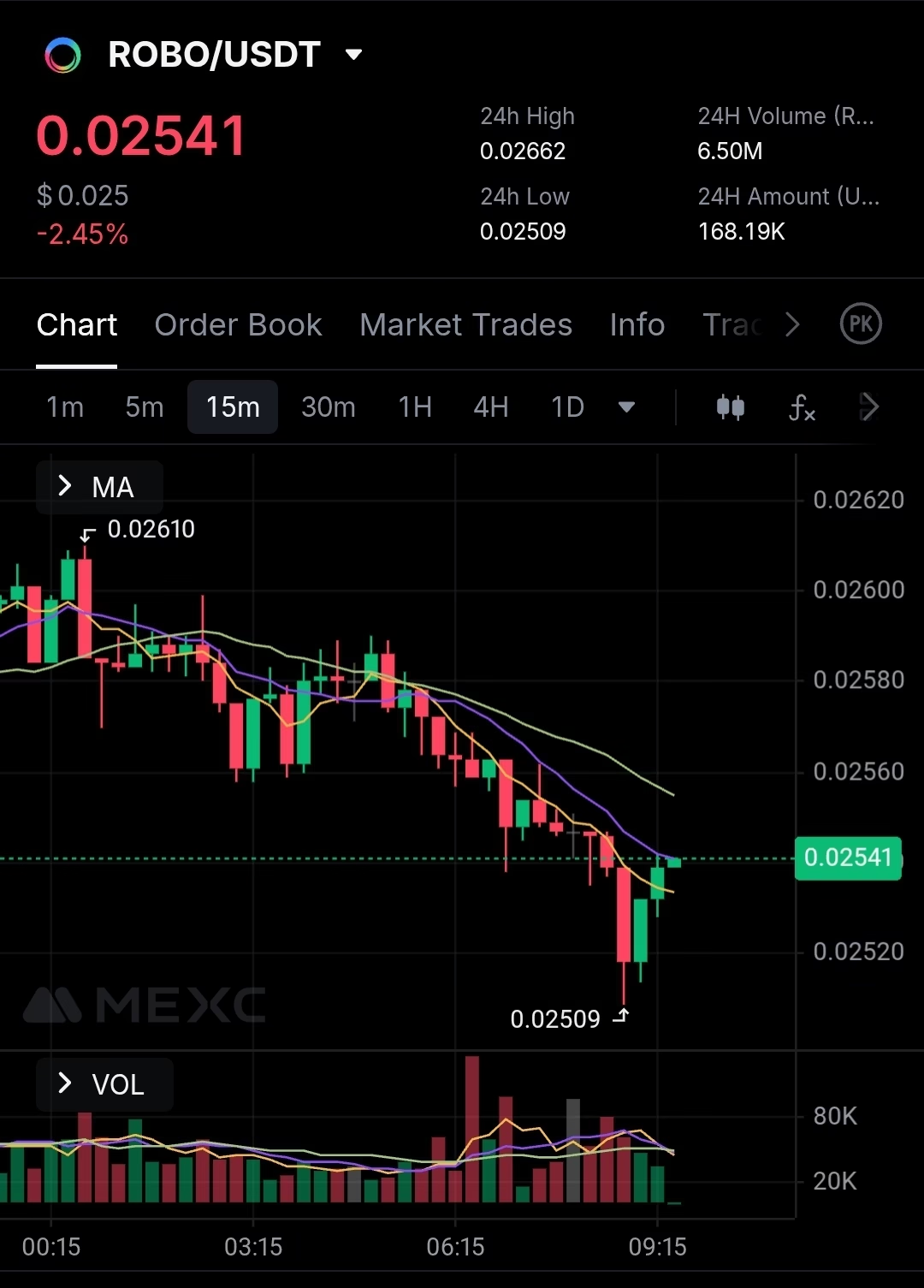
Despite the controversy, the ROBO airdrop has not dampened market interest in the token. Trading activity surged shortly after distribution, with reports indicating daily volumes reaching approximately $137 million.
This surge suggests that, regardless of distribution concerns, the airdrop has successfully generated attention and liquidity. However, analysts warn that the concentration of tokens in a single entity poses a potential risk to market stability.
If the holder decides to liquidate a significant portion of their allocation, it could trigger:
The situation places the airdrop at the intersection of hype and risk — a common pattern in emerging token launches.
The controversy surrounding the ROBO airdrop underscores deeper issues within the crypto airdrop model. While projects aim to reward genuine users, the lack of strict identity verification often allows bad actors to exploit distribution systems.
For the ROBO airdrop, the implications go beyond a single event:
Importantly, there is no indication that Fabric Protocol itself engaged in wrongdoing. However, the outcome of the ROBO airdrop demonstrates how easily such initiatives can be gamed without proper controls.
As the crypto industry continues to evolve, the ROBO airdrop serves as a case study in both the potential and the pitfalls of token distribution strategies.



Copyright © 2025 - The Bit Gazette.