







- Trending
- Comments
- Latest

The cryptocurrency industry recorded its most brutal year on record in 2025, with failed crypto tokens reaching unprecedented levels as speculative excess collided with market reality.
New data from CoinGecko shows that 11.6 million crypto tokens collapsed last year alone, underscoring the fragile foundations beneath much of the sector’s explosive growth.
According to the report, failed crypto tokens in 2025 accounted for 86.3% of all token failures recorded between 2021 and 2025, marking a dramatic acceleration in project attrition. The analysis focused on tokens once listed on GeckoTerminal that are no longer actively traded, offering one of the clearest snapshots yet of how unforgiving the crypto market has become.
“Meme coins dominated new launches in 2025, but they also dominated failures,” CoinGecko researchers said in the report, noting that low-effort token creation and speculative hype left most projects unable to survive even minor market stress.
The overwhelming driver behind the surge in failed crypto tokens was the collapse of meme coins. Platforms such as pump.fun enabled users to mint tokens in minutes with little to no technical knowledge, lowering the barrier to entry while dramatically increasing failure risk.
CoinGecko noted that only tokens with at least one recorded trade were included in the study, and for pump.fun, only projects that “graduated” from the platform were counted. Even with that filter, the data shows that meme coins were disproportionately represented among defunct projects.
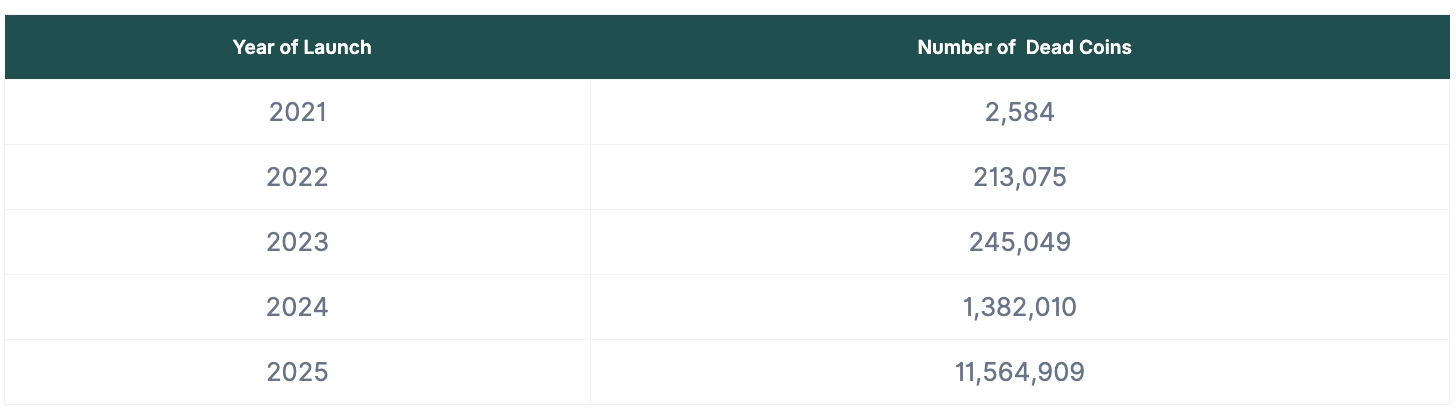
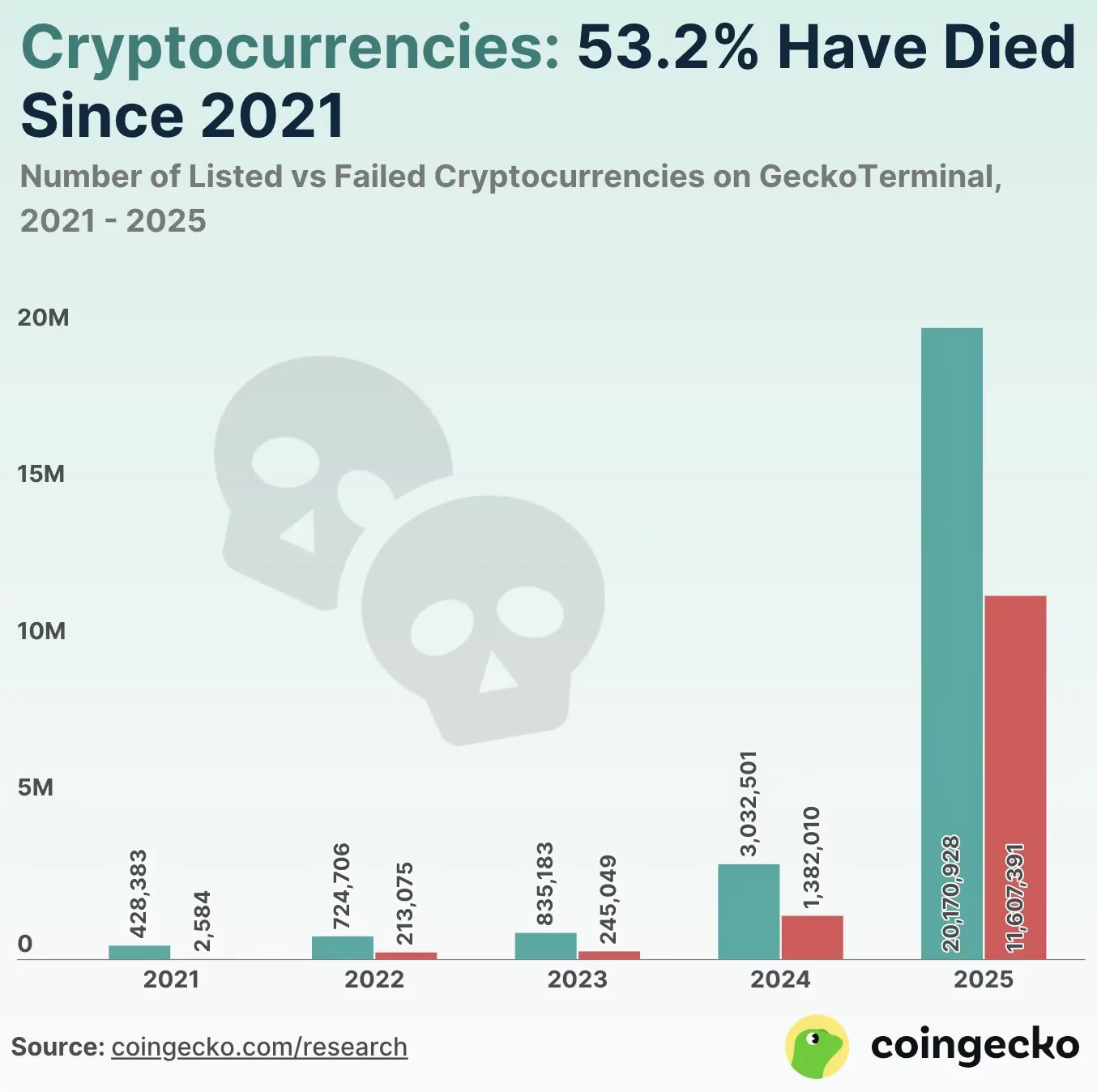
As of Dec. 31, 2025, 53.2% of all cryptocurrencies ever listed on GeckoTerminal had failed. That means more than half of all crypto projects launched since 2021 have effectively gone to zero—an extraordinary statistic that highlights how pervasive failed crypto tokens have become.
The final quarter of 2025 proved especially devastating. CoinGecko data shows that 7.7 million tokens collapsed in Q4 alone, accounting for 34.9% of all crypto failures recorded since 2021.
The most severe stress event occurred on Oct. 10, when roughly $19 billion in leveraged crypto positions were liquidated in just 24 hours. The episode marked the largest single-day deleveraging in crypto history and triggered a cascade of liquidations across high-risk assets.
“Meme coins were hit the hardest during the October liquidation,” CoinGecko noted, as thin liquidity and highly leveraged traders amplified losses. For many projects, that single event was enough to turn them into failed crypto tokens overnight.
CoinGecko linked the sharp rise in failed crypto tokens to persistent volatility throughout 2025. While Bitcoin and Ethereum remained relatively resilient, smaller tokens lacked the liquidity, community support, or use cases needed to survive rapid drawdowns.
“Meme coins tend to thrive in risk-on environments but collapse quickly when liquidity dries up,” said Nic Puckrin, founder of Coin Bureau Trading, in comments to industry media. “Most of these projects were never designed for long-term survival.”
The report reinforces the idea that speculative cycles, rather than technological development, drove much of the token explosion—and subsequent collapse.
Paradoxically, the surge in failed crypto tokens came alongside a massive increase in total project creation. In 2021, GeckoTerminal tracked just 428,383 crypto projects. By the end of 2025, that number had ballooned to nearly 20.2 million.
Pump.fun emerged as the dominant meme coin launchpad in 2024 and 2025, allowing virtually anyone to issue a token with automated smart contracts. While this democratized token creation, it also flooded the market with projects that lacked any sustainable model.
Of the roughly 20.2 million projects in existence by year-end 2025, more than 11.6 million failed during the same year—suggesting that the majority of new launches quickly became failed crypto tokens.
Compared to 2025, earlier years saw relatively modest levels of failed crypto tokens. In 2024, approximately 1.38 million projects collapsed, representing 10.3% of all failures over the five-year period. That year also recorded over 3 million new launches, foreshadowing the speculative excess to come.
Between 2021 and 2023, failures were comparatively rare. CoinGecko data shows just 2,584 failures in 2021, followed by 213,075 in 2022 and 245,049 in 2023. Combined, those three years account for only 3.4% of all crypto failures since 2021.

“The data clearly shows a structural shift,” CoinGecko analysts wrote. “The explosion in low-quality token launches after 2023 fundamentally changed the failure profile of the market.”
The rise of failed crypto tokens is fueling calls for stronger investor education and more rigorous due diligence. Analysts warn that retail traders, in particular, are vulnerable to hype-driven launches with little transparency.
“Meme coins aren’t inherently bad, but the scale and speed of issuance in 2025 made failure almost inevitable,” said blockchain researcher Molly White, who tracks crypto collapses. “The numbers suggest that survival is now the exception, not the rule.”
Regulators are also watching closely. While most meme coins fall outside traditional securities frameworks, the sheer volume of failed crypto tokens may prompt renewed scrutiny of launch platforms and disclosure practices.
As crypto enters 2026, the data paints a sobering picture. Innovation continues, but it is increasingly buried beneath millions of failed crypto tokens that never stood a realistic chance.
For investors, the lesson is stark: explosive growth does not equal sustainability. And for the industry, CoinGecko’s findings serve as a warning that without higher standards, the next wave of token creation may simply produce another record-breaking year of failures.



Copyright © 2025 - The Bit Gazette.


