

- Trending
- Comments
- Latest

For years, the relationship between PayPal and Nigeria has been one of unrequited utility. While the world enjoyed seamless global payments, Nigerian freelancers and entrepreneurs were largely relegated to a “send-only” status—effectively locked out of the global digital economy they helped build.
Now, in late 2025, PayPal is signaling a full-scale return to the continent’s largest economy.
But as the saying goes in the crypto world: “Don’t trust, verify.”
While the official narrative frames this as a move toward financial inclusion and “collaborative fintech,” the timing reveals a more calculated agenda.
PayPal isn’t just coming back to offer traditional payments—it’s coming back to secure a front-row seat in Africa’s stablecoin revolution.
The primary sentiment echoing across Nigerian crypto communities on X and Telegram is simple: You’re too late.
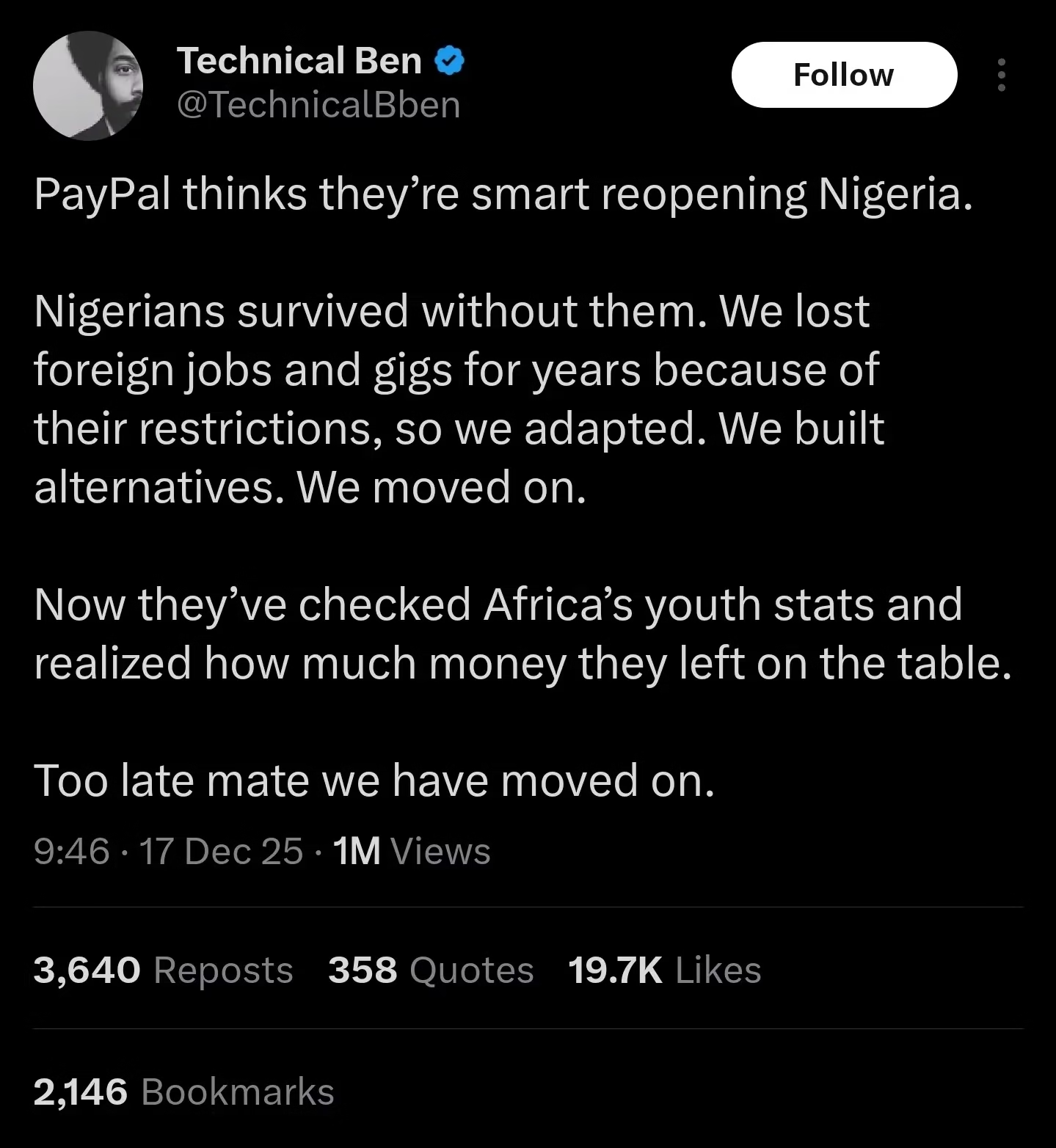
In the decade PayPal spent sidelined by its own risk-averse policies, Nigeria became a global powerhouse of crypto adoption.
When PayPal wasn’t there, Paystack and Flutterwave built the infrastructure. When the Naira plummeted, Nigerians didn’t wait for a Silicon Valley savior—they turned to USDT on P2P markets.
By the time PayPal announced its $100M commitment to African startups and the “PayPal World” initiative for 2026, the local ecosystem had already matured.
To many, the return feels less like a partnership and more like a late-stage land grab for a market that has already learned to survive—and thrive—without them.
The most compelling angle of this “homecoming” is the strategic push for PYUSD.
As of December 2025, PYUSD’s market cap has surged past $3.8 billion. However, in the high-stakes stablecoin war, PayPal is still playing catch-up to Tether (USDT) and Circle (USDC).
Nigeria, with its massive remittance inflows and high inflation, is the ultimate testing ground for a payment-focused stablecoin.
Remittance dominance: By integrating PYUSD into the Nigerian corridor, PayPal can offer “near-instant” settlements with fees up to 90% lower than traditional rails.
The Trojan Horse: The promise of reopening account inflows is the “carrot” to lead users into the PayPal crypto ecosystem. Once the gates are open, the default, most friction-less path for a Nigerian freelancer to get paid will likely be PYUSD.
Regulatory arbitrage: As Nigerian regulators move toward more structured digital asset frameworks, a “regulated” US-backed stablecoin like PYUSD offers a “safe” alternative that traditional banks might be more willing to touch than the decentralized alternatives.
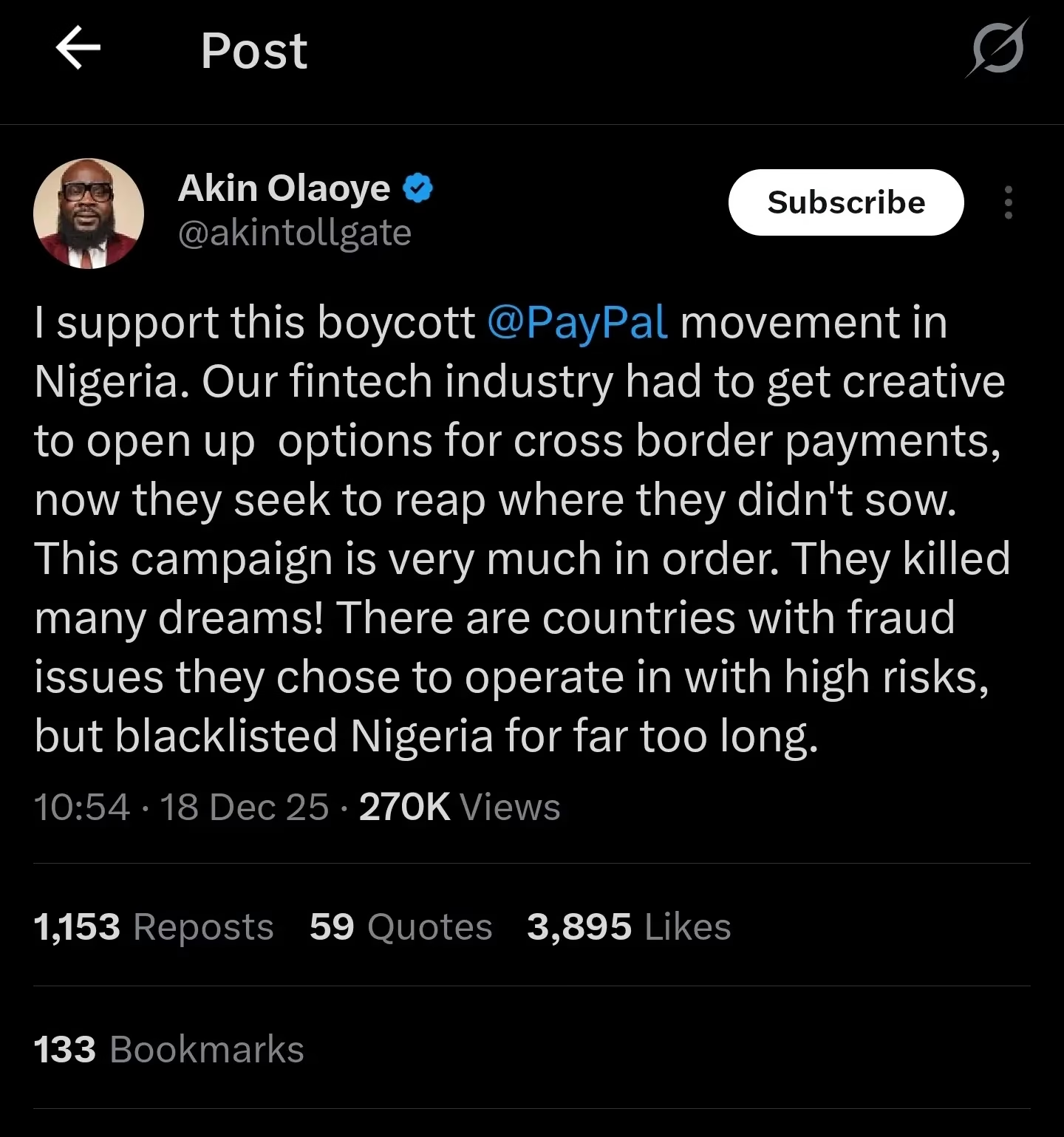
Despite the technical brilliance of a stablecoin-led entry, PayPal faces a massive credibility gap. Thousands of Nigerians still remember the “frozen funds” era.
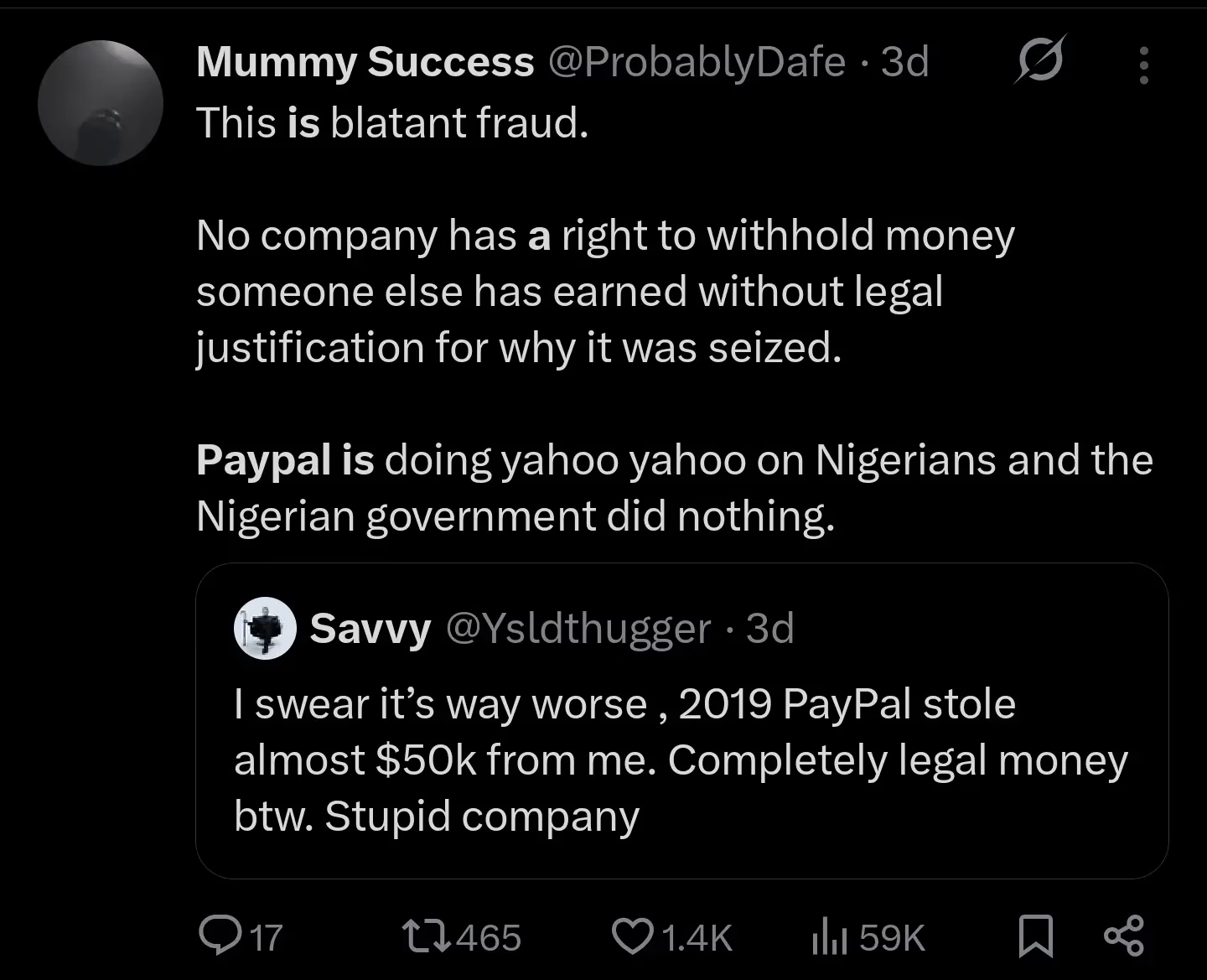
For a generation of tech-savvy workers who saw their livelihoods halted by arbitrary account closures, the move to a centralized stablecoin managed by the same entity is a hard sell.
The crypto ethos is built on sovereignty and censorship resistance—two things PayPal has historically struggled to provide to the African market.
PayPal’s return to Nigeria isn’t about “helping” the unbanked—it’s a strategic pivot to ensure they aren’t completely disrupted by the “stablecoinization” of global finance.
They are entering a market that is no longer desperate. If they wants to win, they can’t just flip a switch and expect loyalty.
They are walking into a battleground where USDT is King, and the local users have long memories.
PYUSD may be the goal, but the Nigerian crypto community will be the judge, jury, and executioner of its success.



Copyright © 2025 - The Bit Gazette.