







- Trending
- Comments
- Latest

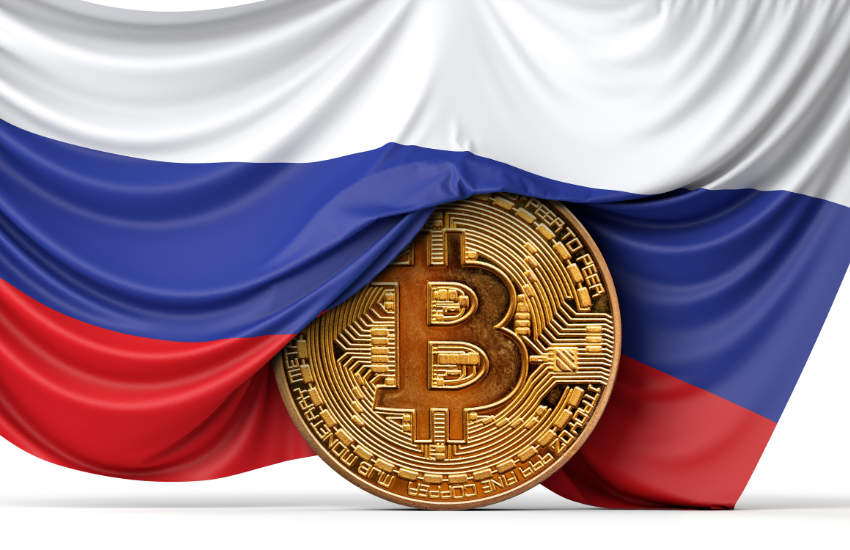
Russia is preparing to open parts of its cryptocurrency market to everyday investors after lawmakers finalized the Russia crypto bill aimed at redefining how digital assets are regulated, according to a January 13, 2026 report by state news agency TASS.
The proposed law, expected to be considered during the spring parliamentary session, would allow non-qualified traders to buy limited amounts of crypto while easing restrictions that previously confined participation to professional investors.
The Russia crypto bill was confirmed as ready for legislative consideration by Anatoly Aksakov, chairman of the State Duma’s Financial Markets Committee, who said the draft has cleared internal preparation and will be reviewed when lawmakers reconvene.
According to TASS, the proposal represents one of the most concrete steps yet in Moscow’s gradual recalibration of its stance on digital assets.
“A bill has already been prepared that removes cryptocurrencies from special financial regulation, meaning they will become commonplace in our lives,” — Anatoly Aksakov, Chairman, State Duma Financial Markets Committee, in an interview with Russia-24 cited by TASS.
At its core, the legislation seeks to strip cryptocurrencies of their current designation as a niche financial instrument subject to exceptional oversight. Instead, lawmakers want to fold digital assets into more conventional regulatory frameworks, while still applying targeted safeguards for retail participants.
The Russia crypto bill would not create a fully open retail market. Instead, it introduces a tiered system designed to balance broader access with risk containment. Under the proposed framework, individuals who do not meet Russia’s qualified-investor standards would be allowed to purchase cryptocurrencies up to a capped amount, while professional market participants would face no such ceiling.
Aksakov said non-qualified investors would be permitted to buy up to 300,000 rubles (about $3,800) worth of crypto under the Russia crypto bill, reflecting regulators’ continued concern about volatility and consumer protection. The cap is intended to limit potential losses while giving retail participants exposure to the market.
“Non-qualified traders will have limited access,” — Anatoly Aksakov, Chairman, State Duma Financial Markets Committee, according to TASS.
Professional investors, by contrast, would be free to trade without restrictions, underscoring the bill’s emphasis on proportional regulation. Lawmakers have consistently argued that experience and financial capacity should determine the degree of exposure allowed in high-risk asset classes.
The approach aligns with earlier signals from Russian regulators. In December, the Bank of Russia proposed a framework that would allow non-qualified investors to trade crypto only after passing a risk-awareness test. That proposal also maintained bans on anonymous or privacy-focused digital assets, indicating that authorities remain wary of compliance and oversight challenges.
Beyond domestic trading, the Russia crypto bill is expected to support international crypto use, including cross-border settlements and the overseas placement of Russian-issued tokens. Aksakov said the legislation could help normalize crypto’s role in foreign trade at a time when Russia continues to explore alternatives to traditional payment systems.
The bill follows months of coordination between the Finance Ministry and the central bank. In December, Finance Minister Anton Siluanov said both institutions were working toward a unified approach that would permit retail access under defined risk thresholds, according to TASS. While Siluanov did not provide direct details, both agencies have stressed that transaction caps and investment limits are essential to minimizing systemic risk.
This coordinated stance marks a notable shift from earlier periods of regulatory uncertainty, when proposals oscillated between outright restrictions and cautious experimentation. By formalizing access rules, the Russia crypto bill aims to reduce ambiguity for investors and market operators alike.
If passed, the Russia crypto bill could reshape how digital assets are used and perceived within the country. By allowing limited retail participation while maintaining oversight, lawmakers appear to be testing whether crypto can be integrated into everyday financial life without destabilizing the broader system.
Observers note that the bill reflects a pragmatic compromise rather than a wholesale endorsement of cryptocurrencies. Retail investors gain access, but only within carefully defined boundaries. At the same time, the legislation could make Russia’s crypto market more predictable for businesses and foreign partners.
As the spring session approaches, attention will turn to how lawmakers debate and potentially amend the proposal. For now, the Russia crypto bill stands as the clearest indication yet that Moscow is prepared to cautiously expand crypto participation while keeping firm control over its risks.



Copyright © 2025 - The Bit Gazette.

