







- Trending
- Comments
- Latest

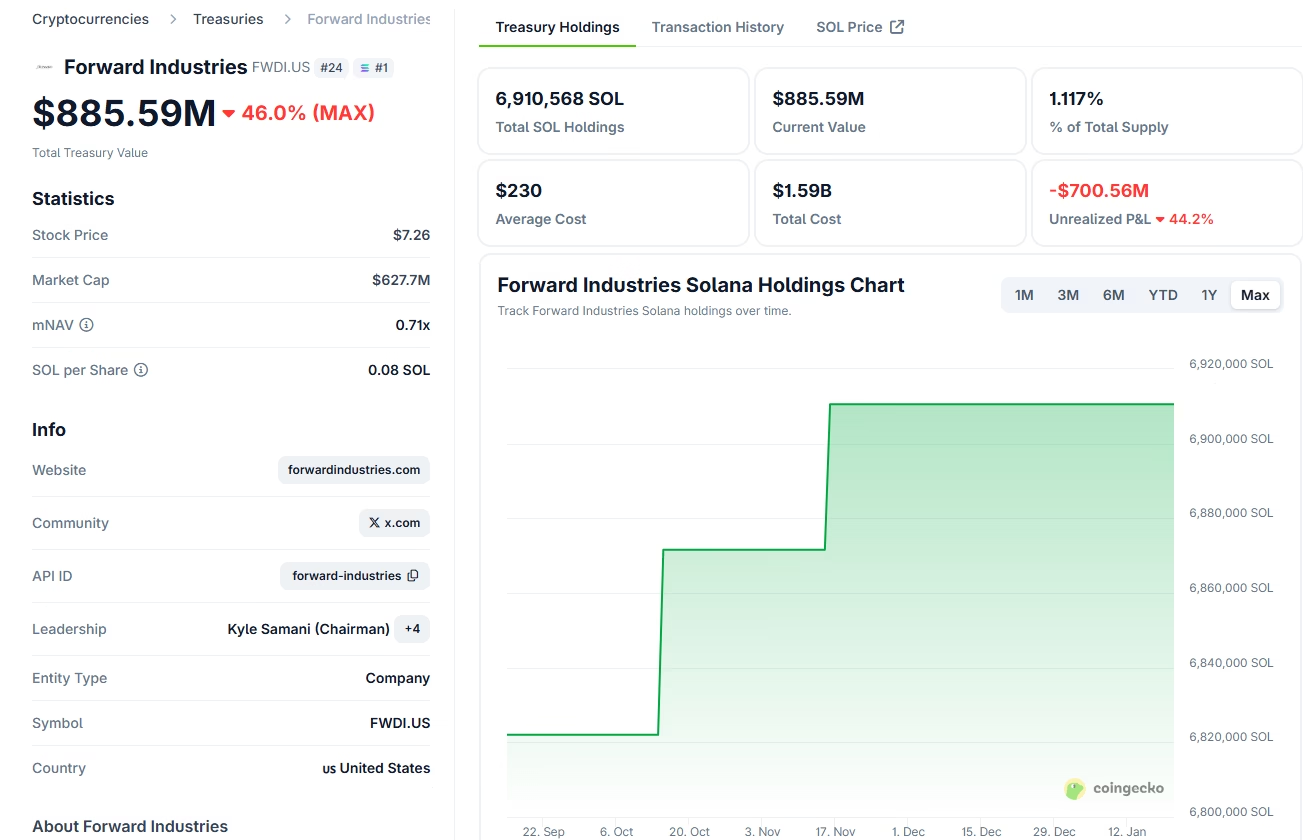
Forward Industries, the largest corporate holder of Solana with over 6.9 million SOL tokens, is sitting on unrealized losses exceeding $700 million after a 46% drawdown forced the company and other digital asset treasuries to halt further accumulation for the first time since launching the strategy.
At the center of the downturn is Forward Industries, the largest corporate holder among Solana Digital Asset Treasuries, controlling more than 6.9 million SOL—over 1.1% of the token’s total circulating supply. While the company maintains confidence in Solana’s long-term potential, the near-term financial impact has been severe.
According to CoinGecko data, Forward Industries accumulated its SOL position at a total cost of approximately $1.59 billion. With SOL trading near $128, that stake is now valued at roughly $885 million, leaving the firm with unrealized losses exceeding $700 million, a drawdown of about 46%.
Despite the steep decline, Forward Industries has continued staking nearly all of its holdings, a core pillar of its Solana Digital Asset Treasuries strategy. Since launching the program in September 2025, the company has earned more than 133,450 SOL in staking rewards.
“Since inception, the Company’s validator infrastructure has generated a 6.73% gross annual percentage yield before fees, outperforming top peer validators,” Forward Industries said in a recent statement. “Nearly all of the Company’s SOL holdings are currently staked.”
Even so, staking income has done little to offset the scale of market losses, particularly as investor sentiment toward crypto-exposed public companies weakens.
The SOL downturn has also weighed heavily on Forward Industries’ equity. Since announcing its treasury pivot into Solana Digital Asset Treasuries, the company’s share price has fallen more than 80%, sharply reducing its market capitalization and limiting its ability to raise fresh capital.
Market analysts say the sell-off reflects growing concern over whether public companies should mirror strategies popularized by bitcoin-heavy treasuries when applied to more volatile altcoins.
“Digital asset treasuries amplify exposure in both directions,” said a digital assets strategist at a European investment firm. “When prices rise, they look visionary. When prices fall, balance-sheet risk becomes impossible to ignore.”
Forward Industries is far from alone. Other firms operating Solana Digital Asset Treasuries are also reporting significant unrealized losses.
Upexi disclosed losses of more than $47 million on its SOL holdings, representing a 15.5% decline. Sharps Technology is facing unrealized losses exceeding $133 million, or roughly 34%, while Galaxy Digital Holdings reported losses of more than $52 million, equating to a 38% drop.
Collectively, these figures underscore the systemic exposure embedded in the Solana Digital Asset Treasuries model, particularly during periods of sharp market reversals.
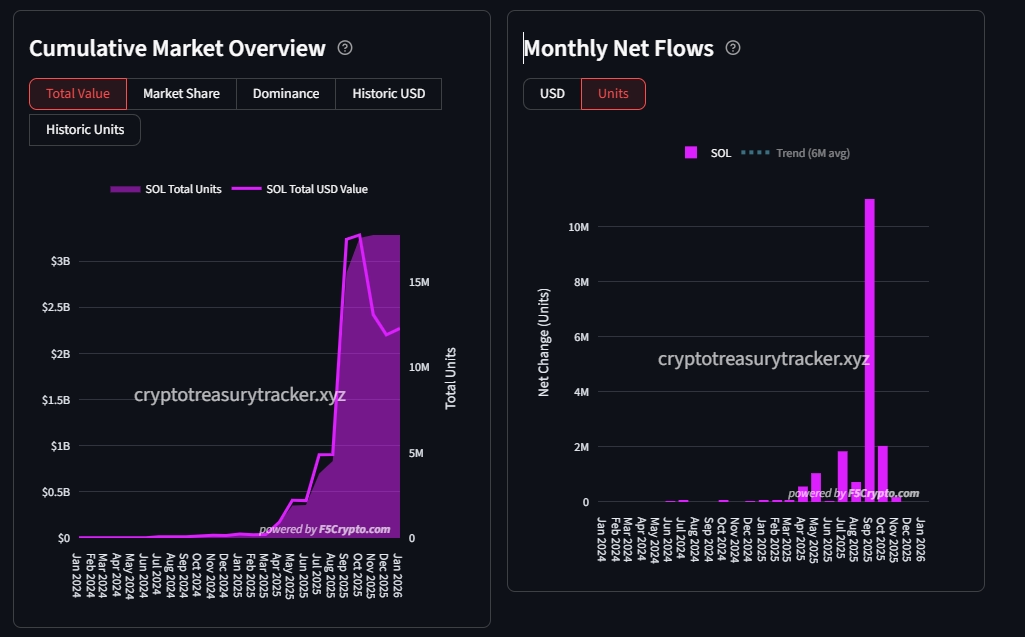
On-chain data suggests that companies have effectively halted new SOL purchases over the past two months. Total SOL held by Solana Digital Asset Treasuries has plateaued at approximately 17.7 million tokens, signaling a pause in capital deployment amid rising uncertainty.
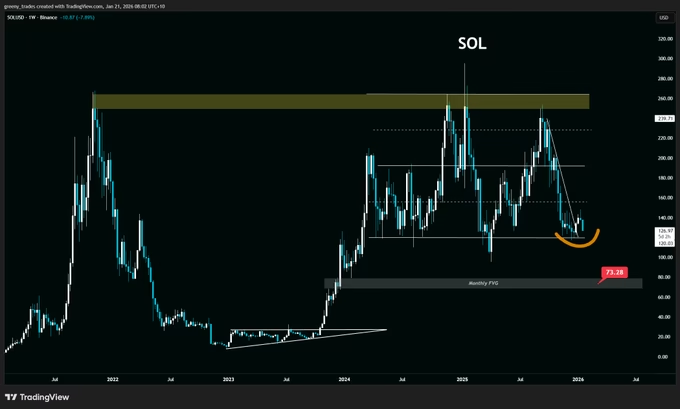
Analysts warn that conditions could worsen if SOL breaks below the critical $120 support level. A sustained move lower could open the door to a decline toward $70, a scenario that would dramatically increase unrealized losses across corporate treasuries.
The caution is already visible in fund flows. Solana-linked exchange-traded products recently recorded their first net outflows in four weeks, suggesting weakening institutional confidence in the near term.
Despite the drawdown, companies operating Solana Digital Asset Treasuries have not rushed to liquidate their holdings. Forward Industries, in particular, continues to express confidence in Solana’s long-term roadmap.
The company has pointed to Solana’s upcoming upgrades across consensus, execution, and infrastructure, describing 2026 as a potential breakout year for the network.
Executives have framed Solana’s ambition as becoming a “decentralized Nasdaq” capable of supporting high-throughput financial applications at global scale.
Network data offers some support for that optimism. According to Token Terminal, Solana’s staking ratio has climbed to an all-time high of 70%, with roughly $60 billion worth of SOL currently staked. High staking participation strengthens network security and reduces liquid supply, factors that could stabilize prices over time.
For now, Solana Digital Asset Treasuries remain caught between long-term conviction and short-term market reality. The strategy has not collapsed, but it is clearly under strain as volatility exposes the risks of aggressive balance-sheet exposure to a single digital asset.
Whether these firms resume accumulation or retreat entirely may depend on SOL’s price action in the coming weeks. A rebound could restore confidence and reopen the buying spigot. A deeper slide, however, may force a broader rethink of how public companies engage with crypto-native treasury strategies.
As markets watch closely, Solana Digital Asset Treasuries are fast becoming one of the most closely scrutinized experiments in corporate crypto finance.



Copyright © 2025 - The Bit Gazette.

