- Trending
- Comments
- Latest

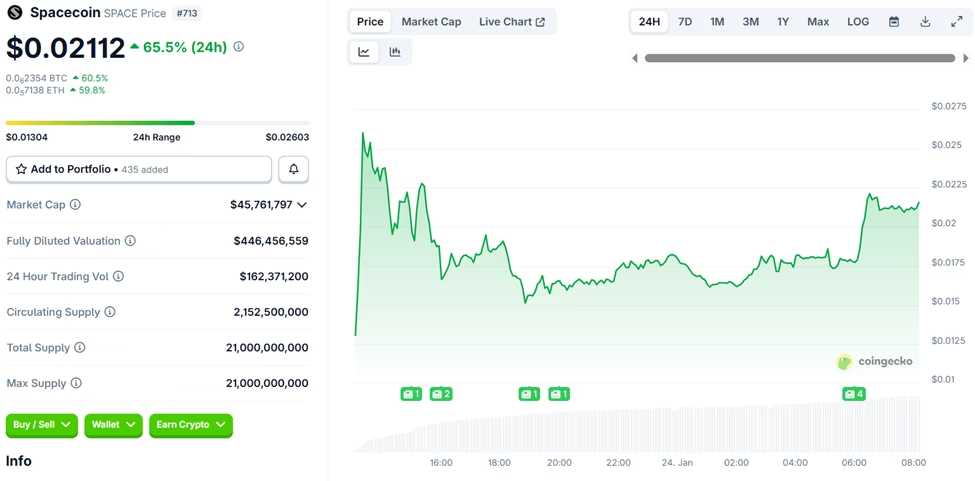
Spacecoin’s SPACE token surged 65% to an intraday high of $0.026 in its first 24 hours of trading following simultaneous listings on Binance, Kraken, OKX, and five other major exchanges.
The rally accompanied the launch of the project’s Season 1 airdrop distribution, which rewards early network participants across four blockchains including Ethereum and Binance Smart Chain.
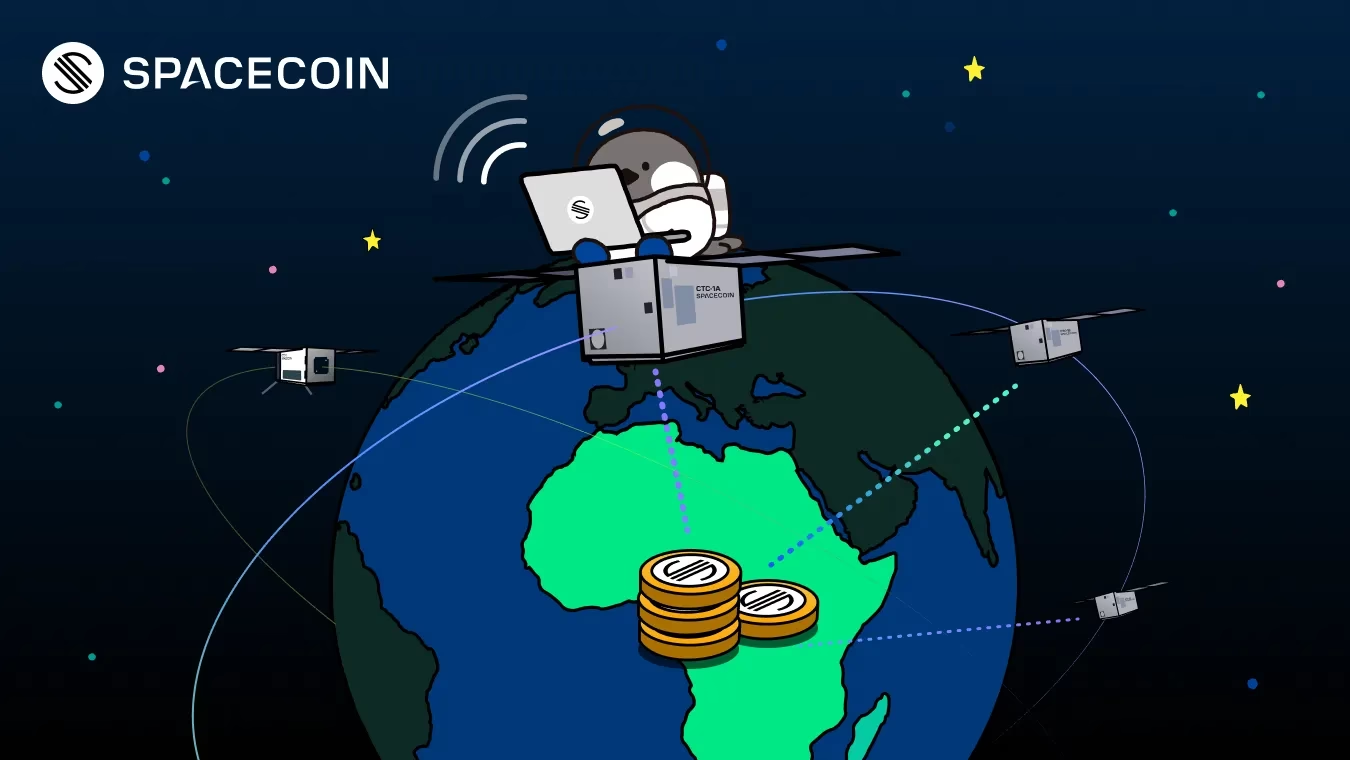
The launch of SPACE represents what the team calls the economic core of Spacecoin’s decentralized satellite internet model. By introducing a tradable token tied to participation in the network, the project aims to allow users—known internally as “Cadets”—to engage directly in a growing space-based connectivity ecosystem.
SPACE is now live across multiple blockchains, including Creditcoin, Ethereum, Binance Smart Chain, and Base. This cross-chain approach was designed to reduce barriers to entry and support global participation from day one, a strategy that amplified attention around the Spacecoin airdrop.
“The token launch is a foundational milestone for the network,” a Spacecoin representative said in a statement. “It enables community ownership and aligns incentives across infrastructure, users, and developers.”
Liquidity arrived quickly. On launch day, SPACE debuted across a wide slate of centralized exchanges, including Binance (Alpha and Futures), Kraken (Spot), OKX (Spot and Perpetuals), KuCoin, MEXC, Bitget, Coinone, Blockchain.com, and Bybit. Both spot and derivatives listings went live almost simultaneously, accelerating price discovery and trading volumes.
Decentralized trading options were also available from the outset, with SPACE listed on PancakeSwap for swaps and liquidity provision. The combination of CEX and DEX access played a central role in magnifying the Spacecoin airdrop effect, giving both retail and professional traders multiple avenues to gain exposure.
Market analysts note that such broad listings are uncommon for early-stage projects and often contribute to short-term rallies driven by accessibility rather than long-term fundamentals.
Further momentum came from Aster DEX, which launched a limited-time promotional campaign tied to SPACE trading. The initiative includes reward pools totaling $150,000 in ASTER tokens alongside 15.75 million SPACE tokens, incentivizing participation across both centralized and decentralized venues.
The dual-track strategy reflects Spacecoin’s broader ambition to remove geographic and financial constraints from internet access. It also underscores how the Spacecoin airdrop has been positioned not just as a giveaway, but as part of a coordinated liquidity and engagement push.
“This kind of hybrid launch structure is becoming more common,” said a DeFi analyst at a digital asset research firm. “It spreads activity across ecosystems and reduces reliance on a single venue.”
At the center of the launch is the Season 1 Spacecoin airdrop, which rewards early users who interacted with the ecosystem prior to the token generation event. Eligible participants can now claim their allocations through an official portal by connecting wallets used during the campaign.
To streamline the process, Spacecoin is distributing small amounts of Creditcoin to eligible wallets to cover gas fees, reducing friction for claimants. However, the Spacecoin airdrop comes with firm eligibility rules and anti-abuse safeguards.
Participants were required to hold specific assets such as CTC, WCTC, or designated NFTs, and to complete verified social and event-based activities. Wallets flagged for suspicious behavior were excluded, a measure aimed at ensuring rewards went to genuine contributors rather than automated farming operations.
Token distribution has also been structured to limit immediate sell pressure. Only 25% of Season 1 rewards unlock at launch, with the remainder vesting monthly over a three-month period. Season 2 allocations will follow a similar phased approach, though details will be revealed later.
Beyond trading and distributions, Spacecoin has rolled out additional features to support longer-term engagement. A limited-time staking program offers a 10% annual percentage rate for SPACE holders on the Creditcoin network, while cross-chain transfers are enabled via Wormhole.
These elements position SPACE as more than a short-term speculative asset, giving holders incentives to remain involved beyond the Spacecoin airdrop window.
“Utility launches alongside liquidity are critical,” said a portfolio manager focused on early-stage crypto projects. “It’s one of the few ways to test whether interest extends beyond launch day.”
Despite the strong debut, questions remain about durability. History shows that many tokens rally sharply after an airdrop only to retrace as early recipients take profits. Industry data suggests a significant portion of airdropped tokens struggle to maintain value beyond the first few months.
While Spacecoin’s vesting schedules and eligibility filters may help soften immediate selling pressure, staggered unlocks could still weigh on price over time. High launch-day volumes, meanwhile, often reflect speculative positioning rather than sustained demand.
Even so, the project’s fundamentals—multi-chain deployment, broad exchange support, and a clear infrastructure narrative—set it apart from many short-lived launches.
For now, the Spacecoin airdrop has succeeded in one crucial respect: it has captured the market’s attention. Whether SPACE can convert that early excitement into lasting value will depend on execution in the months ahead, long after the initial airdrop hype fades.



Copyright © 2025 - The Bit Gazette.