

- Trending
- Comments
- Latest

Major crypto exchanges now hold over 9 billion XRP—nearly 10% of circulating supply, as the token has plunged 24% from its early January peak of $2.40 to $1.83.
The surge in exchange-held XRP, particularly on Binance and South Korea’s Upbit, has intensified fears that large holders are positioning for further downside as geopolitical tensions push investors away from risk assets.
According to on-chain data provider CryptoQuant, the latest XRP reserve surge became visible in early January, when balances on Binance and South Korea’s Upbit began climbing steadily. Since then, XRP inflows to exchanges have remained persistent.
CryptoQuant data shows Binance now holds roughly 2.72 billion XRP, while Upbit’s reserves have climbed to nearly 6.3 billion XRP. Combined, exchange balances account for close to 10% of XRP’s circulating supply—an unusually high concentration that has historically coincided with elevated volatility.
“The sustained inflow of XRP to exchanges suggests that holders are preparing for liquidity events,” said Ki Young Ju, CEO of CryptoQuant, in commentary shared with market participants. “When we see an XRP reserve surge alongside falling prices, it often reflects rising sell-side pressure.”
One of the most striking trends linked to the XRP reserve surge is the growing influence of Korean investors. Analysts note a clear inverse relationship between XRP’s price and the rising balances on Upbit.
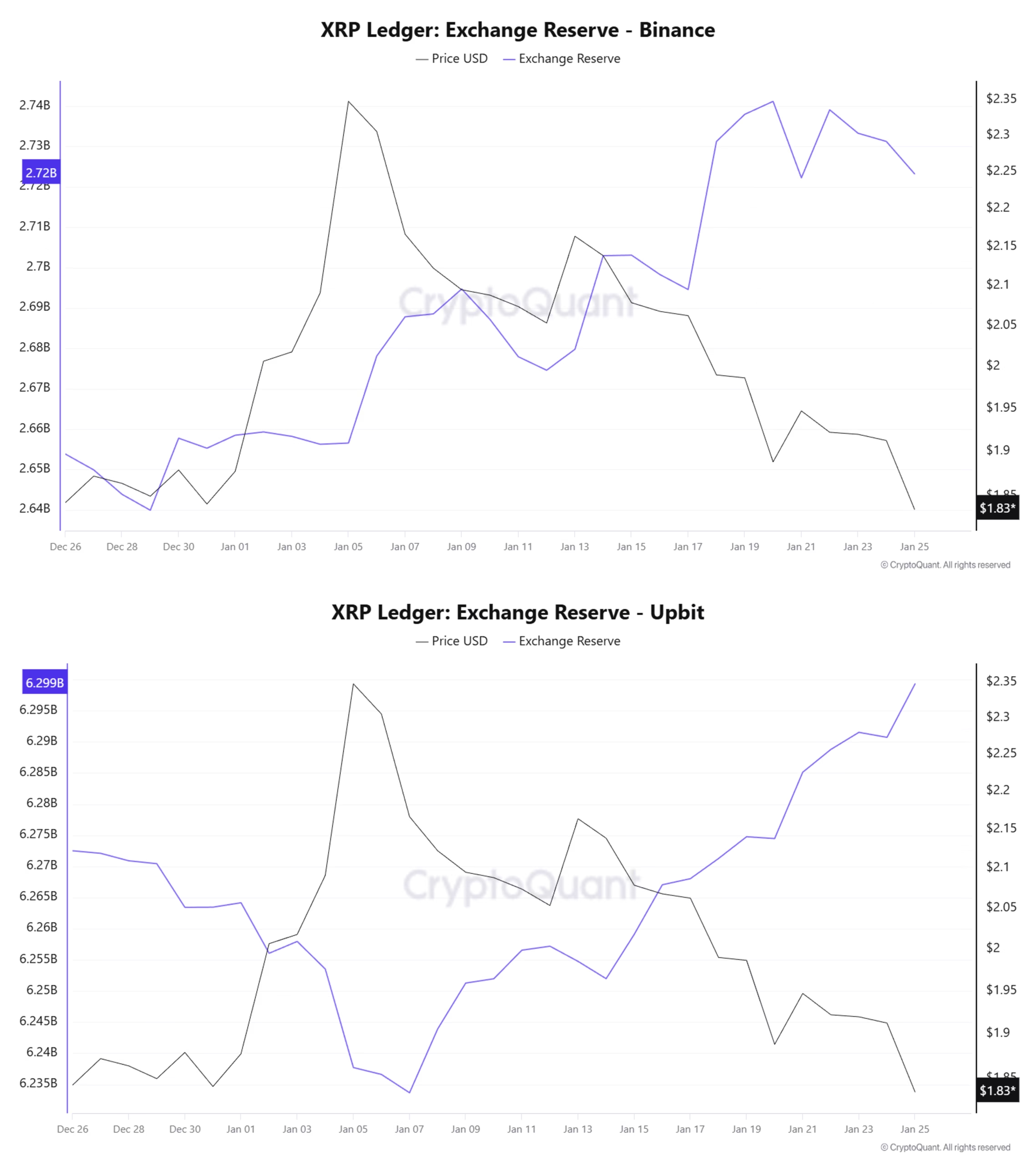
Since Upbit reserves started increasing in the first week of January, XRP’s price has dropped by more than 20%. This pattern underscores how flows from Korean exchanges can disproportionately affect XRP, which has long enjoyed strong retail support in the region.
Market strategists say the dynamic reinforces the importance of monitoring regional exchange data, especially during periods of heightened uncertainty.
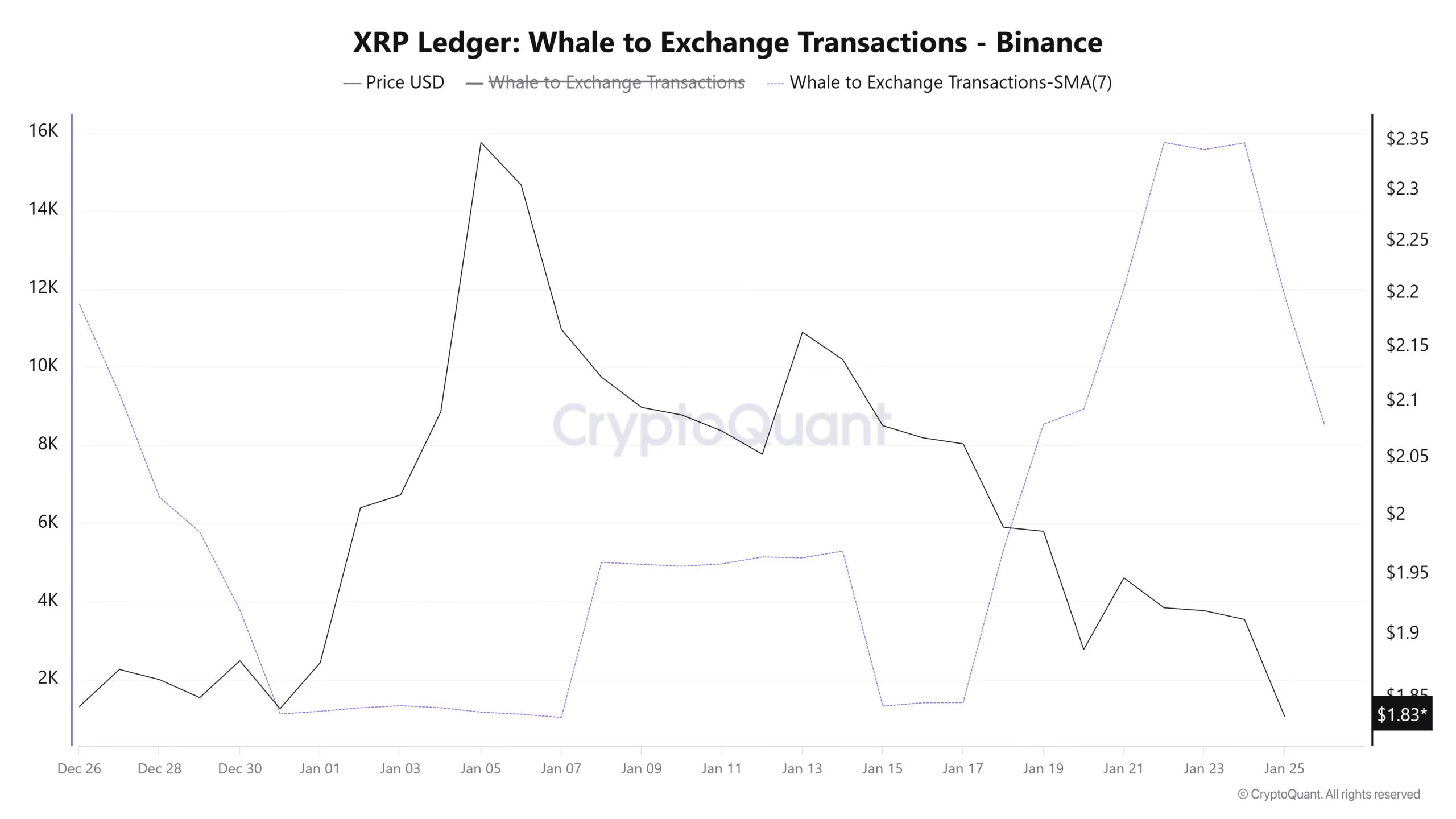
Beyond exchange balances, another metric flashing warning signs is Whale Exchange Transactions on Binance. This indicator tracks large transfers between whale wallets and trading platforms, offering clues about the intentions of major holders.
In January, whale-to-exchange activity accelerated alongside the XRP reserve surge, suggesting that more large investors are moving tokens onto exchanges. Historically, such behavior increases the likelihood of distribution rather than accumulation.
“Rising whale deposits don’t guarantee immediate selling,” noted an analyst at a Singapore-based digital asset desk. “But when combined with an XRP reserve surge, it raises the probability of near-term downside.”
Adding to market jitters, XRP exchange-traded funds recorded their largest-ever single-day outflow on January 20. Data shows $53.32 million exited XRP ETFs, primarily from Grayscale’s GXRP product. This followed an earlier $40.80 million outflow on January 7.
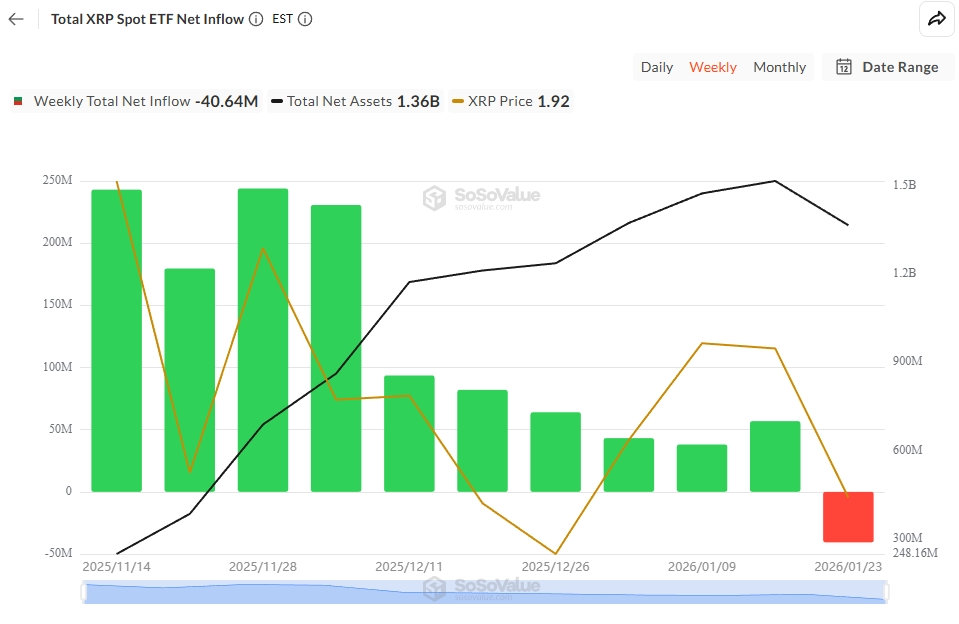
The timing is critical. The January 20 drawdown coincided with renewed tariff threats from U.S. President Donald Trump targeting European NATO members, which sparked a broad selloff across U.S. equity and crypto markets.
Despite the headline risk, analysts argue the ETF activity does not undermine the longer-term case for XRP. Even after the XRP reserve surge and January redemptions, cumulative net inflows stand at $1.23 billion as of January 23, with total net assets of $1.36 billion.
Industry researchers at Token Relations say ETF flows point to structural demand rather than speculative churn.
“December 2025 delivered $483 million in XRP ETF inflows, while Bitcoin ETFs saw $1.09 billion in outflows during tax-loss harvesting,” Token Relations reported. “This suggests institutional rotation from Bitcoin to XRP ahead of 2026.”
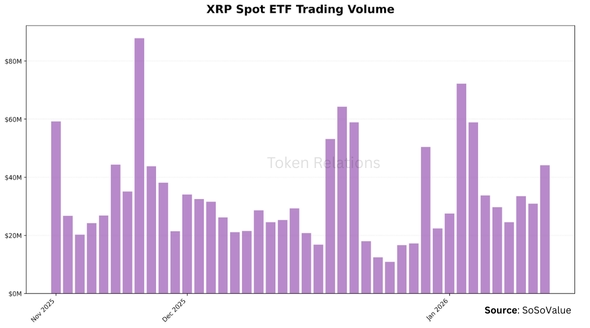
The firm added that liquidity remained strong, with daily trading volumes consistently ranging between $20 million and $80 million. According to Token Relations, adoption of XRP ETFs has exceeded expectations for altcoin-based products, reinforcing confidence even amid the current XRP reserve surge.
While short-term indicators skew cautious, Ripple’s ongoing ecosystem expansion could help stabilize sentiment. The company continues to broaden the use of RLUSD, a stablecoin built on the XRP Ledger, through partnerships with governments and financial institutions.
Analysts say these initiatives could provide fundamental support if macro conditions improve. “The market is clearly nervous right now,” said one U.S.-based digital asset strategist. “But if XRP holds above key support and the XRP reserve surge begins to plateau, we could see buyers step back in.”
From a technical perspective, traders are closely monitoring the $1.88 support zone. Holding this level could open the door to a rebound toward $2.40, particularly if ETF inflows resume. Conversely, a decisive break lower would shift attention to the $1.25 area.
For now, the XRP reserve surge remains the dominant narrative shaping short-term price action. Whether it evolves into a full-blown selloff or fades as macro fears ease may determine how XRP enters 2026.
As history shows, periods marked by an XRP reserve surge often test investor resolve—but they can also set the stage for the next major move.



Copyright © 2025 - The Bit Gazette.