

- Trending
- Comments
- Latest

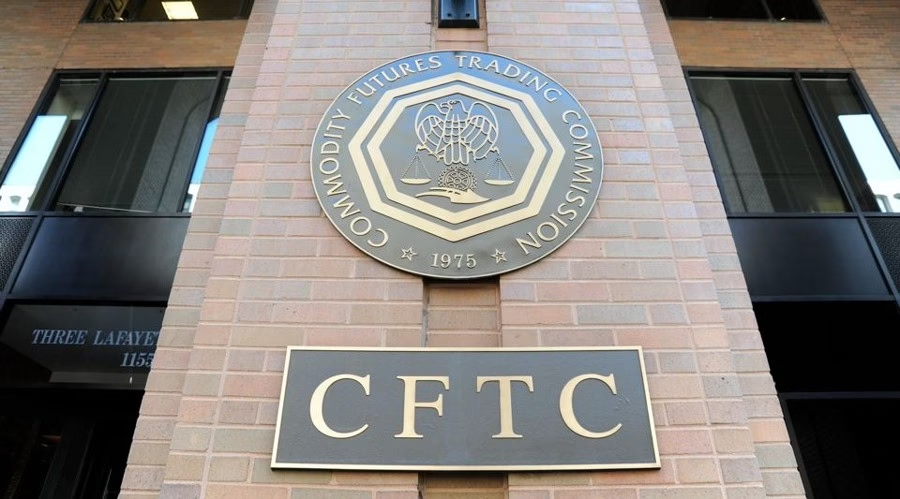
The U.S. Commodity Futures Trading Commission has withdrawn a proposed ban on prediction markets covering elections and sports outcomes, removing a major regulatory threat to crypto platforms like Polymarket and Kalshi.
The reversal, announced Feb. 4 by newly confirmed CFTC Chairman Michael S. Selig, scraps a 2024 proposal that would have prohibited so-called event contracts—a move Selig described as the “prior administration’s frolic into merit regulation” that exceeded the agency’s authority.
The move was announced Feb. 4, 2026, under newly confirmed CFTC Chairman Michael S. Selig and ends months of uncertainty that had clouded the future of blockchain-based prediction platforms.
The now-abandoned rule had been drafted under the previous administration and would have categorized event contracts, including wagers on election results, sporting events, and other real-world outcomes.
CFTC proposal had drawn objections from industry participants who argued it exceeded the CFTC’s statutory authority and risked stifling innovation in emerging markets.
“This proposal reflected the prior administration’s frolic into merit regulation with an outright prohibition on political contracts.” Chairman Selig said in a press release.
The withdrawal of the proposed ban is likely to be welcomed by stakeholders in the prediction market and broader crypto ecosystem.
Platforms such as Kalshi and Polymarket, which allow users to take positions on future events and have gained traction among both retail and institutional participants, stood to be most directly affected.
According to one industry analyst, this decision removes a significant source of uncertainty, noting that trading volumes in event markets surged in 2025 as political and economic forecasts increasingly attracted speculative capital.
Polymarket, in particular, has seen a complex regulatory journey. After settling with the CFTC in 2022 over operating event-based binary options without appropriate registration.
The platform pursued compliance through the acquisition of a licensed derivatives exchange and has been working to re-establish legal operations in the United States.
Rather than pursuing prohibition, Chairman Selig and CFTC leadership have signalled a preference for crafting detailed, market-specific regulations that provide clearer guidance to both legacy and crypto innovators.
In his announcement, Selig said the agency plans to begin drafting rules under the Commodity Exchange Act that balance oversight with legal certainty for event contracts and other derivatives tied to digital assets.
The CFTC’s pivot also comes amid coordinated efforts with the Securities and Exchange Commission (SEC) under initiatives aimed at harmonizing digital asset regulation and bringing trading activity onshore.
Critics of event markets, including some state gaming regulators and public policy advocates, maintain that such contracts can resemble unregulated gambling and carry risks that merit caution or prohibition.
In a formal letter to the CFTC, Coinbase’s legal team previously contended that the broad definition embedded in the proposal could inadvertently sweep in non-political markets.
The CFTC’s decision underscores a broader regulatory realignment in the United States that favors structured oversight over sweeping bans.
The reversal sends a signal that U.S. authorities may be increasingly open to integrating novel, blockchain-enabled financial products into regulated markets.
Sector participants expect that clarity on event contracts could spur additional participation and investment in derivatives products tied to real-world outcomes.
Observers also note that while the ban’s removal is a boon for innovation, the next challenge for platforms will be ensuring they comply with whatever regulatory framework emerges from the CFTC’s forthcoming rulemaking.



Copyright © 2025 - The Bit Gazette.