

- Trending
- Comments
- Latest

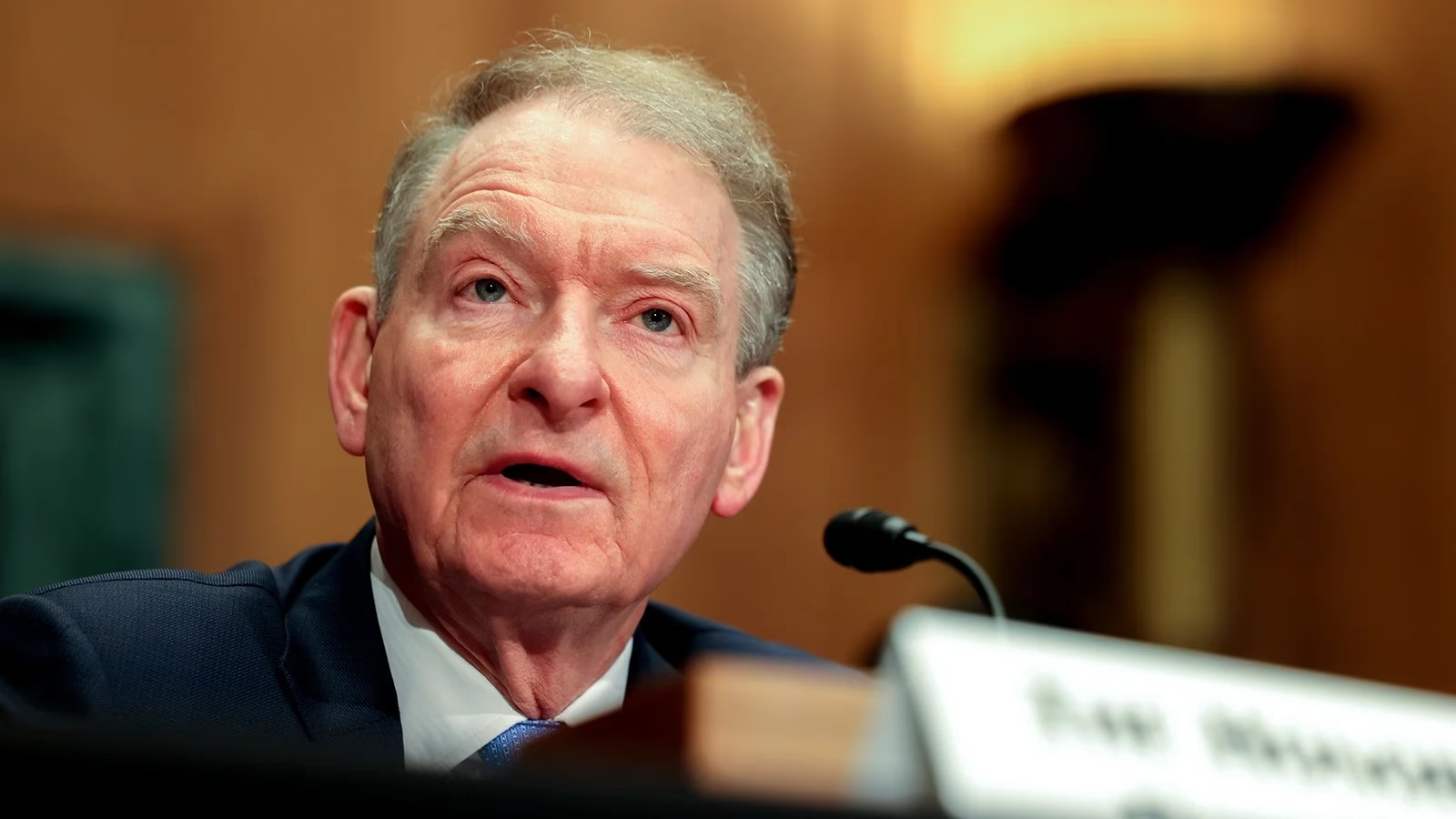
SEC Chair Paul Atkins faced pointed questions from Democratic lawmakers on Wednesday over whether Justin Sun’s reported ties to Donald Trump’s political network influenced the agency’s decision to freeze a nearly two-year-old enforcement case, with Atkins repeatedly citing legal restrictions to avoid answering directly.
Speaking at a congressional briefing in the United States, Atkins said legal constraints prevent public discussion of active litigation, even as lawmakers pressed him on why the Justin Sun case has remained stalled for nearly 11 months.
The enforcement action, originally filed in 2023, accused Sun of conducting unregistered securities offerings and engaging in manipulative trading practices tied to the TRX token.
In February 2025, the SEC and Sun’s legal team jointly requested a stay in the proceedings, effectively placing the Justin Sun case on hold. The pause has since become a focal point in broader debates over crypto oversight, regulatory consistency, and political influence.
During the hearing, Democratic lawmakers intensified scrutiny of the Justin Sun case, questioning whether external factors may have influenced the SEC’s decision to halt enforcement activity. Representative Maxine Waters, ranking Democrat on the House Financial Services Committee, challenged Atkins directly over the agency’s handling of the matter.
Waters pointed to reports that Sun had developed connections within President Donald Trump’s political orbit through World Liberty Financial Inc. She asked whether those relationships played any role in the SEC’s enforcement posture.
The 2023 complaint against Sun alleged more than 600,000 wash trades designed to artificially inflate TRX token volumes, along with unregistered securities offerings. Waters also referenced allegations from Sun’s former girlfriend that purportedly pointed to evidence of TRX manipulation.
Atkins declined to discuss specifics, citing long-standing restrictions governing public commentary on active cases. “I would provide them a confidential briefing,” he told lawmakers, adding that he would engage further “to the extent the rules allow.” — Paul Atkins, Chair, U.S. Securities and Exchange Commission.
His remarks underscored the legal boundaries shaping the SEC’s silence on the Justin Sun case, even as political pressure mounts.
When asked whether the agency would continue prioritizing fraud enforcement in digital asset markets, Atkins responded that the SEC acts “where securities laws apply.” — Paul Atkins, Chair, U.S. Securities and Exchange Commission.
The exchange reflects growing tension over how the regulator balances enforcement discretion with public accountability in high-profile crypto disputes such as the Justin Sun case.
The SEC’s original lawsuit alleged that Sun orchestrated manipulative trading practices to inflate TRX token volumes and conducted unregistered securities offerings. The agency described a pattern of wash trading involving hundreds of thousands of transactions.
In February 2025, both parties jointly moved to pause the litigation, signaling possible discussions or strategic recalibration. Since then, the Justin Sun case has remained inactive in court, fueling speculation among lawmakers and market participants.
The controversy surrounding the Justin Sun case extends beyond the individual allegations. It intersects with broader concerns about regulatory consistency at a time when digital asset oversight remains in flux.
Democratic lawmakers, including Representatives Maxine Waters, Ritchie Torres, and Stephen Lynch, sent a January 2026 letter requesting explanations for the withdrawal or suspension of more than a dozen crypto-related cases. The Justin Sun case was cited as part of that broader pattern.
The pause in the Justin Sun case comes amid a wider recalibration of the SEC’s crypto strategy. Over the past year, the agency has dropped or wound down cases involving Coinbase, Binance, Ripple, Kraken, and Robinhood.
SEC leadership has characterized the previous approach as “regulation by enforcement,” signaling a shift toward structured rulemaking and clearer statutory guidance. Atkins said the agency is working closely with the Commodity Futures Trading Commission (CFTC) in anticipation of legislative developments tied to the proposed CLARITY Act.
The coordination reflects a broader attempt to define jurisdictional boundaries between the SEC and CFTC as Congress debates the future of crypto oversight. The outcome of that legislative process could shape the trajectory of cases like the Justin Sun case, particularly where securities classification is contested.
Critics, however, warn that scaling back enforcement risks weakening investor protections. The broader political context has further amplified scrutiny.
Bloomberg has estimated that President Trump generated $1.4 billion from crypto ventures, while the Trump family reportedly holds a 20% stake in mining firm American Bitcoin. Trump has also nominated Kevin Warsh to succeed Federal Reserve Chair Jerome Powell when Powell’s term ends in May.
While Atkins did not address those political dynamics directly, the unresolved Justin Sun case continues to symbolize the shifting ground beneath U.S. crypto regulation. As Congress debates statutory reforms and agencies recalibrate enforcement strategies, the case remains a litmus test for transparency, independence, and the future direction of digital asset oversight.
For now, the Justin Sun case remains paused, with the SEC signaling that any further discussion will occur within the confines of legal procedure rather than public debate.



Copyright © 2025 - The Bit Gazette.