
- Trending
- Comments
- Latest

Binance has disappeared from the Philippine version of the Google Play Store, with local users reporting that searches no longer return the app, as regulatory pressure from the Philippine Securities and Exchange Commission continues to escalate against the world’s largest crypto exchange.
Multiple Filipino users reported that searches for “Binance” on the Play Store no longer return the main Binance application. Instead, users are redirected to local platforms such as Coins.ph or to region-specific Binance apps like Binance TH and Binance TR, which are designed for Thailand and Turkey, respectively.
The development has reignited debate around the scope and enforcement of the Binance Philippines ban, which regulators began signaling more forcefully late last year.
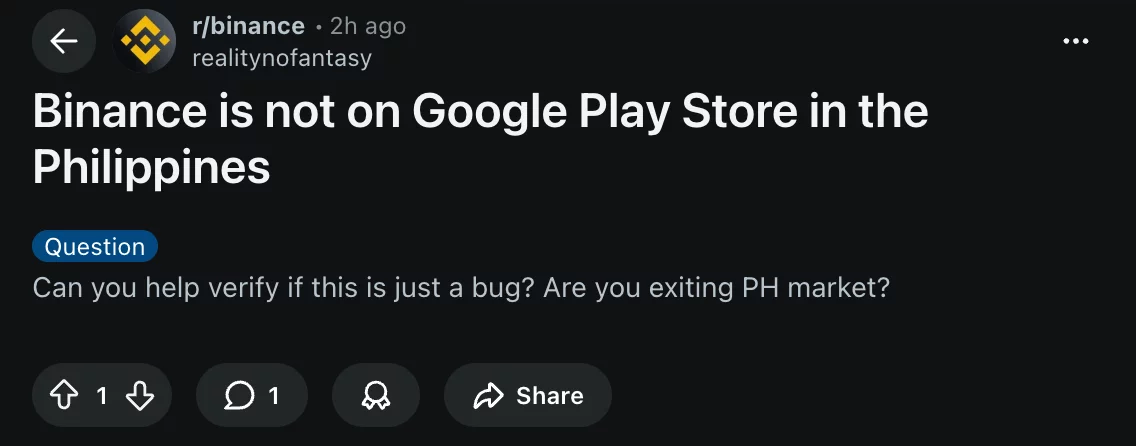
On Reddit, a user posting under the handle “realitynofantasy” questioned whether the disappearance was the result of a technical glitch or a deliberate move tied to the Binance Philippines ban. Similar concerns quickly spread across local crypto communities, with users sharing screenshots and error messages.
Beyond the app store issue, access problems extend to the exchange’s main website. Several Filipino users reported being unable to load Binance’s primary domain, encountering browser warnings such as “Privacy Error” and “Site can’t be reached.” These access issues have further fueled speculation that the Binance Philippines ban is now being actively enforced at both the app and web levels.
As of press time, Binance has not released an official statement directly addressing the app’s removal in the Philippines. However, the timing aligns closely with regulatory actions taken by Philippine authorities, suggesting the situation is unlikely to be accidental.
The Binance Philippines ban** has its roots in actions taken by the Securities and Exchange Commission, which has repeatedly warned foreign crypto platforms against operating without proper authorization. In late 2024, the regulator sent formal requests to both Google and Apple, urging them to remove the Binance app from their respective Philippine app stores.
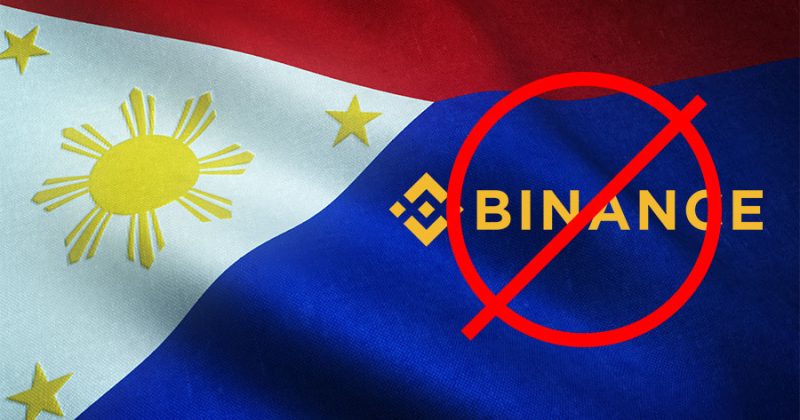
At the time, the SEC alleged that Binance was offering unregistered securities to Philippine residents and acting as an unlicensed broker, in violation of the country’s Securities Regulation Code. These claims formed the legal backbone of the Binance Philippines ban, which authorities framed as a consumer protection measure rather than an outright rejection of crypto activity.
The SEC’s actions were reinforced by the National Telecommunications Commission, which previously ordered internet service providers to block access to Binance’s website nationwide. That move marked a significant escalation and signaled that regulators were willing to use infrastructure-level controls to enforce the Binance Philippines ban.
The disappearance of the Binance app from the Play Store suggests regulators may now be closing remaining access points. App store removals are particularly impactful, as mobile trading accounts for a significant share of retail crypto activity in the Philippines.
By limiting discoverability and downloads, the Binance Philippines ban could gradually push users toward licensed local exchanges. Coins.ph, which is registered and regulated in the country, has frequently been cited by officials as an example of a compliant alternative.
While existing users who already have the Binance app installed may still retain limited access, updates and security patches could become unavailable if the Binance Philippines ban remains in force. Over time, that could create additional risks for users who continue relying on unsupported software.
Despite the tightening restrictions, Binance has not confirmed an official exit from the Philippine market. The absence of a statement leaves room for multiple scenarios, including ongoing negotiations with regulators or a potential path to compliance.
This uncertainty is a defining feature of the Binance Philippines ban. Regulators have emphasized that their goal is not to suppress innovation, but to ensure exchanges meet licensing, disclosure, and investor protection standards.
A Binance spokesperson previously said in similar situations that the company is “committed to working with regulators globally.” Whether that commitment translates into a compliance strategy for the Philippines remains unclear.
The Binance Philippines ban echoes challenges the exchange has faced elsewhere. In India, for example, Binance was fined by regulators over compliance failures related to anti-money laundering rules. After paying the penalty and meeting regulatory conditions, the platform was able to continue operating as a registered entity.
That precedent suggests the Philippine situation is not necessarily irreversible. However, it also underscores that regulators are increasingly willing to impose tangible consequences, including app removals and website blocks, to enforce local laws.
For Filipino crypto users, the Binance Philippines ban represents a turning point. It highlights the risks of relying on offshore platforms that lack local authorization, even if they are globally dominant.
At the same time, the move could strengthen domestic exchanges and accelerate the maturation of the local crypto ecosystem. Regulators have repeatedly stated that innovation is welcome, provided it operates within a clear legal framework.
As enforcement tightens, the Binance Philippines ban may become a case study for how emerging markets balance access to global crypto liquidity with the need for regulatory oversight. Until Binance or regulators issue further clarification, users remain in limbo—caught between a disappearing app, blocked websites, and unanswered questions about what comes next.
One thing, however, is increasingly clear: the Binance Philippines ban is no longer theoretical. With app store removals and access restrictions now visible to everyday users, the regulatory message has moved from warnings to action.



Copyright © 2025 - The Bit Gazette.