







- Trending
- Comments
- Latest

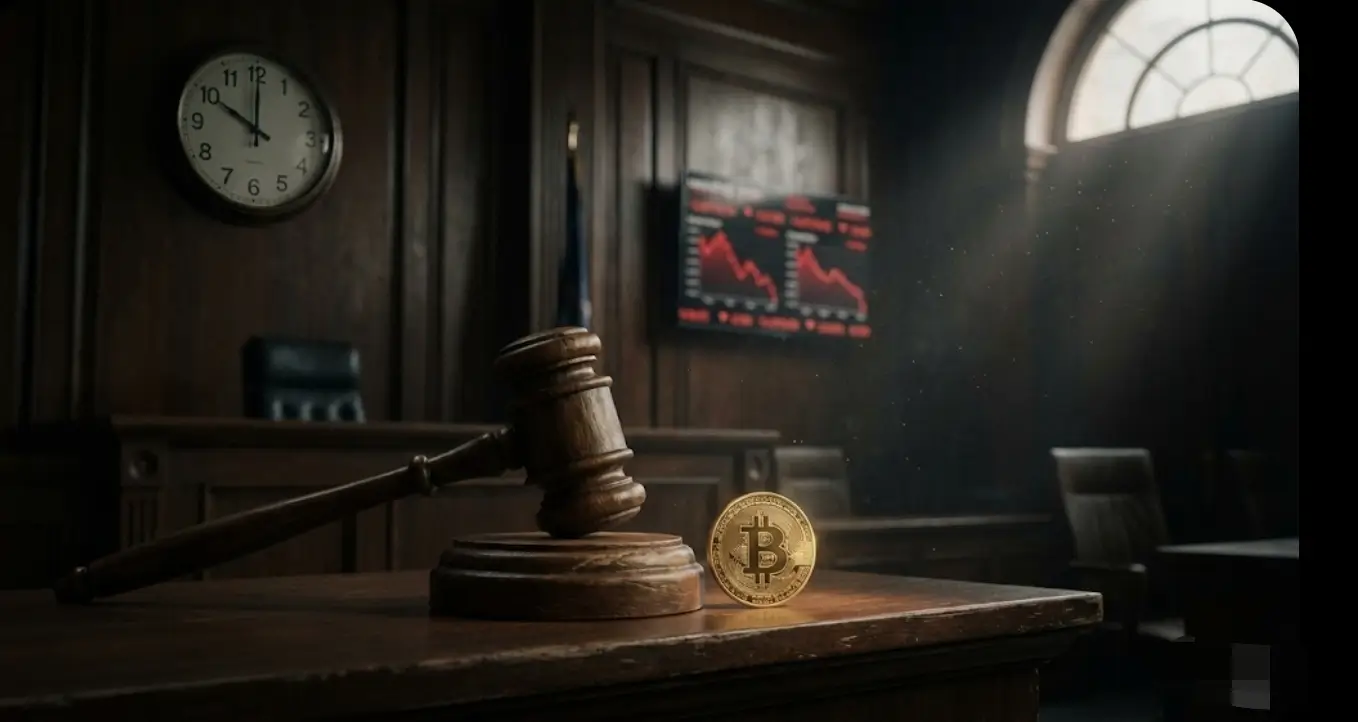
The ghost that haunted bitcoin every morning may have finally met its match in a Manhattan courtroom
For months, cryptocurrency traders have been plagued by a ghost in the machine. Every morning, almost like clockwork, Bitcoin would suffer a sudden, brutal sell-off right around 10:00 a.m. Eastern Time.
Retail investors called it the “10 a.m. Dump”—an infuriating daily ritual where early morning gains were violently erased by invisible, heavy-handed institutional selling. Theories ran wild, but proof was scarce.
Then, on Monday, the music suddenly stopped.
The daily dump vanished. The crypto market immediately erupted, adding more than $170 billion to its total market capitalization in a matter of hours. Bitcoin surged back toward the $70,000 battleground, while Ethereum skyrocketed over 13% and Solana jumped 15%.
What caused the sudden relief? Crypto social media is pointing to a massive, multi-billion-dollar lawsuit filed against one of Wall Street’s most secretive and powerful market makers: Jane Street.
The catalyst for this week’s market explosion didn’t come from a Federal Reserve meeting or a new ETF approval. It came from a Manhattan federal court.
On Monday, Todd Snyder—the court-appointed bankruptcy administrator for Terraform Labs—filed a devastating lawsuit against Jane Street, accusing the quantitative trading giant of insider trading that worsened the catastrophic $40 billion collapse of the Terra (LUNA) ecosystem in May 2022.
The complaint outlines a chillingly precise timeline. According to the filing, after Terraform Labs quietly withdrew $150 million in liquidity from a Curve Finance pool, Jane Street executed a massive $85 million TerraUSD (UST) sell-off just minutes later.
The administrator alleges that Jane Street used non-public, insider channels to front-run the market, sparking the panic that ultimately spiraled into one of the darkest chapters in crypto history.
Jane Street has fiercely denied the allegations. In a public statement, the firm called the lawsuit a “desperate” and “transparent attempt to extract money,” blaming the collapse entirely on the fraud perpetrated by Terraform Labs’ imprisoned founder, Do Kwon.
While the lawsuit explicitly targets events from 2022, the crypto market’s reaction in 2026 has been immediate and explosive.
The narrative catching fire across X (formerly Twitter) and trading desks is simple, albeit unproven: did the legal scrutiny force a major market maker to turn off its algorithmic selling?
There is currently no direct legal evidence proving Jane Street was responsible for the daily 10 a.m. sell-offs. For years, analysts have pointed out that the 9:30 a.m. to 10:30 a.m. window is inherently volatile due to the U.S. stock market open, ETF flow calculations, and macroeconomic data releases.
But in crypto, perception often becomes reality. The sheer coincidence of the lawsuit dropping on Monday, followed immediately by the sudden disappearance of the morning dumps and a $170 billion market rally, is too loud for traders to ignore.
Whether the “10 a.m. Dump” was a coordinated suppression algorithm or just standard institutional hedging, its sudden absence has unchained the market.
This story is resonating because it validates the ultimate crypto narrative: retail vs. Wall Street. For months, retail traders felt like they were fighting a rigged game. Now, rightly or wrongly, they feel like they have caught the man behind the curtain.
As Bitcoin tests the $70,000 threshold once again, all eyes are on the clock. Tomorrow at 10:00 a.m., the market won’t just be watching the charts—they will be watching to see if the ghost in the machine dares to return.



Copyright © 2025 - The Bit Gazette.

