


- Trending
- Comments
- Latest

BlackRock, which oversees $13 trillion in assets, signaled it has no immediate plans to launch cryptocurrency ETFs beyond Bitcoin and Ethereum, with Head of Digital Assets Robert Mitchnick telling investors that institutional demand for altcoins like Solana and XRP remains “very limited.”
The statement comes as crypto industry executives push for regulatory approval of altcoin ETFs, with some forecasting $3–8 billion in potential inflows, but suggests the world’s largest asset manager sees minimal institutional appetite for digital assets beyond the two most established cryptocurrencies.
BlackRock’s own funds, including the iShares Bitcoin Trust and the iShares Ethereum Trust ETF, have drawn billions in investor capital and helped accelerate mainstream adoption of crypto exposure through traditional markets.
According to BlackRock’s digital asset leadership, most institutional clients remain focused on gaining exposure to Bitcoin first, followed by Ethereum.
Interest in other cryptocurrencies, the firm says, is still limited among its core investor base.
“I would say that our client base today, their interest overwhelmingly is in Bitcoin first, and then somewhat in ETH… and there’s very little interest today beyond those two.”Robert Mitchnick, Head of Digital Assets, BlackRock.
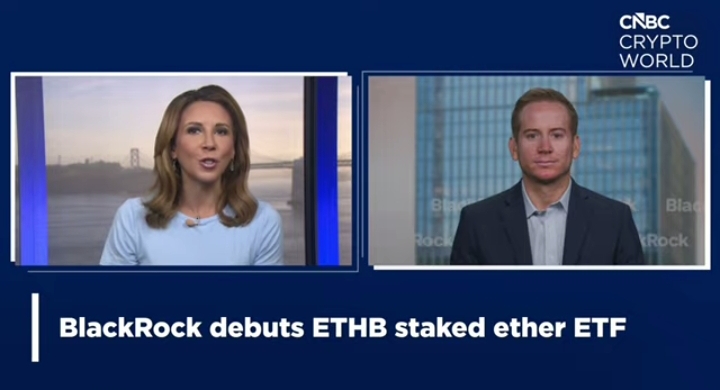
The comments reflect a key reality: while hundreds of digital assets exist, institutional adoption remains concentrated around the most established cryptocurrencies.
Bitcoin continues to dominate the narrative as a digital store of value, while Ethereum has gained traction due to its smart-contract ecosystem and decentralized finance applications.
That focus has shaped ETF demand since regulators approved spot Bitcoin ETFs in the United States, triggering significant capital inflows from traditional investors.
BlackRock’s stance carries significant weight because of its influence in global asset management.
The firm oversees more than $13 trillion in assets and operates the widely used iShares ETF platform.
When its Bitcoin ETF launched, the product quickly became one of the largest drivers of institutional capital entering crypto markets.
Analysts say BlackRock’s participation has been critical to the success of crypto ETFs overall.
According to research cited by Cointelegraph, the company’s Bitcoin ETF attracted more than $28 billion in inflows during 2025 alone, accounting for the majority of net inflows across the entire spot Bitcoin ETF market.
Because of this dominance, analysts say BlackRock’s absence from altcoin ETF launches could limit how much institutional capital flows into those markets.
In other words, even if regulators approve ETFs tied to smaller cryptocurrencies, their success may depend heavily on whether the world’s largest asset manager participates.
Despite BlackRock’s caution, parts of the crypto industry are pushing for more specialized ETF products.
Asset managers and exchanges have proposed funds tied to various cryptocurrencies and strategies, including staking-based funds and ETFs tracking individual altcoins.
Some analysts believe these products could attract billions in inflows if approved by regulators.
The forecasts from financial institutions suggest that ETFs tracking cryptocurrencies like Solana or XRP could potentially draw between $3 billion and $8 billion in capital within their first year, depending on market adoption.
Still, regulatory uncertainty remains a major factor. In the United States, ETF approvals must pass scrutiny from the U.S. Securities and Exchange Commission.
The agency’s earlier hesitation over spot Bitcoin ETFs before eventually approving them, demonstrated how complex the regulatory process can be.
BlackRock’s strategy suggests that institutional crypto adoption may evolve more slowly than some investors expect.
Instead of launching a wide range of crypto ETFs, the firm appears focused on deepening liquidity and investor confidence in the largest digital assets first.
Institutional investors often prioritize assets with the longest track records, deepest liquidity, and clearer regulatory frameworks.
The takeaway is clear: while the ETF boom has opened new doors for institutional capital.
As the ETF ecosystem evolves, the decisions made by firms like BlackRock, and regulators overseeing the industry will likely determine how quickly crypto investment products expand beyond the current market leaders.



Copyright © 2025 - The Bit Gazette.