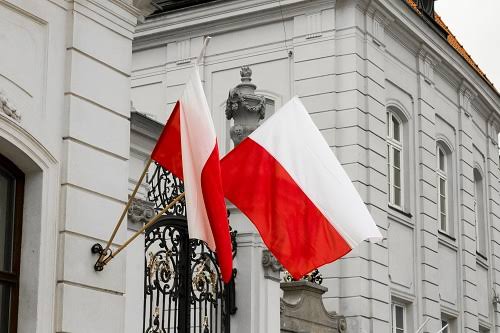
Poland crypto tax is entering a new era of aggressive enforcement, with authorities warning that non-compliant investors could face punitive tax rates of up to 75% on undeclared gains.
As the country aligns with new European Union transparency rules, millions of crypto holders may soon find themselves under intense scrutiny.
Poland crypto tax enforcement is tightening rapidly following the country’s adoption of the EU’s DAC8 directive, a sweeping regulatory framework designed to track cryptocurrency transactions across borders.
For investors who have failed to declare their earnings, the message is clear: comply now or risk losing the bulk of your profits.
Poland Crypto Tax Compliance Crisis Deepens
Estimates suggest that up to 3 million people in Poland have invested in cryptocurrencies such as Bitcoin.
However, local reports indicate that only about 1% of these investors have been properly reporting their gains under existing Poland crypto tax rules.
This massive compliance gap has triggered alarm within the country’s tax authority, the National Revenue Administration (KAS), which is now preparing to leverage new tools under DAC8 to identify offenders.
According to insights shared by Bitcoin.pl, authorities will soon gain unprecedented visibility into crypto holdings, making it nearly impossible for investors to hide their activities.
EU DAC8 Framework Supercharges Poland Crypto Tax Enforcement
The eighth amendment to the EU Directive on Administrative Cooperation—DAC8—marks a turning point for Poland crypto tax enforcement.
Signed into law by President Karol Nawrocki in early March, the regulation introduces automatic data sharing between EU member states.
This means crypto platforms—including exchanges, brokers, and wallet providers—must now collect and report detailed user transaction data to tax authorities.
Once reported, this data is shared across borders. For example, a Polish resident trading on a foreign exchange will still have their activity reported back to Poland’s tax office.
A senior EU tax official recently noted: “DAC8 closes the loopholes that allowed crypto investors to operate outside traditional financial oversight.”
75% Penalty Threat Under Poland Crypto Tax Rules
The most alarming aspect of the Poland crypto tax crackdown is the potential penalty for non-compliance. Investors who fail to declare their crypto income could face a punitive tax rate of up to 75% on undisclosed earnings.
Tax experts warn that this is not merely theoretical. As enforcement tools improve, authorities are expected to pursue back taxes aggressively.
A Warsaw-based tax advisor told Business Insider Polska: “The era of anonymity in crypto is effectively over. Investors must assume their transactions are visible.”
Under current regulations, Poland crypto tax is relatively straightforward—at least on paper.
-
A flat 19% capital gains tax applies to profits from crypto transactions
-
Taxable events include converting crypto into fiat currencies or using crypto for payments
-
Deadline for reporting 2025 gains: April 30, 2026
-
Filing is done via the PIT-38 form
Interestingly, not all crypto activities are taxed immediately:
-
Mining and staking rewards are tax-free upon receipt
-
Tax applies only when these assets are converted into fiat
-
Crypto-to-crypto trades and wallet transfers remain non-taxable
However, even investors who only purchased crypto without selling are required to declare acquisition costs.
Poland Crypto Tax Rules May Tighten Further Under MiCA
While DAC8 is already reshaping compliance, Poland crypto tax regulations could soon evolve further under the EU’s Markets in Crypto-Assets (MiCA) framework.
Poland has struggled to pass comprehensive crypto legislation, with previous proposals vetoed due to concerns over excessive regulation.
However, the country must align with MiCA by July 1 to ensure its crypto businesses remain operational within the EU.
This creates uncertainty for investors, as future Poland crypto tax policies could become even stricter.
Europe-Wide Trend: Poland Crypto Tax Not an Isolated Case
Poland is not alone in tightening crypto oversight. Countries like Germany are also ramping up enforcement under DAC8, signaling a broader European shift toward transparency.
Industry analysts believe this marks the end of the “wild west” era for crypto in Europe.
As one blockchain policy expert put it: “Regulators are no longer playing catch-up—they are now firmly in control.”
The message surrounding Poland crypto tax has never been clearer. With DAC8 in full motion and cross-border data sharing becoming the norm, non-compliance is no longer a viable strategy.
Investors who fail to act risk severe financial consequences, including losing up to three-quarters of their profits. Filing accurate returns and understanding tax obligations is now essential—not optional.