


- Trending
- Comments
- Latest

In March 2026, Visa became one of about 40 Super Validators on the Canton Network, a network built specifically for banks and regulated finance.
This role gives Visa:
Even more telling: Visa received one of the highest governance weights (10) after approval.
This looks more like positioning than participation. Anyone can see.
Let’s Start with what Visa is already doing. According to reporting from The Bit Gazette, Visa is aggressively expanding stablecoin-linked payment infrastructure, not outside its system but inside it.
Rather than letting crypto-native networks displace it, Visa is:
This is containmen and shouldn’t be viewed as disruption just yet.
Visa is “bringing stablecoin activity onto its existing rails rather than ceding ground to blockchain networks.”
After expansions comes scaling. In another Bit Gazette report, Visa partnered with Bridge to expand stablecoin-linked cards from 18 countries to over 100 by 2026.
This move does something enthusiasts could read as deceptively powerful:
In effect:
Crypto doesn’t replace Visa — it runs through Visa.
Even more telling, these cards allow users to spend stablecoins at millions of merchants globally, embedding crypto into everyday commerce but only through Visa’s rails.
Now to connect the dots.
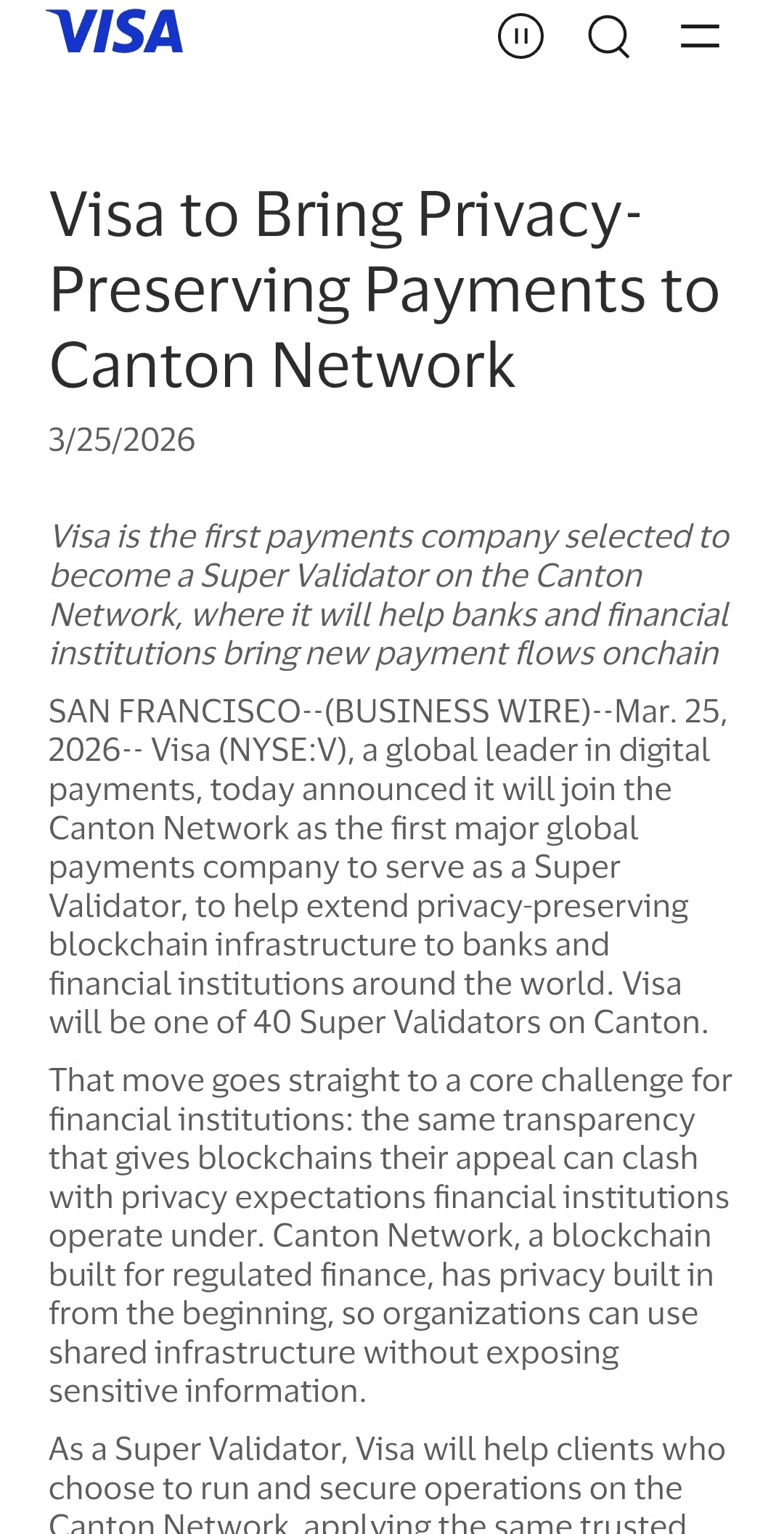
The announcement came on the 25th day of March from Visa itself. Her reason?
“…help decide critical payment infrastructure, enabling banks and financial institutions to adopt blockchain at scale.” -Part of the reasons cited by Visa
That’s the final step.
Because once you control:
You don’t just participate in crypto but also define it.
Let’s be clear about what Canton is solving.
Traditional finance doesn’t like public blockchains. One bold reason.
They are too transparent.
Visa’s solution?
Build blockchain systems where privacy, control, and compliance come first
Canton’s design allows institutions to transact without exposing sensitive data, effectively reshaping blockchain into something closer to traditional finance rails a role called “crypto with permission.”
The validator move is just one piece of a much bigger play.
Visa is already:
This is the key insight:
Visa isn’t adopting crypto — it’s absorbing it into its existing system.
Instead of disrupting finance, blockchain is being redesigned to fit it.
Here’s where the narrative breaks.
The Canton Network is often described as “public” — but in practice:
Even the justification is revealing:
“Many banks see lack of privacy as a dealbreaker.” (usa.visa.com)
Translation:
Crypto must change to accommodate institutions — not the other way around.
This isn’t about Visa alone. It’s about a broader shift:
| Then | Now |
|---|---|
| Crypto removes intermediaries | Intermediaries become validators |
| Open participation | Controlled access |
| Trustless systems | “Trusted” institutions |
Visa joining Canton signals something bigger:
Wall Street isn’t fighting crypto anymore — it’s redesigning it.
And it’s doing so at the infrastructure level, where users have the least visibility but the most at stake.
We are entering a split era:
The tension between these two worlds will define the next decade.
Visa becoming a Super Validator is not the death of crypto.
But it is the clearest signal yet that:
The battle is no longer about whether crypto wins, it’s about who controls it when it does.



Copyright © 2025 - The Bit Gazette.