




- Trending
- Comments
- Latest

In cryptocurrency, ownership isn’t defined by your name or identity, it’s defined by a single piece of data: your private key. Whoever holds it controls the money. This creates a system of absolute personal responsibility that separates crypto from every traditional financial system.
This concept is central to how blockchain systems like Bitcoin function. Instead of relying on banks or intermediaries, users secure their funds through cryptography.
This explainer breaks down what a private key is, how it works, and why it is the most important element in crypto security.
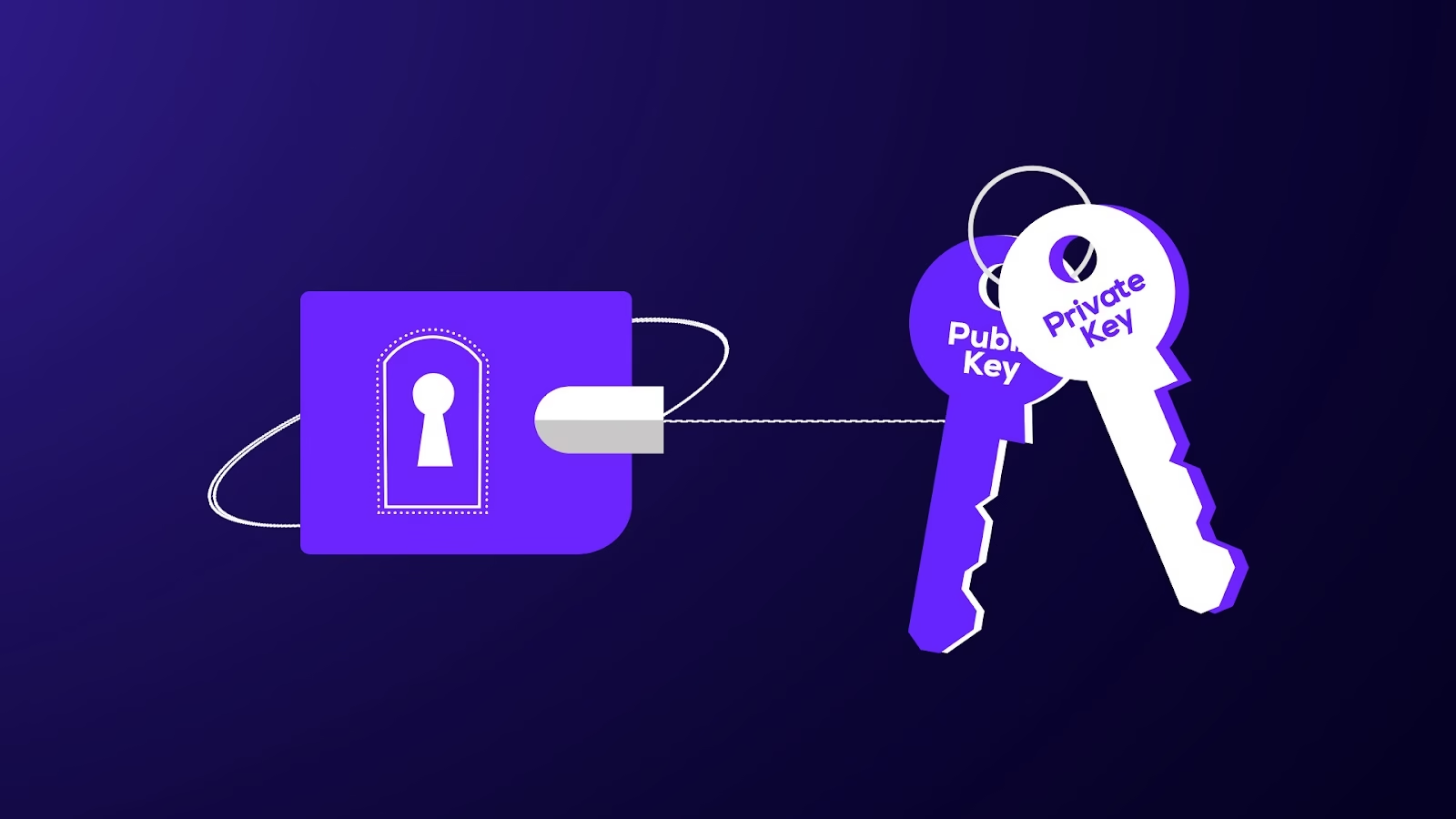
A private key is a long string of randomly generated characters that acts as a secure password for accessing cryptocurrency.
It is mathematically linked to a public key, which is used to generate wallet addresses. While the public key can be shared, the private key must remain secret at all times.
In simple terms:
If someone gains access to your private key, they gain full control over your funds.
Private keys are part of a cryptographic system that enables secure transactions on a blockchain.
When a user sends cryptocurrency, the transaction is signed using their private key. This signature proves ownership without revealing the key itself.
The network then verifies the transaction using the corresponding public key.
This process ensures:
This cryptographic model is what allows decentralized networks to function securely at scale.
Private keys define ownership in crypto.
Unlike traditional banking systems, there is no central authority that can recover lost credentials or reverse transactions. If a private key is lost, access to the funds is permanently lost.
This makes private key management one of the most important responsibilities for any crypto user.
It also reinforces a core principle of blockchain: self-custody. Users are in full control of their assets but also fully responsible for their security.
The biggest risks in crypto are often tied to private keys.
If a private key is exposed, stolen, or improperly stored, funds can be drained instantly. There is no way to reverse the transaction or recover the assets.
Common risks include:
Because of this, many users rely on hardware wallets or secure storage methods to protect their keys.
Private keys remain the foundation of cryptocurrency because they represent true ownership without intermediaries.
While new technologies such as custodial services and smart wallets are emerging, they still rely on the same underlying principle: access is determined by cryptographic keys.
This creates a powerful but demanding system. Users gain full control over their assets, but they must also manage the risks that come with it.
In crypto, security is not outsourced as it is personal. And that responsibility begins and ends with the private key.



Copyright © 2025 - The Bit Gazette.