







- Trending
- Comments
- Latest

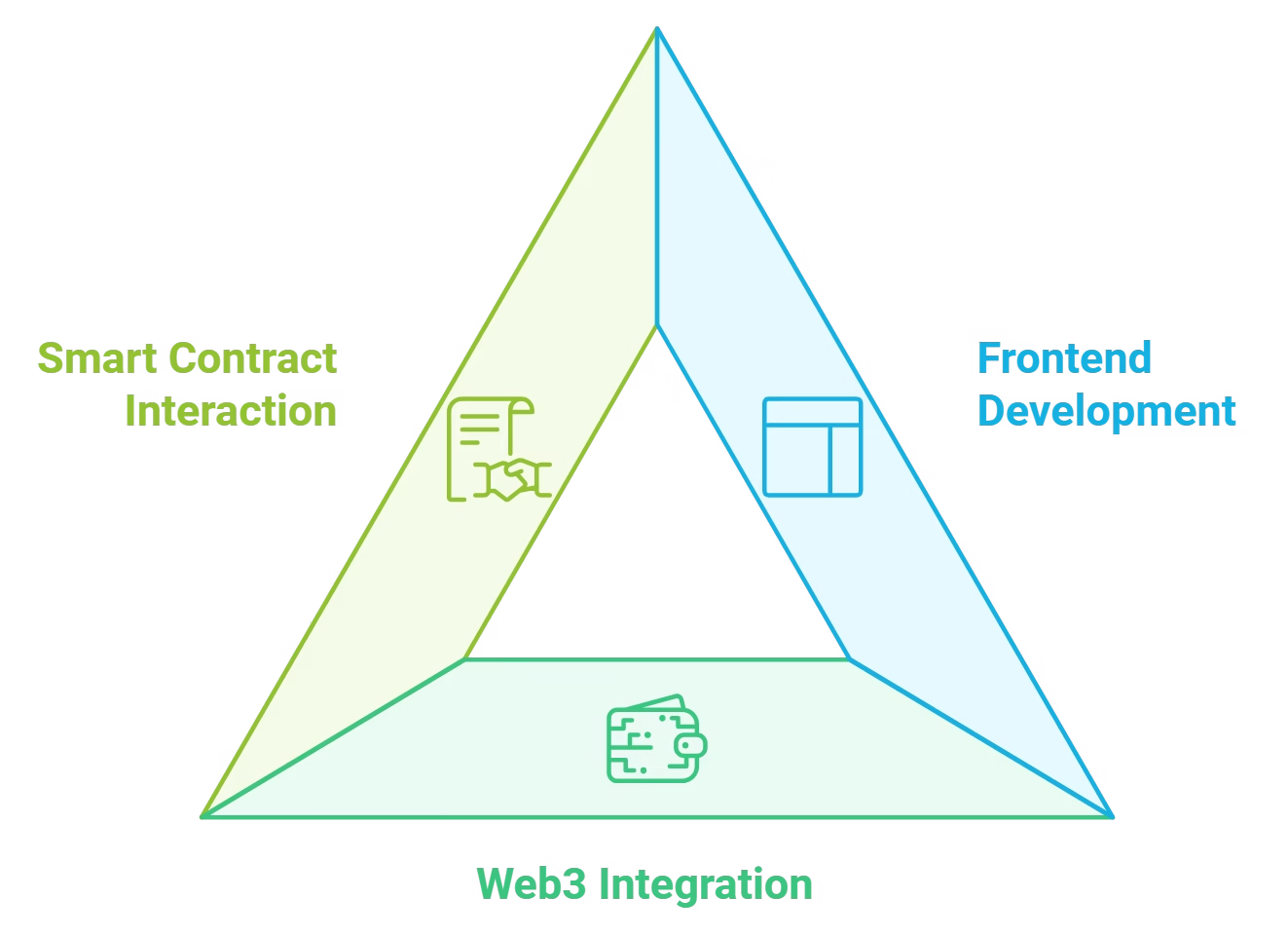
A user buys crypto on an exchange, stores it in a native wallet, spends it through a debit card, settles transactions in a proprietary stablecoin, and interacts with apps built on that blockchain. That’s Vertical Integration (in Web3).
While much of the market remains distracted by memecoin volatility and ETF headlines, infrastructure players are quietly rebuilding crypto’s business model around ownership of entire financial stacks.
The latest headlines show how serious this race has become. This week, Societe Generale expanded crypto services through SG-Forge while pushing deeper into stablecoin issuance for institutional clients.
At the same time, HSBC and Standard Chartered received Hong Kong’s first stablecoin licenses, embedding digital assets directly into banking ecosystems.
In traditional business, vertical integration happens when a company controls multiple layers of its supply chain. Think Apple designing hardware, software, and payment infrastructure under one ecosystem.
In Web3, the stack looks different, the blockchain infrastructure, wallets, stablecoins, exchanges, custody solutions, payment rails, and developer tools.
Companies increasingly want to own several of these layers instead of relying on third parties.
Coinbase is a clear example. It operates an exchange, launched Base blockchain, offers wallet infrastructure, provides custody services, and heavily promotes USD Coin alongside Circle.
Binance followed a similar model with exchange infrastructure, wallet services, launchpads, and BNB Chain.
The goal? Capture more revenue while reducing dependence on external platforms.
The 2021 cycle rewarded user growth, and the 2026 cycle rewards infrastructure control with the three factors below are driving this trend.
Stablecoins are no longer just trading tools. They are becoming settlement infrastructure.
European regulators are now pushing for more euro-backed stablecoins to challenge dollar dominance, while banks are entering the space aggressively.
Owning the stablecoin layer means controlling transaction volume.
Exchange fees are declining. Wallets are becoming commoditized. Protocols need multiple revenue streams. Owning adjacent services helps firms protect margins.
Compliance costs are rising globally. Companies with integrated custody, compliance, and payment infrastructure are better positioned to survive.
Vertical integration creates stronger moats. A company that owns users, liquidity, infrastructure, and settlement rails becomes harder to disrupt.
This is why investors increasingly evaluate crypto firms like platform businesses not token experiments.
The market is already rewarding companies building full-stack ecosystems rather than standalone protocols.
There’s an obvious contradiction. Web3 was built on decentralization. Vertical integration concentrates power.
If exchanges control wallets, blockchains, stablecoins, and payments simultaneously, crypto risks recreating the same gatekeepers it originally tried to replace. That tension will define the next phase of Web3.
The winners may not be the most decentralized platforms. They may be the companies that quietly own the rails beneath everything else.



Copyright © 2025 - The Bit Gazette.

