







- Trending
- Comments
- Latest


When FTX collapsed in 2022, it wiped out billions in retail funds and permanently altered how ordinary investors think about centralised custody. Three years later, the traders who stayed are increasingly moving to ETFs, Telegram bots, and decentralised platforms, leaving centralised exchanges competing for a shrinking slice of retail activity.
The result is a quieter but increasingly dangerous reality for centralized exchanges: the retail engine that powered crypto’s golden years is slowing down.
During the 2021 bull market, retail crypto exchange volume exploded because speculation itself became entertainment.
Millions of users traded meme coins, leveraged altcoins, NFTs, and newly launched tokens with almost nonstop activity. Exchanges benefited from enormous fee generation as volatility encouraged constant buying and selling. That environment no longer exists at the same scale.
Retail crypto exchange volume has become fragmented across dozens of ecosystems instead of concentrating on a handful of centralized platforms. Traders who once kept funds on exchanges now split activity between onchain wallets, decentralized exchanges, staking protocols, and mobile-native trading tools. At the same time, regulatory scrutiny has made some retail users more cautious.
The collapse of FTX permanently changed how many people view centralized custody risk. Even large exchanges with stronger compliance frameworks continue facing trust issues from users who watched billions disappear during previous failures. The psychological damage from that period still matters.
One of the most underestimated pressures on retail crypto exchange volume is the rise of spot Bitcoin ETFs and regulated investment products.

Traditional brokerage apps now offer exposure to crypto without requiring users to manage wallets, private keys, or exchange accounts. That convenience matters more than many crypto-native firms expected.
For casual investors, buying Bitcoin exposure through BlackRock or Fidelity feels simpler than navigating exchange interfaces filled with futures contracts, funding rates, and liquidation risks. The irony is difficult for exchanges to ignore.
Crypto spent years trying to achieve institutional legitimacy. Now that institutional products exist, some retail traders no longer need crypto exchanges at all. Retail crypto exchange volume suffers every time long-term investors choose passive ETF exposure instead of active spot trading. That shift does not eliminate crypto demand. It changes where the activity happens.
Another major threat to retail crypto exchange volume comes from the rise of hyper-fast onchain trading environments.
Telegram bots such as Banana Gun, Maestro, and Trojan transformed speculative trading into something closer to social gaming. Users can now snipe meme coins, copy wallets, automate entries, and trade directly from chat applications within seconds. For a generation raised on internet immediacy, traditional exchange interfaces increasingly feel slow and outdated.
Decentralized exchanges also improved dramatically. Platforms on Solana, Base, and Ethereum Layer-2 networks now offer execution speeds and liquidity conditions that rival centralized venues for many retail users.
Onchain trading feels more aligned with modern crypto behavior. It is faster, more experimental, and deeply connected to online communities. Retail crypto exchange volume weakens when the most active speculative traders stop treating centralized exchanges as their primary home.
While spot trading activity softens, perpetual futures continue absorbing liquidity. This matters because perpetual trading concentrates volume differently than traditional retail investing. A smaller number of highly active traders can generate enormous turnover through leverage.
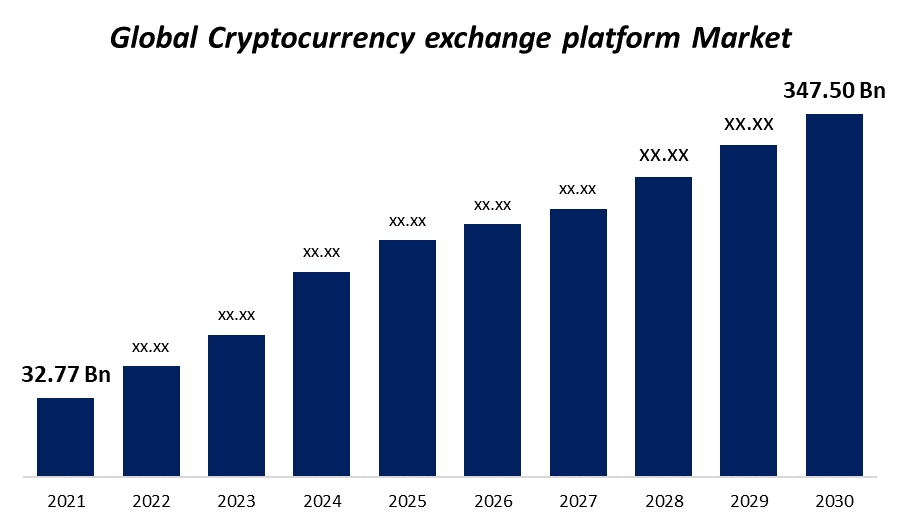
Exchanges increasingly rely on derivatives to offset declining retail crypto exchange volume in spot markets.
Perpetual futures platforms depend heavily on volatility. When volatility fades, leveraged traders disappear quickly. Exchanges then face a double pressure: weaker spot activity and declining derivatives engagement at the same time. Some platforms already show signs of this imbalance.
The competition for trading volume has become so intense that exchanges now aggressively subsidize activity through fee reductions, reward campaigns, and token incentives. Those tactics temporarily boost numbers but often fail to create sustainable user loyalty. In many cases, exchanges are effectively paying traders to remain active.
That is rarely a healthy long-term business model.
The deeper issue behind falling retail crypto exchange volume is psychological. The old crypto promise was simple: retail traders believed they were entering a new financial system before institutions arrived. That belief created emotional energy around speculation.
Today, the market feels different, institutions dominate headlines. ETFs absorb capital flows. Venture-backed market makers control liquidity. Meme coin launches increasingly resemble extraction games where insiders win first.
Many no longer believe centralized exchanges are designed primarily for ordinary users. Instead, exchanges increasingly look like infrastructure providers serving professional trading firms, whales, and institutional capital.
Crypto still attracts attention, but the emotional optimism that once fueled relentless retail activity has weakened significantly.
The decline in retail crypto exchange volume does not necessarily mean centralized exchanges disappear. But it likely means the old model is fading.

Exchanges are already adapting by expanding into tokenized stocks, prediction markets, perpetual futures, payment systems, stablecoins, AI trading tools, and wealth management services.
Coinbase pushes deeper into infrastructure and custody. Binance continues expanding ecosystem services. Kraken explores equities and payments. Bitget aggressively pursues multi-asset trading. OKX increasingly positions itself as an onchain technology platform rather than only an exchange.
Trading fees alone may no longer sustain the next generation of crypto exchanges.
Retail crypto exchange volume once gave platforms nearly endless profitability during bull markets. But that era depended on conditions that may never fully return: easy stimulus liquidity, explosive speculation, low regulatory pressure, and widespread retail optimism.



Copyright © 2025 - The Bit Gazette.

