
- Trending
- Comments
- Latest

Block has spent years telling the world that Bitcoin is the future of money. On Wednesday it gave 59 million Cash App users access to USDC across four blockchains, no wallet, no setup, no fees required.
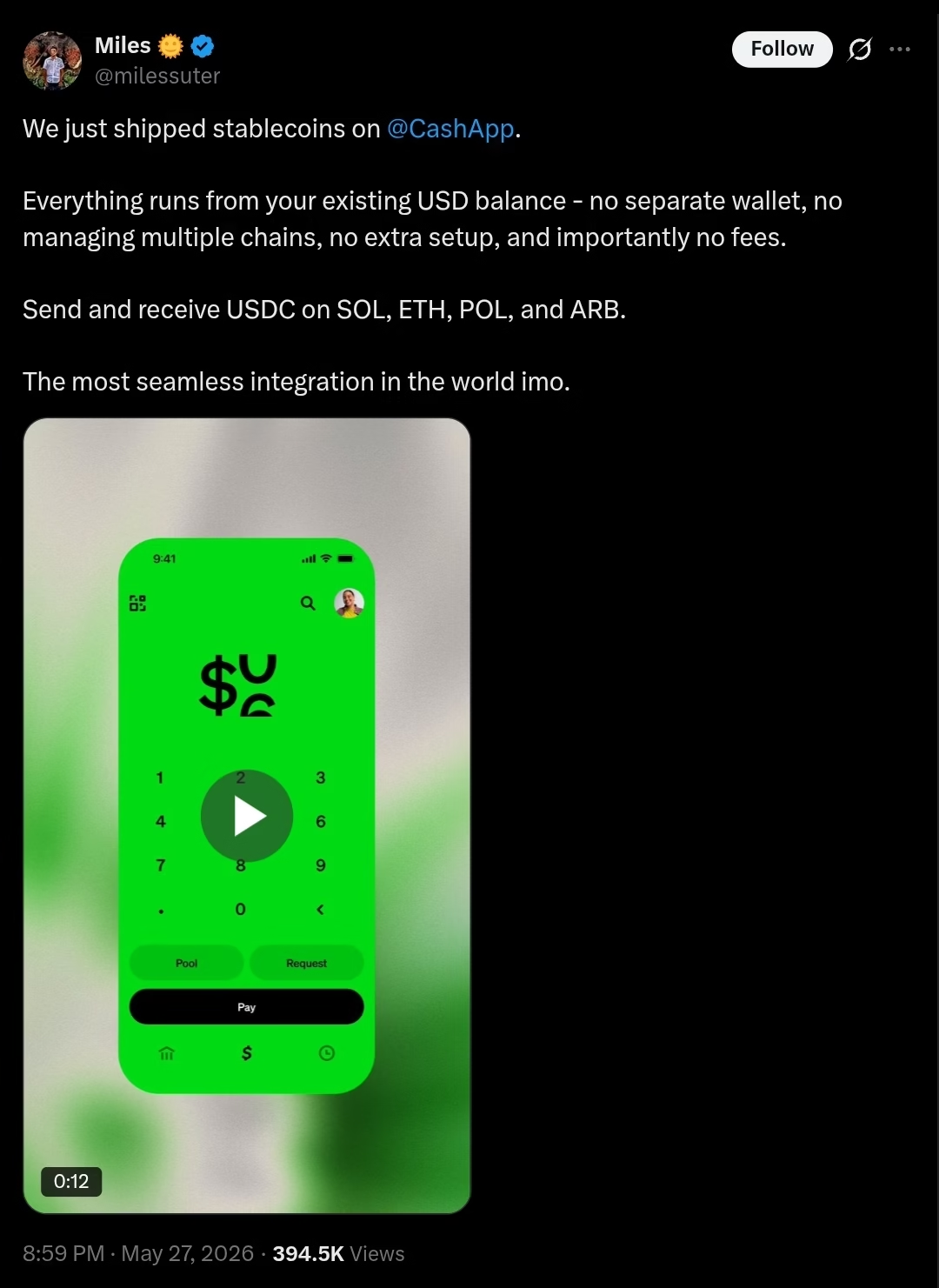
The announcement was made Wednesday by Block, Inc. Bitcoin Product Lead Miles Suter, who said the new Cash App USDC functionality supports transactions on Solana, Ethereum, Polygon, and Arbitrum. The expansion allows millions of users to transfer stablecoins directly from their existing U.S. dollar balances without requiring separate wallets or blockchain-specific setup procedures.
The rollout comes as payment companies, banks, and fintech firms increasingly invest in stablecoin infrastructure in response to rising demand for faster and lower-cost digital payments.
The Cash App USDC expansion also reflects broader competition among financial technology firms seeking to establish a foothold in blockchain-based payment networks.
Cash App, operated by Block, Inc., currently serves about 59 million monthly active customers, making the integration one of the most significant mainstream stablecoin deployments by a U.S. fintech platform to date.
For years, Cash App’s crypto identity was closely tied to Bitcoin. The company, co-founded by Jack Dorsey, has consistently promoted Bitcoin-focused initiatives, including the Bitkey self-custody wallet, the Proto mining division, and Spiral, the company’s open-source Bitcoin development arm.
The introduction of Cash App USDC therefore represents a notable expansion in strategy, even as company executives continue emphasizing their long-term commitment to Bitcoin.
“Everything runs from your existing USD balance. No separate wallet, no managing multiple chains, no extra setup, and importantly no fees,” — Miles Suter, Bitcoin Product Lead at Block, Inc.
The update enables users to move USDC across four major blockchain networks, giving customers greater flexibility in how they send and receive digital assets. Circle, the issuer of USDC, remains the largest U.S.-based stablecoin provider and one of the central players in regulated digital dollar infrastructure.
While announcing the Cash App USDC rollout, Suter framed stablecoins as an intermediary layer within a broader digital monetary transition.
“Bitcoin is Money 2.0, fiat is Money 1.0, and stablecoins are the bridge between the two,” — Miles Suter, Bitcoin Product Lead at Block, Inc.
The statement reflects Block’s ongoing effort to balance its Bitcoin-first philosophy with the practical adoption of stablecoins for everyday financial transactions.
The launch of Cash App USDC arrives during a period of rapid expansion for the global stablecoin market. Major payment firms including Visa and Mastercard have recently accelerated their own stablecoin initiatives as digital dollar transactions gain momentum across global financial systems.
Industry data shows the total stablecoin supply recently surpassed $300 billion. Market leader Tether’s USDT added more than $5 billion in supply over the past month, while the combined supply of Circle’s USDC, Ethena’s USDe, and PayPal’s PYUSD declined by approximately $4.2 billion during the same period.
Against that backdrop, the Cash App USDC launch could help strengthen USDC’s consumer reach in the United States, particularly among retail users already familiar with Cash App’s peer-to-peer payment ecosystem.
Analysts say stablecoins are increasingly being viewed not just as trading instruments for crypto markets, but as infrastructure for cross-border transfers, digital commerce, and programmable payments. Fintech firms are racing to integrate these tools before regulatory frameworks become more rigid.
The addition of stablecoin transfers also positions Cash App more directly against emerging blockchain payment platforms that market themselves around low-cost international transfers and instant settlements.
The broader significance of the Cash App USDC rollout lies in its accessibility. By removing the need for external wallets or advanced blockchain knowledge, Cash App is effectively simplifying stablecoin usage for mainstream consumers.
The company’s approach may help normalize blockchain-based payments among users who have never interacted directly with decentralized finance systems. Unlike earlier crypto products that required separate onboarding processes, the Cash App USDC feature operates within the app’s existing payment interface.
Still, Block executives insist the company’s larger mission remains centered on Bitcoin adoption.
“Making Bitcoin Everyday Money remains my top goal at Cash App, Square, Bitkey and Block,” — Miles Suter, Bitcoin Product Lead at Block, Inc. “We remain singularly focused on bitcoin becoming the native currency of the internet.”
That balancing act reflects a broader tension within the digital asset industry: while Bitcoin continues to dominate as a store of value narrative, stablecoins are increasingly emerging as the preferred mechanism for day-to-day blockchain payments.
The success of Cash App USDC may ultimately depend on whether mainstream consumers view stablecoins as practical financial tools rather than speculative crypto assets. With major financial institutions now entering the space, competition over digital payment infrastructure is expected to intensify in the months ahead.
Primary source:
The Block report



Copyright © 2025 - The Bit Gazette.