

- Trending
- Comments
- Latest

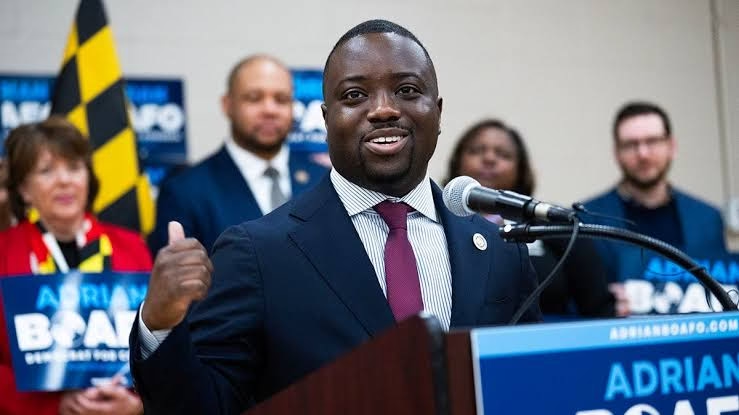
A crypto-backed political action committee affiliated with Coinbase, Ripple, and Andreessen Horowitz spent approximately $5.5 million to propel Maryland state Delegate Adrian Boafo to victory in the Democratic primary for the state’s 5th Congressional District on June 23, one of the most expensive House primaries of the 2026 election cycle.
Boafo, who received substantial support from crypto-aligned political action committees, is heavily favored to win the general election in the Democratic-leaning district.
Potentially adding another digital asset-friendly voice to Congress at a time when lawmakers are debating stablecoin oversight and broader crypto market reforms.
Boafo’s victory shows the expanding role of cryptocurrency-funded political organizations in U.S. elections.
Protect Progress, a Democratic affiliate of the Fairshake network backed by major industry players including Coinbase, Ripple Labs, and venture capital firm Andreessen Horowitz, reportedly spent approximately $5.5 million supporting Boafo’s campaign.
Outside spending in Maryland’s 5th District exceeded $8 million overall, making the contest one of the most expensive House primaries of the 2026 election cycle.
Boafo also benefited from endorsements from retiring Representative Steny Hoyer, Maryland Governor Wes Moore, and Senator Angela Alsobrooks.
“Protect Progress supports Democratic candidates committed to establishing a clear cryptocurrency framework in the U.S.,” the organization has stated in describing its mission.
Critics, however, argue that such expenditures raise concerns about the growing influence of well-funded industry groups in congressional races.
According to reporting from The Washington Post, nearly $11 million tied to cryptocurrency and pro-Israel interests flowed into the competitive Democratic primary after Hoyer announced his retirement.
Senator Chris Van Hollen of Maryland criticized the scale of spending, describing the sums as “obscene,” according to reports covering the race and related campaign finance disclosures.
Boafo’s win arrives as Washington moves closer to establishing long-awaited rules governing digital assets.
Industry participants are closely monitoring negotiations surrounding market structure legislation, including discussions related to the proposed CLARITY framework.
Stablecoin legislation has also gained bipartisan momentum following increased scrutiny of dollar-pegged digital assets and their role in global payments.
Fairshake and its affiliated committees have adopted a bipartisan strategy, supporting candidates from both major parties who are considered receptive to crypto innovation.
Recent primary cycles suggest that strategy has delivered measurable results.
Crypto-backed political groups have already supported candidates in California, New Jersey, South Dakota, Utah, Maryland and New York, contributing millions of dollars toward congressional races viewed as critical to the industry’s regulatory future.
Boafo himself has demonstrated an interest in digital asset policy at the state level.
Reports indicate that during his tenure in the Maryland House of Delegates, he sponsored legislation intended to shield cryptocurrency businesses from certain state regulatory burdens and supported initiatives examining policies favorable to blockchain innovation.
The Maryland race highlights a broader debate unfolding across American politics: whether crypto industry spending represents legitimate advocacy or disproportionate influence.
Supporters argue that cryptocurrency firms are simply adopting tactics long employed by traditional banking, energy and technology lobbies.
“The crypto industry’s largest political action committee turned a single House primary into a demonstration of its spending power.”
One recent analysis observed, noting that digital asset firms are increasingly positioning themselves to influence lawmakers who will ultimately determine the regulatory framework governing stablecoins, tokenized assets and decentralized finance.
Opponents counter that multimillion-dollar expenditures risk overshadowing local issues and diminishing grassroots competition.
Regardless of perspective, Boafo’s victory suggests crypto-focused political organizations are likely to remain major players heading into the November elections and the 2027 congressional session.
With Fairshake reportedly maintaining more than $100 million available for future races, industry-backed spending may continue reshaping the composition of Congress as lawmakers prepare to decide some of the most consequential digital asset legislation in U.S. history.



Copyright © 2025 - The Bit Gazette.