







- Trending
- Comments
- Latest

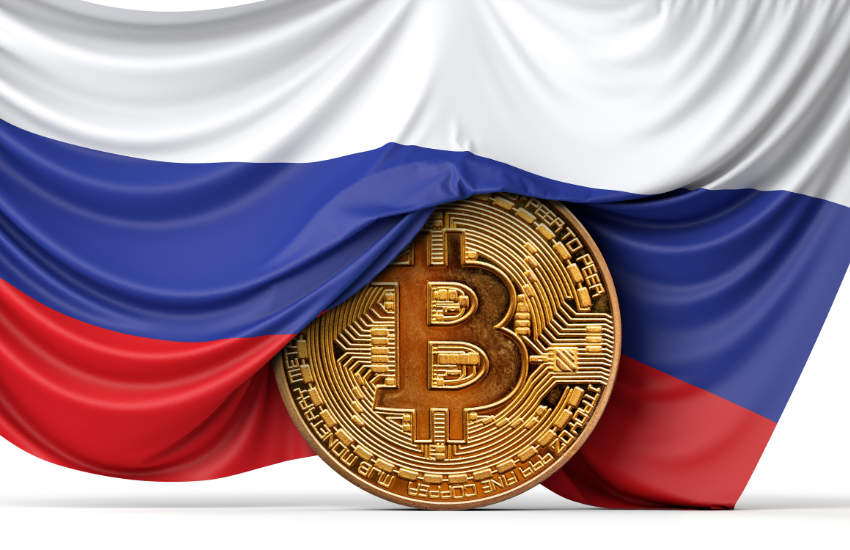
Russia has advanced a revised digital asset bill that would establish the country’s first comprehensive legal framework for cryptocurrency trading, licensing, custody and taxation, after lawmakers dropped an earlier requirement forcing users to disclose wallet addresses in certain cases.
The proposal, currently progressing through the country’s legislative process in Moscow, aims to formalize crypto trading, licensing, custody and taxation while balancing privacy concerns raised by industry participants.
The changes come as Russia continues expanding its digital asset strategy amid international sanctions and growing institutional interest in regulated crypto markets.
One of the most closely watched amendments to the legislation is the removal of a proposed requirement that would have compelled users to disclose cryptocurrency wallet addresses under broader circumstances.
The revision follows criticism from legal experts and crypto market participants who argued that mandatory wallet disclosure could undermine user privacy while creating unnecessary compliance burdens.
Although the controversial provision has been dropped, the bill continues to introduce extensive oversight of Russia’s crypto ecosystem.
Under the proposal, licensed exchanges, brokers, custodians and other regulated intermediaries would operate within a government-approved framework, while cryptocurrencies would continue to be prohibited for domestic retail payments.
According to legal analysis published by ForkLog, regulators are seeking greater oversight of crypto infrastructure while attempting to build a regulated market that replaces much of today’s gray-market activity.
“The bill exists; the jokes are over; work on it is well under way behind closed doors.” — Andrey Tugarin, Lawyer, speaking to ForkLog.
The revised legislation would establish Russia’s first comprehensive legal framework governing digital currencies.
If enacted, licensed market participants would oversee cryptocurrency purchases, storage and exchange under regulatory supervision, replacing many peer-to-peer transactions that currently dominate the domestic market.
The proposal also classifies cryptocurrency as property, strengthening legal protections while allowing digital assets to be recognized in court proceedings.
At the same time, domestic cryptocurrency payments would remain prohibited, preserving the government’s long-standing position that crypto should function primarily as an investment asset rather than an alternative payment system.
Government officials have argued that the framework is intended to increase transparency, improve investor protection and reduce illicit financial activity while allowing Russia to participate more actively in global digital asset markets.
The bill arrives as Russia increasingly views cryptocurrency as an important tool for international settlements following Western financial sanctions.
While domestic payment restrictions remain intact, the legislation explicitly provides mechanisms for regulated cross-border cryptocurrency transactions.
Recent reporting indicates that Russia has steadily expanded its use of digital assets in international trade and financial settlements, particularly as access to traditional banking infrastructure has become more constrained.
Analysts say the government’s evolving regulatory approach reflects an effort to encourage legitimate crypto activity while maintaining strong oversight of domestic users.
“Over the last year, Iran and Russia have moved from one-off crypto transactions to building layered sanctions evasion programs.”
Andrew Fierman, Head of National Security Intelligence, Chainalysis.
For crypto investors, Russia’s revised bill highlights a broader global trend: governments are shifting away from outright restrictions toward comprehensive regulation.
Removing the wallet disclosure requirement may ease some privacy concerns, but the broader framework still expands regulatory oversight across exchanges, custodians and licensed intermediaries.
Market participants will now be watching the bill’s remaining legislative stages to determine whether additional amendments emerge before final approval.
If enacted, the law could reshape one of the world’s largest emerging crypto markets while providing a blueprint for jurisdictions attempting to balance innovation, compliance and national security.
The development also reinforces the growing divergence between countries pursuing comprehensive crypto regulation and those relying primarily on enforcement actions, making Russia’s legislative progress a closely watched story for global digital asset investors.



Copyright © 2025 - The Bit Gazette.

