

- Trending
- Comments
- Latest

The Oklahoma State Bureau of Investigation began operating a new Fraud and Cybercrime Unit on July 1, created under state legislation to investigate a wave of AI-generated scams and cryptocurrency fraud that officials say has cost residents as much as $150 million.
Officials say the initiative is designed to protect residents from increasingly sophisticated cybercriminals while providing specialized training to law enforcement agencies and prosecutors across the state.
The creation of the cyber crime unit comes amid growing concerns that AI-generated messages, cryptocurrency scams, and international fraud networks are making it easier for criminals to exploit victims and steal life savings within minutes.
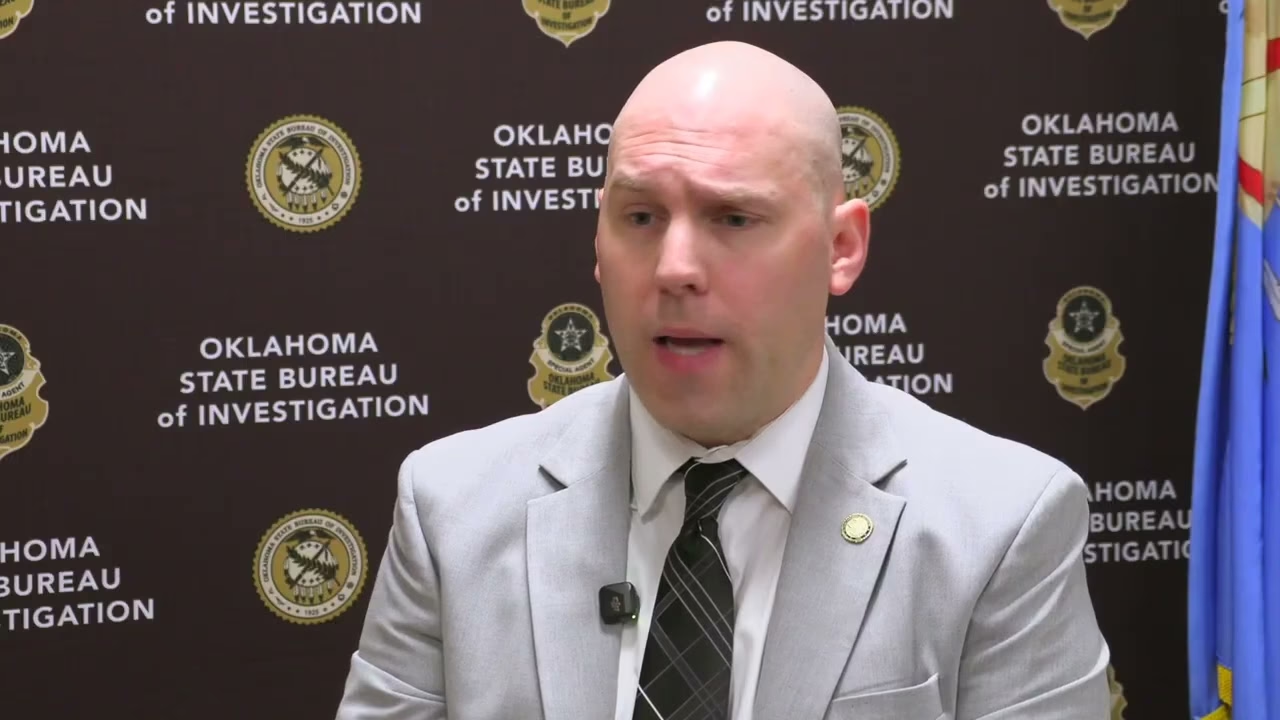
The newly established cyber crime unit was authorized through a Senate Bill that expanded the OSBI’s capacity to investigate digital crimes affecting Oklahomans. Lieutenant Adam York, who leads the unit, said cyber-enabled financial crime has become one of the state’s most pressing public safety challenges.
According to York, the most common threats involve cryptocurrency scams and AI-generated text messages or emails designed to trick people into believing they owe money or face legal consequences.
“Cybercrime and fraud can have the same impact as other major crimes.” — Lieutenant Adam York, Oklahoma State Bureau of Investigation
York explained that advances in artificial intelligence have made fraudulent communications significantly more convincing than in previous years.
“AI-generated text messages, emails they can make them look very real and will you, ‘Hey, you have a warrant, you have a bill, you didn’t pay your taxes,’” — Lieutenant Adam York, Oklahoma State Bureau of Investigation
He continued:
“Things like that, it freaks people out thinking they owe this money, so they send them money, give access to their computers, access to their bank accounts.” — Lieutenant Adam York, Oklahoma State Bureau of Investigation
Officials say these tactics often result in victims unknowingly transferring money, exposing sensitive financial information, or allowing criminals remote access to personal devices.
Beyond investigating digital offences, the cyber crime unit has been tasked with strengthening Oklahoma’s response through education and collaboration.
York said the unit will provide specialized training for police departments and prosecutors throughout the state, helping frontline officers recognize cyber-enabled fraud and collect the evidence necessary for successful investigations.
“Tell officers what they need to look out for, what information they need if someone comes and reports they were scammed. That way they can address it or send it to help and assist.” — Lieutenant Adam York, Oklahoma State Bureau of Investigation
Officials believe standardized investigative practices will improve how cybercrime cases are handled from the initial victim report through prosecution, while also improving coordination between local agencies and state investigators.
The establishment of the cyber crime unit reflects a broader recognition that financial fraud increasingly relies on digital platforms, requiring specialized investigative skills that traditional policing alone may not provide.
York said investigators have found that many scams targeting Oklahoma residents originate outside the United States, making international cooperation an important part of future investigations.
“A lot of them originate overseas in Russia or China.” — Lieutenant Adam York, Oklahoma State Bureau of Investigation
To remain ahead of evolving criminal tactics, the cyber crime unit will work closely with banks and financial institutions to monitor emerging fraud patterns and identify new schemes before they spread more widely.
One recent cryptocurrency-related scam cited by York affected Oklahoma County, including Oklahoma City, where criminals allegedly stole approximately $1,000 at a time from individual victims. Authorities estimate the scheme ultimately resulted in losses totaling around $150 million.
Officials say analyzing reports from financial institutions will help investigators identify common indicators of fraud, improve public awareness campaigns, and support faster responses to emerging threats.
The launch of the cyber crime unit marks a significant expansion of Oklahoma’s efforts to address cyber-enabled financial crime as artificial intelligence and cryptocurrency continue reshaping the fraud landscape.
Authorities say the unit’s work will focus not only on investigating offenders but also on preventing future victimization through partnerships with law enforcement agencies, prosecutors, banks, and community stakeholders.
As scammers adopt increasingly sophisticated techniques, officials are urging residents to verify unexpected financial requests, avoid sharing sensitive account information, and remain cautious of messages creating urgency or fear.
The OSBI believes the cyber crime unit will play a central role in helping protect Oklahomans from rapidly evolving online threats while improving the state’s overall capacity to investigate digital crime.
Primary source: Oklahoma State Bureau of Investigation (OSBI); News 9 Oklahoma.



Copyright © 2025 - The Bit Gazette.