






- Trending
- Comments
- Latest

Derivatives exchange Aster has launched a discretionary token buyback reserve that will allocate between 20% and 40% of daily platform fees to on-chain ASTER repurchases, expanding a buyback program that has already retired over $140 million in tokens.
The new mechanism, which went live January 19, operates alongside the protocol’s existing Stage 5 buyback framework and can direct up to 80% of total daily revenue toward token repurchases depending on market conditions.
The newly activated reserve is separate from Aster’s Stage 5 program which has been running since late December 2025 as part of the broader Aster token buyback strategy. Stage 5 executes automatic and fixed daily buybacks using a predefined share of platform fees regardless of short term market conditions.
By contrast, the reserve is discretionary within clear bounds. Under this Aster token buyback approach, allocations can flex between 20% and 40% depending on liquidity, volatility, and price action.
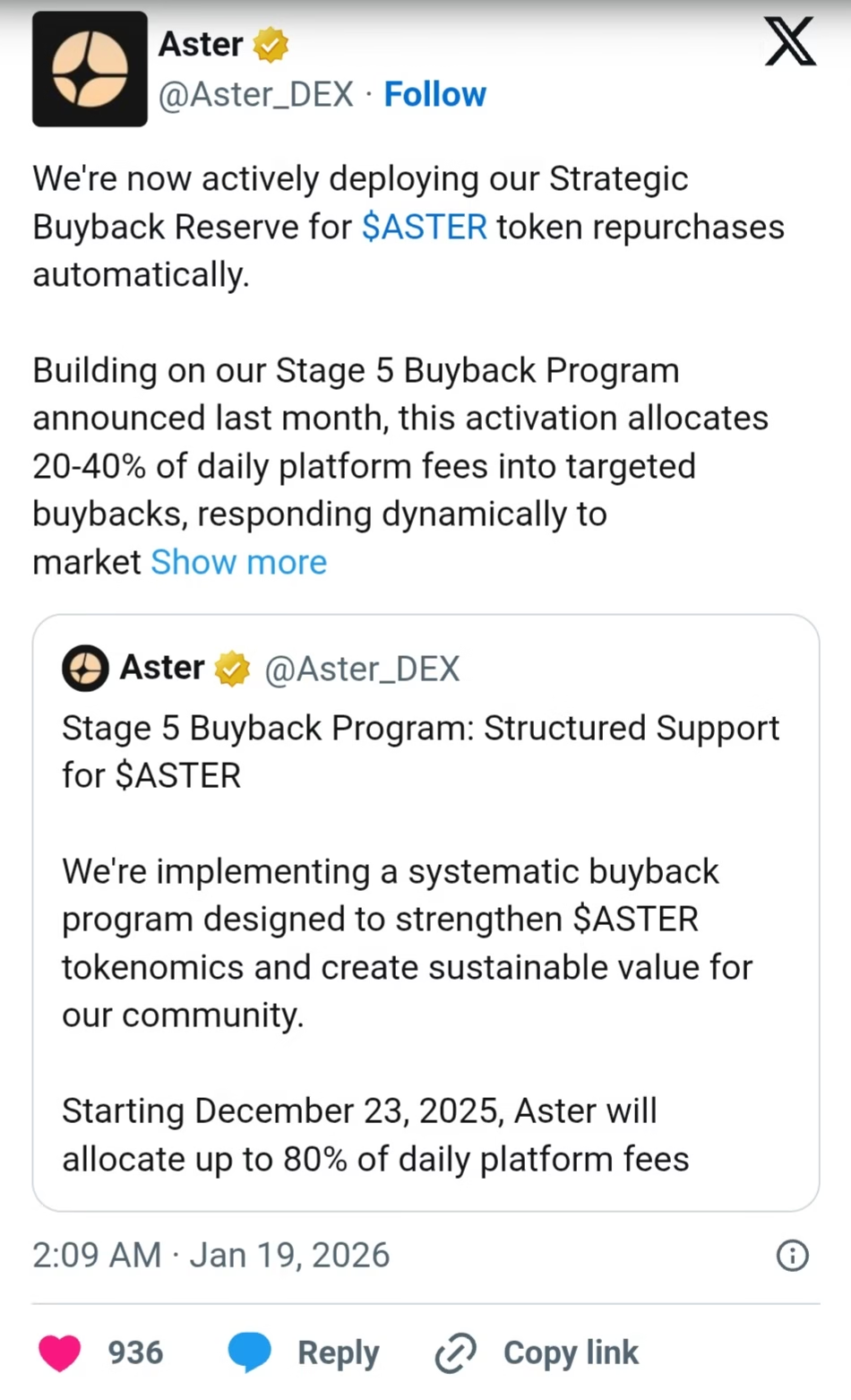 Together, Stage 5 buybacks and the reserve can direct up to 80% of daily protocol fees toward ASTER repurchases, all carried out on-chain and fully verifiable, further strengthening the buyback model.
The buybacks are funded primarily through perpetual trading fees with additional contributions from Shield Mode which is a high leverage feature that charges fees only on profitable trades.
All Shield Mode fees are routed entirely to ASTER repurchases, deepening the revenue linked Aster token buyback pipeline.
Across previous buyback stages, the protocol has repurchased more than 209 million ASTER tokens worth over $140 million at the time of execution.
Some tokens were burned, while others were retained as part of treasury management under the evolving Aster token buyback policy.
As of this writing, ASTER is down roughly 13% over the past 30 days a move the team attributes more to broader market pressure than changes to the Aster token buyback program.
Aster said the framework is expected to run throughout 2026 positioning the reserve as a long term revenue anchored Aster token buyback tool rather than a short term attempt to influence price movements.



Copyright © 2025 - The Bit Gazette.