

- Trending
- Comments
- Latest

The U.S. Securities and Exchange Commission is considering a new framework that could significantly reduce compliance burdens for cryptocurrency firms.
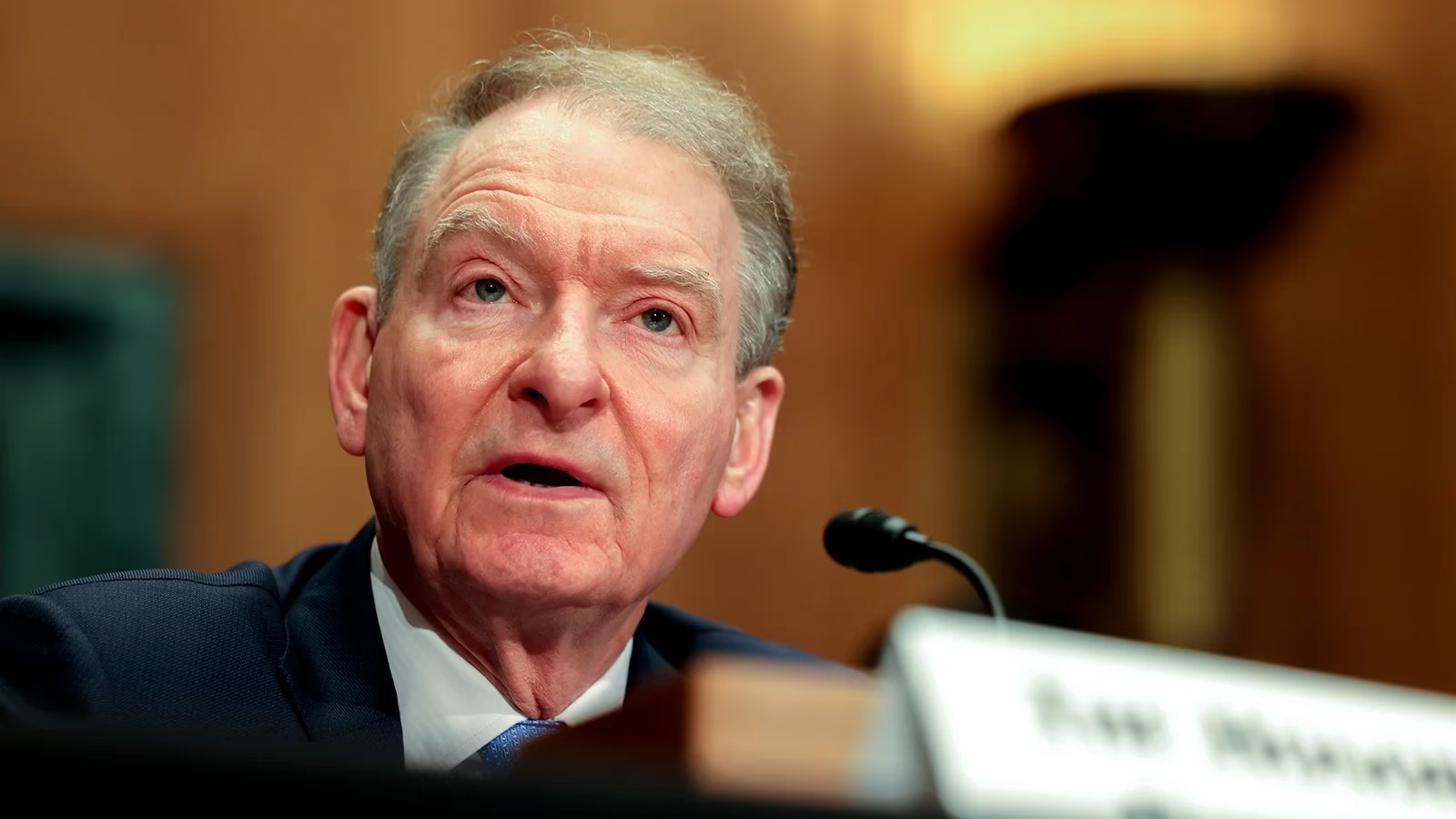
The proposal, put forward by SEC Chair Paul Atkins, aims to introduce conditional exemptions for crypto projects, allowing them to operate with greater flexibility while still maintaining investor protections.
The development, reported in recent coverage by Crypto.news, comes amid growing criticism that existing securities laws are too rigid for the rapidly evolving crypto industry.
If implemented, the framework could clarify long-standing uncertainties around token classification and regulatory obligations—issues that have weighed heavily on market sentiment.
Atkins’ proposal centers on balancing innovation with oversight, addressing concerns from both regulators and industry participants.
According to reports, the framework would allow certain blockchain-based projects to qualify for exemptions from full securities registration requirements.
This approach mirrors earlier “safe harbor” discussions within the SEC but appears more structured and actionable.
Projects that demonstrate decentralization, clear utility, and good-faith compliance efforts could benefit from reduced regulatory friction.
This could lower entry barriers for startups while encouraging innovation within the U.S. market.
“After more than a decade of uncertainty, this interpretation will provide market participants with a clear understanding of how the Commission treats crypto assets under federal securities laws.”
SEC Chairman Paul S. Atkins, said.
According to Paul Atkins, creating a workable exemption framework could foster innovation without sacrificing investor protection.
The proposal also reflects increasing pressure on U.S. regulators to remain competitive globally, as jurisdictions like the EU and parts of Asia move ahead with clearer crypto rules.
“coherent token taxonomy for digital commodities, digital collectibles, digital tools, stablecoins, and digital securities,” and clarify how a “non-security crypto asset” – SEC Report
The crypto industry has broadly welcomed the proposal, viewing it as a step toward regulatory clarity.
Clearer rules could reduce the legal risks associated with holding or trading certain digital assets, particularly those previously considered borderline securities.
However, some experts caution that exemptions must be carefully designed to avoid loopholes that could expose investors to fraud or poorly structured projects.
According to industry analysts, the regulatory clarity is essential, but exemptions must not weaken investor safeguards.
The proposal may also impact how tokens are listed on exchanges, potentially enabling more assets to enter the U.S. market without triggering enforcement actions.
This could boost liquidity and market participation, two factors closely watched by crypto investors.
While the proposal is still in its early stages, it signals a broader shift within the SEC toward engagement rather than strict enforcement.
Any formal adoption would likely require internal review, public consultation, and potential legal scrutiny.
A more defined framework could attract institutional capital, strengthen investor confidence, and position the U.S. as a more competitive hub for blockchain innovation.
As the debate unfolds, one thing remains clear: the outcome of this proposal could shape the next phase of crypto adoption in the United States, and significantly influence global regulatory trends.



Copyright © 2025 - The Bit Gazette.