





- Trending
- Comments
- Latest

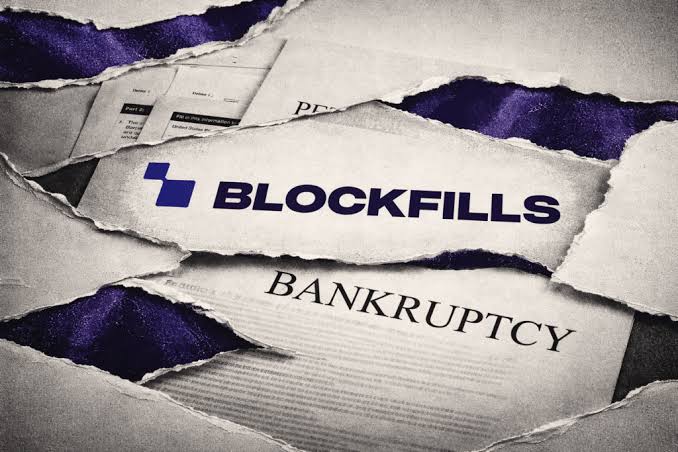
BlockFills, a Chicago-based cryptocurrency trading and lending platform that processed over $60 billion in trading volume in 2025, has filed for Chapter 11 bankruptcy after suspending client withdrawals amid mounting financial pressure.
The collapse, affecting primarily institutional investors including hedge funds and asset managers, has triggered comparisons to 2022’s major crypto failures (FTX, Celsius, BlockFi) and raised questions about whether the industry has addressed structural vulnerabilities exposed during the previous downturn.
Once known as a major liquidity provider for institutional traders, BlockFills reportedly handled tens of billions of dollars in trading volume annually. But after suspending client withdrawals earlier this year amid mounting financial pressure, the firm has now entered Chapter 11 proceedings, marking what analysts describe as one of the most troubling failures in institutional crypto markets since the industry’s last major downturn.
The BlockFills bankruptcy has reignited a broader debate about whether centralized crypto finance has truly evolved since the failures of platforms like FTX, Celsius Network, and BlockFi just a few years ago.
The crisis began earlier this year when BlockFills halted client deposits and withdrawals, citing difficult market conditions and internal financial constraints. The move immediately raised red flags across the crypto trading ecosystem, where the firm had built a reputation as a key counterparty for hedge funds, market makers, and digital asset investors.
The withdrawal freeze soon triggered speculation about the company’s solvency, and within weeks, reports emerged that the firm was consulting restructuring advisers.
Now, with the BlockFills bankruptcy formally underway, the company is attempting to reorganize its finances while continuing limited operations during court proceedings.
Industry observers say the situation highlights a persistent structural weakness in centralized crypto lending platforms: liquidity mismatches between client deposits and the long-term investments those funds often support.
Unlike many high-profile failures of the past, the BlockFills bankruptcy primarily affects institutional investors rather than retail traders.
The company’s business model focused on providing liquidity, derivatives trading, and crypto lending services to hedge funds, asset managers, and professional trading firms. That institutional focus helped BlockFills build significant market share during the crypto boom.
Reports indicate the firm processed more than $60 billion in trading volume in 2025, underscoring its influence within professional digital asset markets.
But that same institutional exposure may also complicate the fallout from the BlockFills bankruptcy, as large funds and trading desks now assess their counterparty risk across the sector.
For many analysts, the most troubling aspect of the BlockFills bankruptcy is how closely the situation mirrors events from 2022.
That year, a cascade of failures including the collapse of FTX and the bankruptcy filings of Celsius Network and BlockFi exposed widespread weaknesses in crypto lending practices. Those firms had relied heavily on opaque balance sheets, leveraged trading strategies, and interconnected loans between industry players.
When market prices fell sharply, liquidity quickly evaporated.
The similarities between those failures and the current BlockFills bankruptcy have not gone unnoticed.
Blockchain entrepreneur Sunny Lu, founder of the enterprise blockchain platform VeChain, recently summarized the sentiment among many industry veterans.
“The same story happens over and over again,” Lu said in comments reported by the Financial Times, referring to repeated liquidity crises in centralized crypto finance.
The financial turmoil surrounding BlockFills has also triggered legal challenges.
One lawsuit filed by investment firm Dominion Capital alleges that the company improperly commingled client assets, an accusation that echoes some of the most controversial claims made during earlier crypto collapses.
A judge reportedly ordered a freeze on certain assets connected to the dispute, further complicating the company’s restructuring process.
While the details will likely emerge during bankruptcy proceedings, the BlockFills bankruptcy has already raised uncomfortable questions about governance and financial oversight inside the digital asset industry.
Some reports also suggest that accounting irregularities and large trading losses contributed to the firm’s deteriorating financial position.
Regulators are now likely to scrutinize the BlockFills bankruptcy closely as they continue developing frameworks for digital asset oversight.
Authorities in the United States and Europe have already tightened rules governing crypto custody, exchange operations, and lending platforms since the market turmoil of 2022.
Still, critics argue that enforcement and transparency requirements have not kept pace with the complexity of institutional crypto markets.
For regulators, the BlockFills bankruptcy may serve as further evidence that stronger safeguards are needed to protect both investors and the broader financial system.
The deeper issue raised by the BlockFills bankruptcy may be cultural rather than technical.
Over the past decade, the cryptocurrency sector has repeatedly championed innovation, decentralization, and financial disruption. But when centralized intermediaries dominate critical services such as trading, lending, and custody, traditional financial risks can quickly reappear.
That dynamic is precisely what many experts believe is happening again.
Despite the catastrophic failures of 2022, many centralized crypto firms still operate with limited transparency and complex lending structures that can unravel under market stress.
The BlockFills bankruptcy therefore represents more than the collapse of a single firm it highlights the unfinished reform agenda facing the entire digital asset industry.
For investors, traders, and regulators alike, the lesson may be clear: until transparency, governance, and risk management improve, the next crisis may simply be a matter of time.



Copyright © 2025 - The Bit Gazette.

