







- Trending
- Comments
- Latest

Cake Wallet announced a Lightning Network integration that maintains full user self-custody and privacy—a rare combination in mobile wallets where custodial speed typically comes at the cost of key control.
The update positions the privacy-focused wallet as an alternative to custodial platforms like Strike and Wallet of Satoshi that dominate Lightning adoption but require surrendering funds to third parties.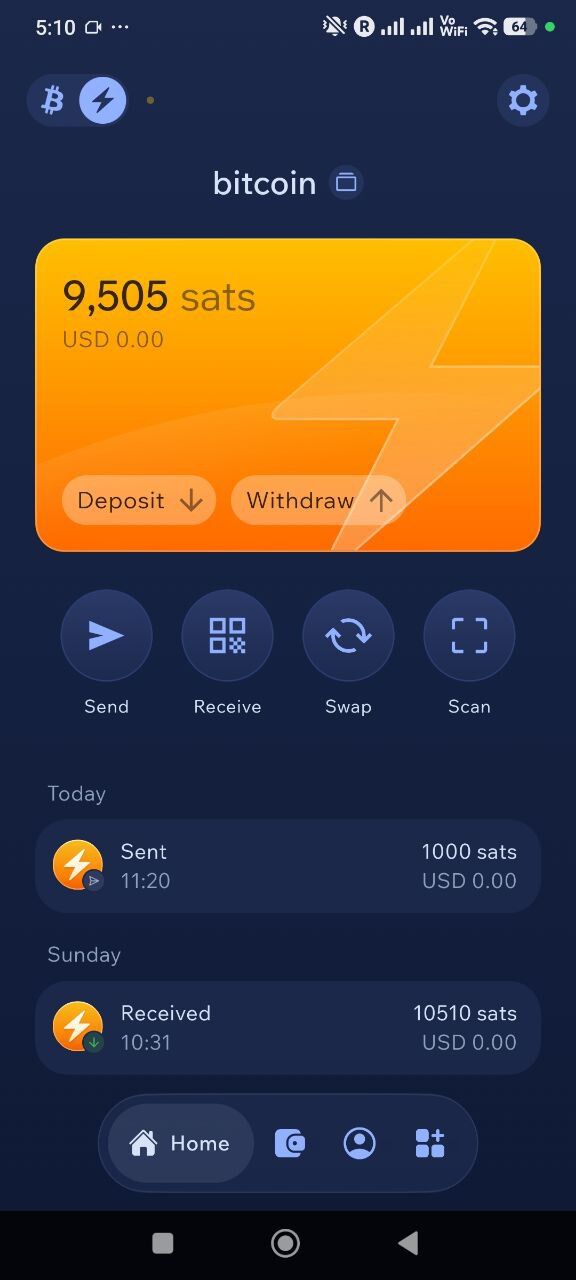
Source: CakeWalletThe announcement was shared in a press release, where Cake Wallet detailed how Lightning payments would operate under its existing privacy architecture.
The integration follows a series of Bitcoin-specific enhancements that have differentiated Cake Wallet from multi-asset competitors such as Trust Wallet, which primarily focus on standard on-chain support.
Unlike many multi-coin wallets, Cake Wallet has previously deployed advanced Bitcoin technologies designed to strengthen transaction privacy.
These include Silent Payments and Payjoin, both of which aim to reduce the traceability of on-chain activity and mitigate risks such as address clustering and targeted scams.
With the new Lightning integration, Cake Wallet extends that philosophy to Bitcoin’s fast payments layer.
The update is enabled through the Breez SDK and Spark, allowing users to access Lightning functionality without running their own node.
Spark provides infrastructure support while preserving self-custody controls, according to the company.
In its statement, Cake Wallet emphasized that Lightning transactions are designed to minimize unnecessary data exposure.
“Lightning transactions in Cake Wallet do not embed your Spark address in Lightning invoices, and transaction data is not published to public explorers by default. Visibility is intentionally limited, reducing unnecessary exposure of user activity and safeguarding user privacy,” — Cake Wallet, in a press release to Bitcoin Magazine.
This approach aims to align Lightning payments more closely with the privacy expectations of Bitcoin users who prefer minimizing metadata leakage.
For many Bitcoin advocates, Lightning adoption has raised concerns about custody trade-offs and privacy compromises.
Cake Wallet’s leadership framed the update as an attempt to address those concerns directly.
“Lightning should not require users to sacrifice privacy or custody just to get speed,” — Seth for Privacy, COO, Cake Wallet. He added, “What we have today makes Lightning practical with solid privacy defaults, simple self-custody, and a clear on-chain exit.”
Vikrant Sharma, CEO of Cake Labs, also underscored the importance of maintaining Bitcoin’s foundational principles.
“With Breez and Spark, Lightning finally reaches a point where it can be fast and intuitive without turning bitcoin into an IOU or giving up control. This is the first time Lightning felt aligned with the principles Cake was built on,” — Vikrant Sharma, CEO, Cake Labs.
By combining Lightning with self-custody design, Cake Wallet seeks to differentiate itself in a competitive mobile wallet landscape increasingly shaped by convenience-focused custodial solutions.
The Lightning integration is part of a broader set of updates within Cake Wallet.
The company recently introduced interface improvements and social features such as Birdpay, which enables users to send cryptocurrency to X.com accounts via usernames.
This functionality reflects a trend toward simplifying crypto transactions through familiar social identifiers.
In addition, Cake Wallet has added support for tokenized equities through xStocks, enabling users to trade blockchain-based representations of traditional shares.
The move expands the wallet’s utility beyond cryptocurrencies and into hybrid digital asset offerings.
These product expansions come as competition intensifies among mobile wallets catering to privacy-conscious and self-custody-oriented users.
While custodial platforms often prioritize ease of use, Cake Wallet continues to emphasize control over private keys and advanced transaction features.
For crypto investors and Bitcoin users, the Lightning rollout signals a maturation of second-layer payment infrastructure within mobile applications.
By embedding Lightning capabilities into Cake Wallet without requiring node management, the company aims to lower barriers to adoption while retaining core privacy safeguards.
As Lightning adoption grows globally, the success of Cake Wallet’s approach may hinge on whether users prioritize privacy and self-custody over fully managed custodial experiences.
With its latest integration, Cake Wallet positions itself at the intersection of speed, autonomy and data minimization in the evolving Bitcoin payments ecosystem.



Copyright © 2025 - The Bit Gazette.

