

- Trending
- Comments
- Latest

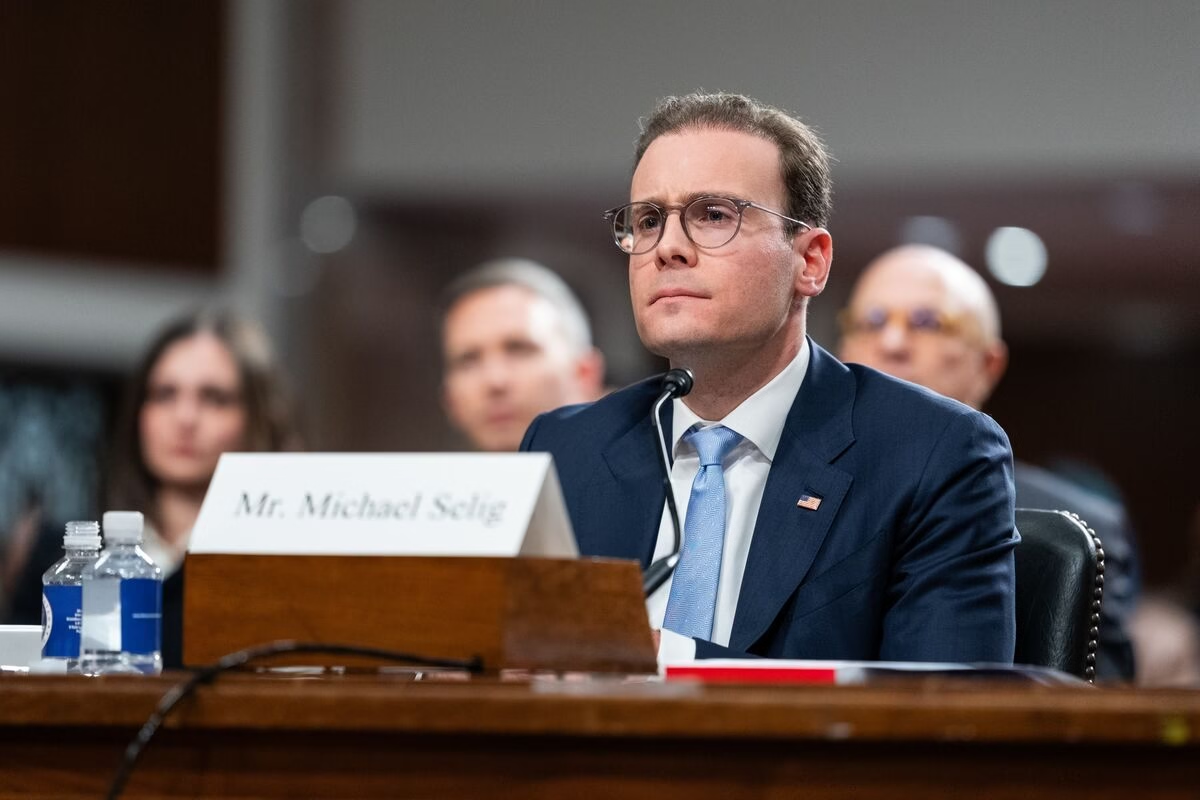
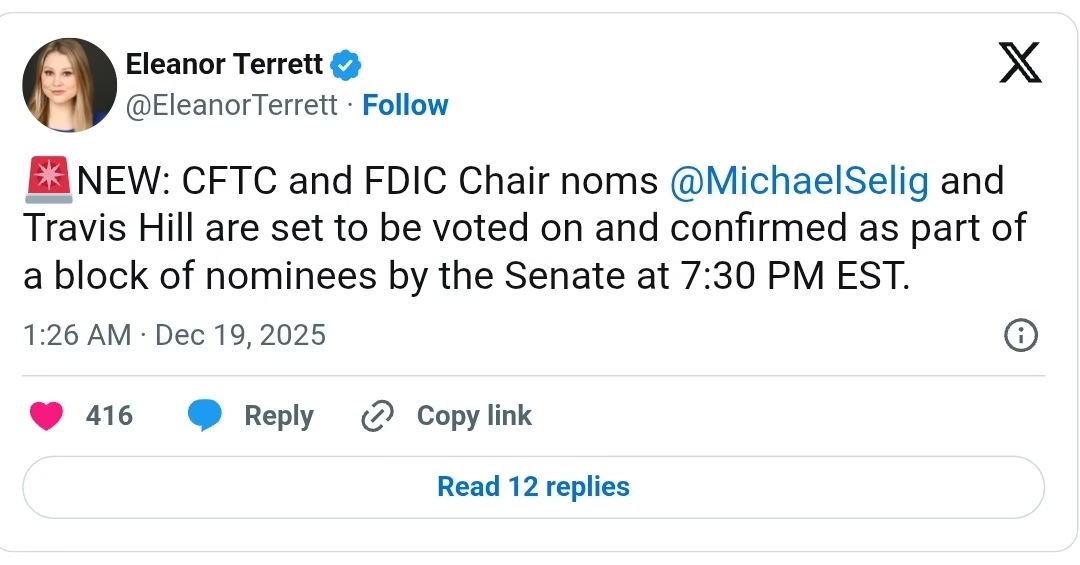
The U.S. Senate confirmed Michael Selig as chair of the Commodity Futures Trading Commission and Travis Hill as chair of the Federal Deposit Insurance Corporation on Thursday, installing permanent leadership at two agencies central to cryptocurrency oversight.
The 53-43 vote completes a broader regulatory realignment as Congress debates legislation that would expand the CFTC’s authority over digital asset markets and reshape how banks interact with crypto firms.
The approvals come as Congress debates legislation that could significantly expand the CFTC’s authority over cryptocurrency markets, while federal banking agencies reassess how financial institutions interact with digital asset firms.
For crypto investors and policymakers alike, the arrival of new CFTC and FDIC chairs signals potential continuity in a more crypto-accommodating regulatory posture.
Michael Selig will take over the CFTC from Acting Chair Caroline Pham, who introduced several pro-crypto initiatives during her tenure and is preparing to leave the agency for a senior role at crypto infrastructure firm MoonPay.
Travis Hill, who has been serving as acting chair of the FDIC, was confirmed to lead the agency permanently after advocating for changes to policies that affected how banks engage with crypto businesses.
The confirmation of the CFTC and FDIC chairs reflects the Senate’s willingness to move forward with leadership appointments even as lawmakers continue to debate the scope of crypto regulation.
The CFTC, which traditionally oversees derivatives markets, is widely expected to become a primary regulator of U.S. cryptocurrency activity once pending legislation is finalized.
Selig’s appointment positions him to carry forward digital asset policy work he previously supported while serving as an official at the Securities and Exchange Commission.
His arrival also marks a transition away from Pham’s acting leadership, which saw the commission pursue what it described internally as a “crypto sprint” focused on updating regulatory language and market rules.
As one of the newly installed CFTC and FDIC chairs, Selig steps into an agency undergoing structural and legal change.
Under Pham, the CFTC was reduced from its traditional five-member commission to a single sitting member, a shift that is expected to continue once Selig formally assumes office. Pham has indicated she plans to depart as soon as Selig arrives, leaving him as the sole commissioner.
That structure could allow Selig to move quickly on policy priorities, but it also raises questions about governance and legal resilience if agency actions are challenged.
Among the initiatives already underway are proposals to allow stablecoins to be used as tokenized collateral, integrate blockchain terminology into regulatory frameworks, and permit regulated platforms to offer spot leveraged crypto products. Derivatives exchange Bitnomial has already moved to pursue such an offering.
Selig takes office as Congress considers legislation that would formally grant the CFTC authority over a wider range of crypto spot markets. The House of Representatives has passed the bill, and observers say the Senate Banking Committee may hold a markup hearing before the end of the month.
At the FDIC, Hill has emerged as a vocal advocate for revising policies that restricted how banks engage with crypto firms, a stance that places the CFTC and FDIC chairs in alignment on easing friction between traditional finance and digital assets.
Hill has argued that previous guidance required banks to seek supervisory approval before engaging in crypto-related activity, a position he said has since been reversed.
“We undid the policy of the past few years,” — Travis Hill, Chair, Federal Deposit Insurance Corporation.
“Banks are expected to manage the safety and soundness risk, but otherwise have no prohibitions to serving those industries,” — Travis Hill, Chair, Federal Deposit Insurance Corporation.
Hill’s approach has been welcomed by segments of the crypto industry and Republican lawmakers who have criticized what they described as “debanking” of crypto companies and executives.
Under his leadership, the FDIC is expected to continue work on stablecoin oversight and clarify expectations for banks that provide services to digital asset firms.
The confirmation of the CFTC and FDIC chairs completes another phase of leadership changes across federal financial regulators.
The administration has already filled key roles at the Securities and Exchange Commission, the Office of the Comptroller of the Currency, and the Department of the Treasury, while also reshaping leadership at the Federal Reserve.
As Selig and Hill settle into their roles, attention will turn to how quickly policy proposals move forward and whether Congress finalizes legislation expanding the CFTC’s crypto mandate.
The decisions taken by the CFTC and FDIC chairs in the coming months are likely to shape the contours of U.S. crypto regulation well beyond 2025.



Copyright © 2025 - The Bit Gazette.