






- Trending
- Comments
- Latest

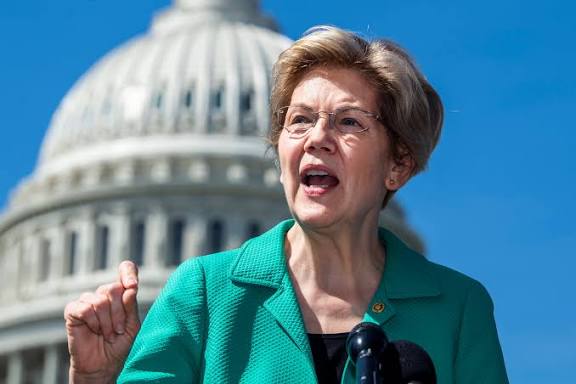
Senator Elizabeth Warren has sent a formal letter to Treasury Secretary Scott Bessent and Federal Reserve Chair Jerome Powell demanding they explicitly rule out any government rescue of crypto markets after Bessent failed to give a straight answer when pressed on whether taxpayer money could be used to support digital assets amid Bitcoin’s 50% slide from its October peak.
The demand comes amid renewed turbulence in digital asset markets, with Bitcoin having fallen roughly 50% from its October peak. The downturn has reignited long-standing debates over systemic risk, investor protection, and whether the federal government should ever intervene in the crypto sector.
Warren, the ranking Democrat on the Senate Banking Committee, left little room for ambiguity. In her letter, she urged both the Treasury Department and the Federal Reserve to categorically reject any form of Crypto Bailout, including direct purchases of digital assets, federal guarantees, or the creation of emergency liquidity facilities aimed at propping up crypto markets.
“Rather than giving a simple ‘no,’ he deflected,” Warren wrote, referencing recent congressional questioning of Secretary Bessent. “It’s deeply unclear what, if any, plans the U.S. government currently has to intervene in the current Bitcoin selloff.”
Her concern centers on whether federal agencies might attempt a backdoor Crypto Bailout under the guise of financial stability measures.
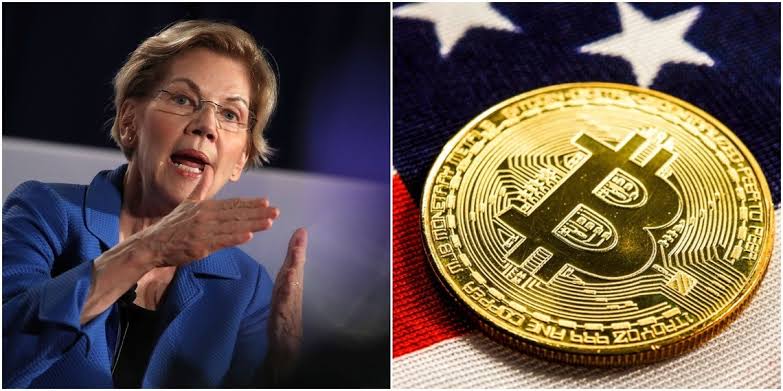
During a February 6 session, Bessent was pressed on whether taxpayer money would be used to purchase crypto assets or otherwise support the industry. He responded that the government is “retaining seized Bitcoin,” but stopped short of ruling out broader intervention—an answer Warren found unsatisfactory.
For Warren, anything short of an unequivocal rejection raises red flags.
The market slide has erased billions in personal wealth among prominent industry leaders—fueling speculation about whether political pressure could mount for a Crypto Bailout if losses deepen.
Changpeng Zhao, founder of Binance, has reportedly seen his net worth shrink by nearly $30 billion during the downturn. Brian Armstrong, CEO of Coinbase, has taken an estimated $7 billion hit. Meanwhile, Michael Saylor, whose firm MicroStrategy holds substantial Bitcoin reserves, has watched company shares fall nearly 20% since the beginning of the year.
Warren cited these losses to underscore her broader argument: wealthy insiders who profited during crypto’s ascent should not be shielded from downturns by a taxpayer-funded Crypto Bailout.
“The American public should not be on the hook for speculative bets made by crypto billionaires,” Warren has repeatedly argued in past public statements.
According to Warren, the recent selloff has been intensified by “cascading liquidations of leveraged positions.” As crypto prices dropped, heavily leveraged traders were forced to unwind positions, accelerating downward pressure.
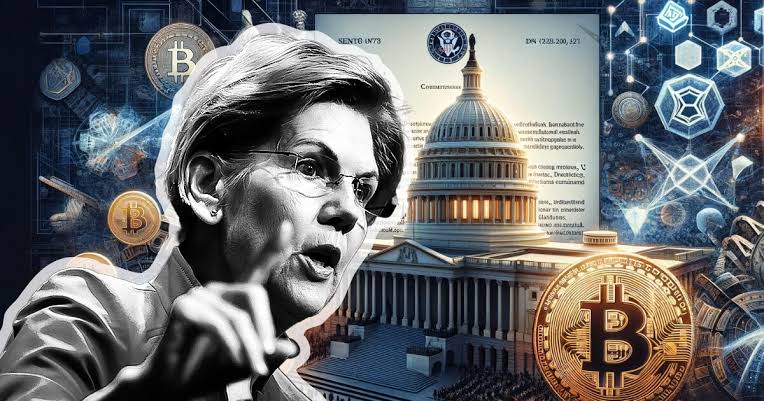
Market analysts note that leverage cycles are not uncommon in crypto, where volatility remains significantly higher than in traditional financial markets. But Warren suggests that such instability is precisely why the federal government must avoid even the appearance of a Crypto Bailout.
Her position aligns with a broader philosophy that speculative markets must be allowed to correct without government intervention, particularly when retail investors face the brunt of losses.
Warren has long been one of crypto’s most vocal critics in Congress. She has called for stronger anti-money laundering rules, tighter exchange oversight, and enhanced consumer protections.
Her latest warning against a Crypto Bailout builds on that regulatory agenda. In her letter, she pointed to a record $17 billion reportedly lost to cryptocurrency fraud and theft in 2025, arguing that federal agencies should focus on strengthening investor safeguards rather than rescuing the industry.
“Federal financial agencies must strengthen protections for retail crypto investors,” she wrote.
For Warren, the solution to crypto market instability is stricter oversight—not a government-funded Crypto Bailout.
The prospect of a Crypto Bailout, even if remote, carries political weight in a post-2008 environment where public trust in financial rescues remains fragile.
In 2008, federal interventions to stabilize banks and automakers were widely criticized as rewarding excessive risk-taking. Warren’s message is clear: crypto should not receive similar treatment.
Federal Reserve Chair Jerome Powell has previously emphasized that the central bank does not regulate crypto directly but monitors its potential spillover risks. If digital asset markets were to pose systemic threats to the broader financial system, policymakers might face difficult decisions.
Still, as of now, neither the Treasury Department nor the Federal Reserve has announced plans resembling a Crypto Bailout.
The crypto industry itself has not formally requested a bailout. Many leaders continue to argue that decentralized markets are resilient by design and capable of weathering downturns without federal assistance.
Yet the political optics of billionaire losses and collapsing token prices have amplified scrutiny.
The debate over a potential Crypto Bailout also intersects with broader discussions about how digital assets should be regulated, taxed, and integrated into traditional finance.
Her letter demands a formal guarantee that no taxpayer resources—direct or indirect—will be used to support digital asset prices or shield crypto moguls from market forces.
Whether federal agencies respond with an explicit denial remains to be seen.
But one thing is certain: as volatility persists and wealth evaporates, the political battle over a possible Crypto Bailout is no longer hypothetical. It has become a flashpoint in the ongoing struggle to define the government’s role in the future of digital finance.



