

- Trending
- Comments
- Latest

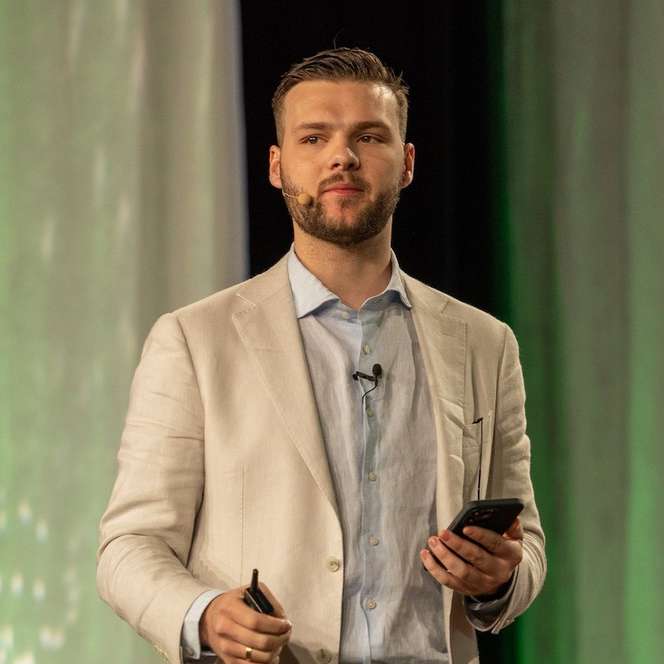
SafeMoon founder Braden Karony was sentenced to eight years in federal prison Monday for orchestrating a fraud scheme that defrauded over one million investors and caused hundreds of millions in losses.
The sentence was handed down Monday by a United States District Judge in Brooklyn, following Karony’s conviction last May on charges of conspiracy to commit securities fraud, wire fraud, and money laundering.
Prosecutors said the case marks one of the most consequential criminal actions stemming from the collapse of high-profile crypto projects launched during the pandemic-era bull market.
For investors and policymakers, the conviction of the Ex-SafeMoon CEO underscores the growing willingness of U.S. authorities to pursue prison terms for digital-asset executives accused of abusing investor trust.
In addition to the 100-month prison term, the court ordered the Ex-SafeMoon CEO to forfeit $7.5 million and surrender two residential properties acquired with illicit proceeds.
Karony will also be required to pay restitution to victims, though the total amount has yet to be finalized, according to court records.
Federal prosecutors said Karony used his leadership position at SafeMoon to misrepresent how investor funds were handled, while secretly maintaining access to liquidity pools that were marketed as locked and inaccessible to insiders.
“Karony lied to investors from all walks of life including military veterans and hardworking Americans and defrauded thousands of victims in order to buy mansions, sports cars, and custom trucks,” — Joseph Nocella Jr., U.S. Attorney, Eastern District of New York, in a statement accompanying the sentencing.
The conviction followed a jury trial in which federal prosecutors presented blockchain records, internal communications, and financial transactions showing how customer funds were diverted.
The jury found the Ex-SafeMoon CEO guilty on all counts, rejecting defense arguments that investor losses were the result of market volatility rather than fraud.
According to evidence presented at trial, the Ex-SafeMoon CEO and his co-conspirators — Thomas Smith, SafeMoon’s former chief technology officer, and Kyle Nagy, the project’s creator implemented a 10% transaction tax on every SafeMoon trade.
The tax was promoted as a mechanism to support liquidity pools that were supposedly locked, ensuring that insiders could not withdraw funds.
In reality, prosecutors demonstrated that Karony and his associates retained secret access to those pools.
Rather than serving as a safeguard for investors, the liquidity reserves were allegedly used as a slush fund to finance luxury real estate purchases, high-end vehicles, and other personal expenses.
The scope of the fraud was significant. Court filings indicate that more than one million investors were affected globally, many of whom were retail participants drawn in by aggressive online marketing and promises of long-term value.
At its peak during the 2021 crypto boom, the SafeMoon token reached a market capitalization exceeding $8 billion, placing it among the most talked-about digital assets of the period.
The collapse was swift once scrutiny intensified. After investigators and independent analysts raised concerns about liquidity access and insider behavior, SafeMoon’s token value fell more than 98%.
The company ultimately filed for bankruptcy in late 2023, wiping out the vast majority of investor holdings.
The sentencing of the Ex-SafeMoon CEO reflects a broader shift in how U.S. regulators and prosecutors approach crypto-related misconduct.
Rather than relying solely on civil enforcement or settlements, authorities are increasingly pursuing criminal cases that carry significant prison time.
Legal analysts say the outcome sends a clear warning to founders and executives who market tokens as decentralized or community-driven while retaining undisclosed control over funds.
“This case reinforces that crypto projects are not beyond the reach of traditional fraud statutes,” — federal prosecutor, during closing arguments summarized in court transcripts.
The case has also highlighted cooperation among defendants. Thomas Smith pleaded guilty in February 2025 and testified against the Ex-SafeMoon CEO, a move prosecutors said strengthened the government’s case.
Smith is expected to receive a reduced sentence as part of his plea agreement. Kyle Nagy, meanwhile, remains at large, with investigators noting in court filings that he is believed to have fled the United States.
Some reports suggest he may be residing in Russia, though U.S. authorities have not publicly confirmed his location.
For crypto investors, the downfall of the Ex-SafeMoon CEO serves as a cautionary example of how opaque token structures and unchecked insider control can expose participants to severe losses.
For policymakers, the case adds momentum to calls for clearer disclosure standards and stronger oversight of token issuers.
As sentencing concludes one chapter of the SafeMoon saga, regulators say investigations into crypto-related fraud remain ongoing.
The conviction of the Ex-SafeMoon CEO stands as one of the most prominent reminders yet that misconduct in digital-asset markets can carry consequences comparable to those in traditional finance.



Copyright © 2025 - The Bit Gazette.