

- Trending
- Comments
- Latest

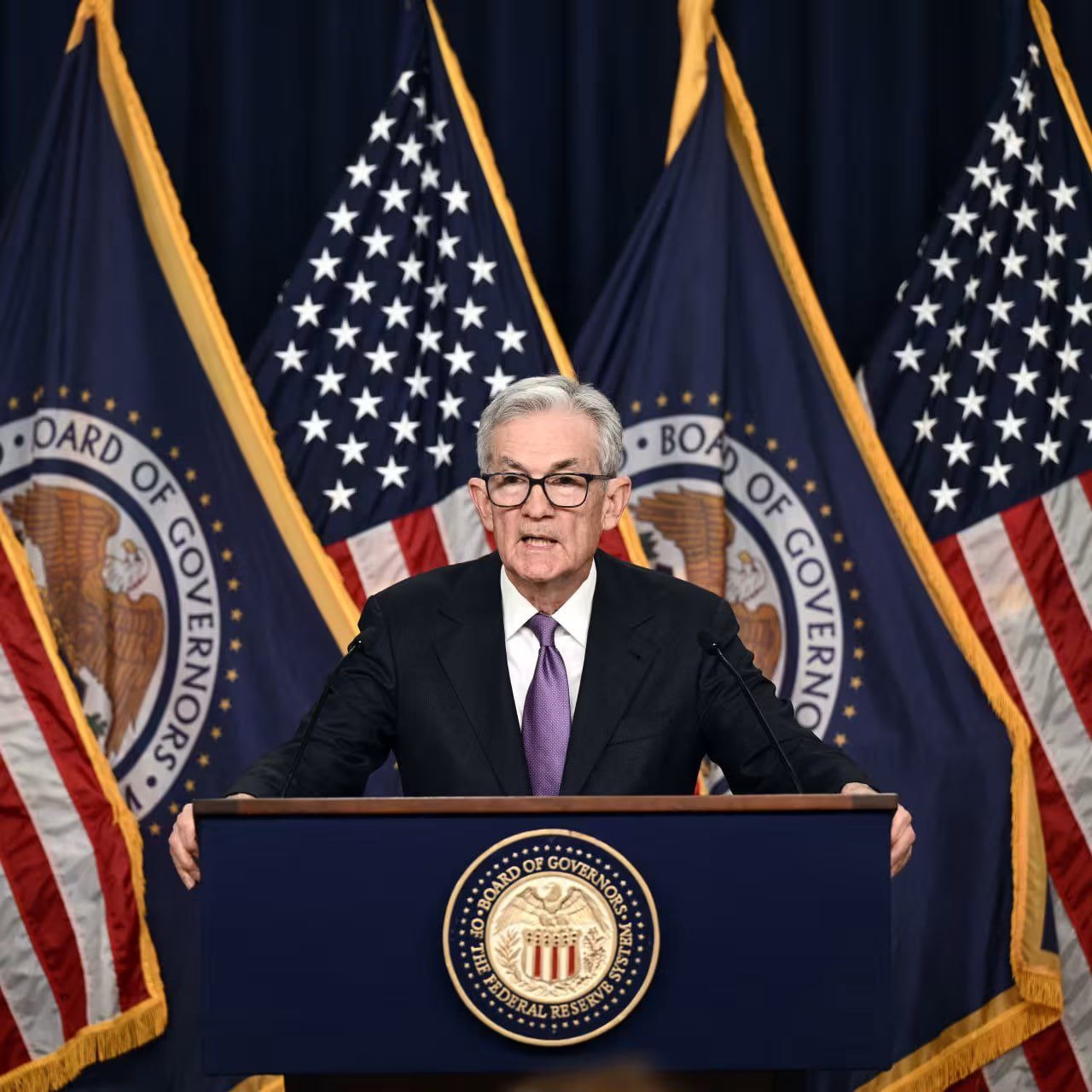
The Federal Reserve held interest rates steady on Wednesday, pausing its rate-cutting cycle after three consecutive reductions as policymakers balanced moderating labor market conditions against inflation that remains above the central bank’s 2% target.
The decision by the Federal Open Market Committee keeps the federal funds rate at its current level while officials assess whether recent economic data supports further easing or requires continued restraint.
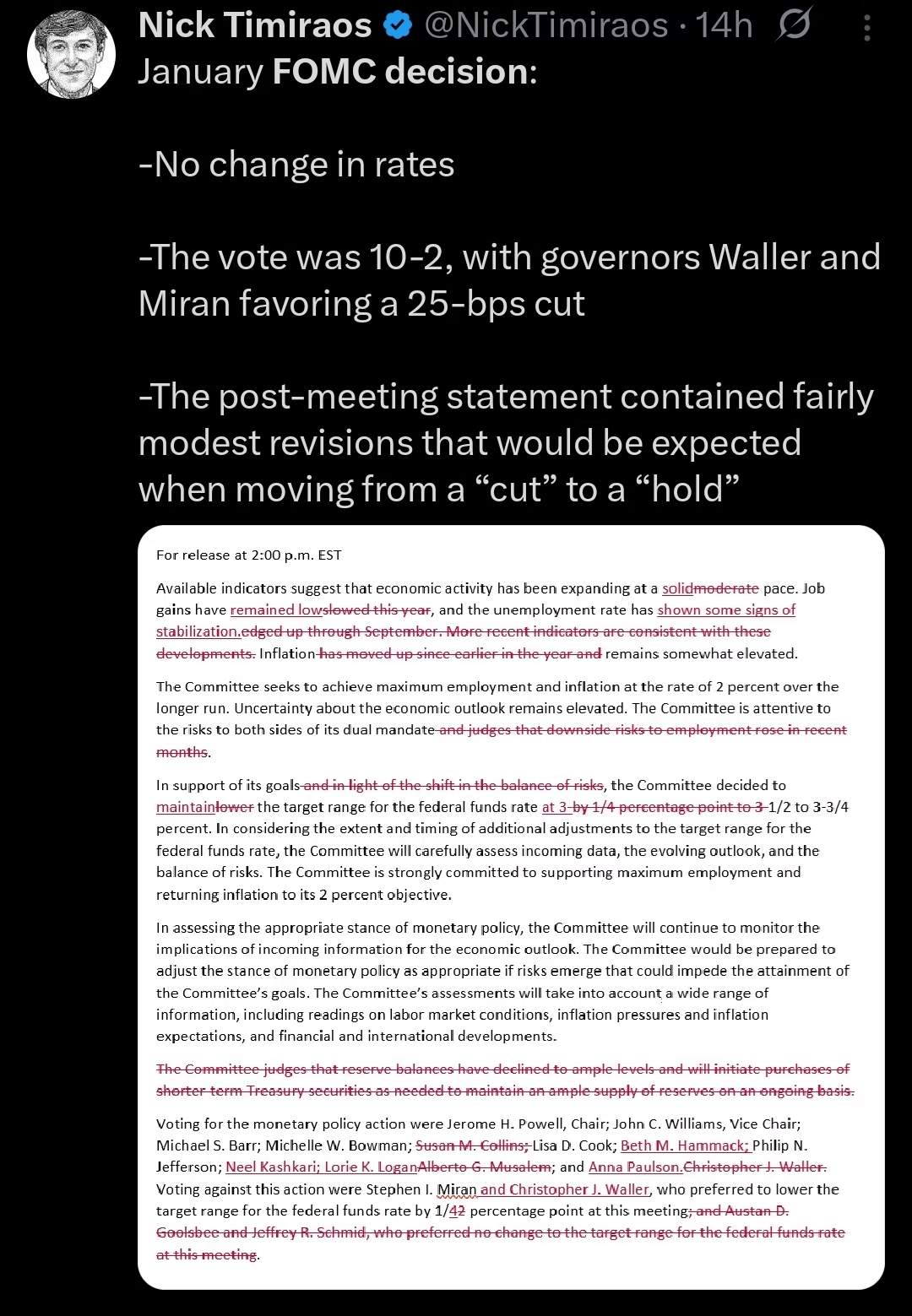
According to the policy statement, available indicators suggest that economic activity has continued to expand at a solid pace, while job gains have slowed compared to earlier periods. The unemployment rate, the committee noted, has shown signs of stabilization, even as inflation remains above the Fed’s 2% target.
The FOMC rate decision comes at a time when financial markets had anticipated a pause, but concerns remain about how long restrictive policy will stay in place.
In its statement, the committee emphasized its dual mandate.
“The Committee seeks to achieve maximum employment and inflation at the rate of 2 percent over the longer run,” — Federal Open Market Committee, policy statement.
This framing underlines why the FOMC rate decision did not include additional cuts despite recent moderation in some economic indicators.
Inflation remained a central theme in the FOMC rate decision, with policymakers acknowledging that price pressures, while lower than earlier in the year, are still “somewhat elevated.” The committee stressed that uncertainty around the economic outlook remains high, reinforcing its cautious stance.
The statement highlighted that more recent indicators are consistent with a slowing but still resilient economy. At the same time, the Fed signaled that it remains attentive to risks on both sides of its mandate.
“Uncertainty about the economic outlook remains elevated,” — Federal Open Market Committee, policy statement.
This language suggests that policymakers are wary of easing too quickly, even as markets look for clearer signals on the future path of rates.
By reiterating its commitment to returning inflation to 2 percent, the committee signaled that the FOMC rate decision should be interpreted as a pause rather than a pivot toward aggressive easing.
Officials indicated they will continue to carefully assess incoming data, including inflation expectations and labor market conditions, before making further adjustments.
Beyond inflation, the FOMC rate decision reflected broader concerns about economic risks. Policymakers acknowledged that job gains have slowed this year, though they stopped short of signaling significant weakness in employment. Instead, the statement suggested that conditions are stabilizing, offering the Fed some room to maintain its current stance.
“In considering the extent and timing of additional adjustments to the target range for the federal funds rate, the Committee will carefully assess incoming data, the evolving outlook, and the balance of risks,” — Federal Open Market Committee, policy statement.
This forward-looking guidance underscores that future FOMC rate decision outcomes will remain data-dependent.
Market participants are also weighing external factors, including renewed trade policy uncertainty, currency market volatility, and bond market selling. These developments add to the complexity surrounding the FOMC rate decision, as fiscal and geopolitical pressures could influence inflation and growth trajectories in the months ahead.
The committee reaffirmed that it stands ready to adjust monetary policy if risks emerge that could impede its goals. However, the current assessment suggests that the threshold for further rate cuts remains high, reinforcing the Fed’s cautious approach.
The pause signaled in the latest FOMC rate decision has implications across financial markets. Investors who had anticipated a quicker return to easing conditions are now recalibrating expectations, particularly as policymakers continue to emphasize inflation control.
While the committee did not announce new measures related to balance sheet operations, it reiterated its commitment to monitoring financial and international developments as part of its broader assessment. The decision-making process reflects the Fed’s view that premature easing could reignite inflationary pressures, complicating its mandate.
Attention now turns to upcoming remarks from Federal Reserve Chair Jerome H. Powell, which may offer further clarity on how policymakers interpret recent data and how they see the path ahead. For now, the FOMC rate decision suggests that the central bank is prepared to hold rates steady until there is clearer evidence that inflation is sustainably moving toward target.
As markets digest the implications, the message from the Fed remains consistent: progress has been made, but not enough to justify further cuts. The FOMC rate decision reinforces a cautious, hawkish posture that prioritizes price stability amid lingering uncertainty.



Copyright © 2025 - The Bit Gazette.