






- Trending
- Comments
- Latest

The Hang Seng Gold ETF has officially entered the Hong Kong market, marking a notable moment where traditional safe-haven assets and blockchain experimentation intersect.
Hang Seng Investment Management this week launched a physically backed gold exchange-traded fund while outlining plans for a future tokenized version of the same product, subject to regulatory approval.
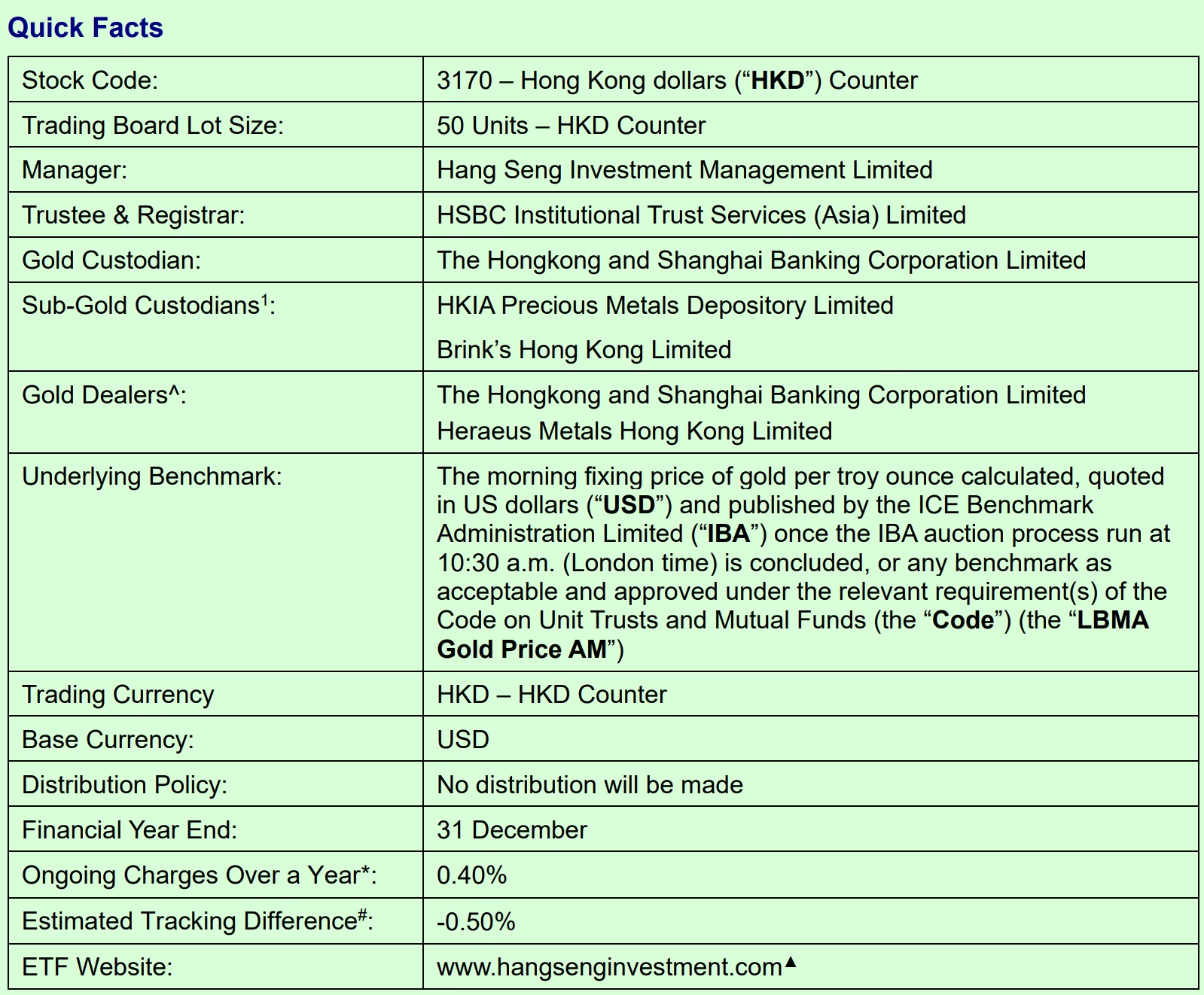
Trading under stock code 3170 on the Hong Kong Stock Exchange, the Hang Seng Gold ETF is designed to mirror the LBMA Gold Price AM, the globally recognized morning benchmark set in London.
The fund is structured as a passive vehicle and holds physical gold bars that meet London Bullion Market Association good delivery standards, according to the prospectus.
The launch comes at a time when gold prices are surging and financial institutions are actively exploring blockchain-based infrastructure. For investors, the Hang Seng Gold ETF offers a familiar way to gain gold exposure, while also pointing to a future where fund ownership could be recorded on distributed ledgers.
At its core, the Hang Seng Gold ETF is a conventional physically backed gold ETF. Gold is stored in secure vaults in Hong Kong, with HSBC appointed as the fund’s gold custodian. Participating dealers can create and redeem units primarily in cash, and in certain cases through in-gold transactions, while retail investors buy and sell units on the exchange like ordinary shares.
The listed class trades in Hong Kong dollars with a board lot size of 50 units. The fund carries an estimated ongoing charge of 0.40% per year and an estimated annual tracking difference of minus 0.50%. Hang Seng has stated that the Hang Seng Gold ETF does not intend to pay dividends, meaning investor returns depend entirely on movements in the gold price.

“This product gives investors a straightforward, transparent way to access physical gold,” a person familiar with the fund structure said, noting that the emphasis is on long-term price exposure rather than income.
What differentiates the Hang Seng Gold ETF from many existing gold products is the issuer’s plan to introduce tokenized, unlisted units of the same fund. These units would represent ownership interests recorded on blockchain infrastructure, although they are not yet available and remain subject to regulatory approval.
HSBC has been appointed as the tokenization agent and would be responsible for issuing digital tokens representing fund units or fractions of units. Subscription and redemption transactions would be recorded on a public blockchain, creating a parallel digital representation of ownership in the Hang Seng Gold ETF.
According to the prospectus, Ethereum is expected to be used initially as the primary blockchain, with the possibility of adopting other public blockchains with comparable security and resilience in the future.
Despite the blockchain element, Hang Seng has emphasized that tokenized units of the Hang Seng Gold ETF would not trade freely on secondary markets. Instead, subscriptions and redemptions would only be available through approved distributors, keeping tight control over investor access.
This approach reflects Hong Kong’s cautious regulatory stance toward tokenized financial products. By limiting secondary trading, the structure aims to balance innovation with investor protection, a theme regulators have repeatedly stressed.
A spokesperson for Hang Seng Investment Management said the tokenization plan is about operational efficiency and future readiness rather than speculative trading.
“The intention is to explore how blockchain can support fund administration while maintaining robust controls,” the spokesperson said.
The debut of the Hang Seng Gold ETF coincides with a sharp rally in gold prices. Spot gold climbed another 4% on Thursday, pushing prices close to $5,530 an ounce as investors sought safe-haven assets amid heightened economic and geopolitical uncertainty.
Market analysts say this environment has renewed interest in gold-linked products. “Gold is back in focus as a hedge,” said a Hong Kong-based commodities strategist. “A product like the Hang Seng Gold ETF benefits from both rising demand for gold and growing comfort with ETF structures.”
Hang Seng’s move also fits into a broader global trend. Traditional financial institutions are increasingly testing blockchain technology for mainstream assets. Last week, the New York Stock Exchange and its parent Intercontinental Exchange announced plans to develop a platform for trading tokenized stocks and ETFs, pending regulatory approval.
In a recent report, digital asset bank Sygnum said tokenization is expected to move into the mainstream by 2026. Sygnum co-founder and CEO Mathias Imbach predicted that up to 10% of new bond issuance by major institutions could be tokenized at launch.
Within that context, the Hang Seng Gold ETF can be seen as part of a gradual shift rather than a radical departure. By anchoring tokenization to a familiar, physically backed fund, Hang Seng is signaling that innovation does not have to come at the expense of established safeguards.
For now, investors can only access the listed version of the Hang Seng Gold ETF, while the tokenized option remains a blueprint awaiting regulatory clearance. Still, the announcement highlights how asset managers are thinking ahead as blockchain infrastructure matures.
As one fund industry observer put it, “Products like the Hang Seng Gold ETF show how traditional finance is experimenting carefully, layering new technology onto well-understood assets.”
Whether tokenized units eventually gain traction or remain a niche offering, the launch underscores Hong Kong’s ambition to stay at the forefront of financial innovation—without losing sight of stability, transparency, and investor confidence.



Copyright © 2025 - The Bit Gazette.