






- Trending
- Comments
- Latest

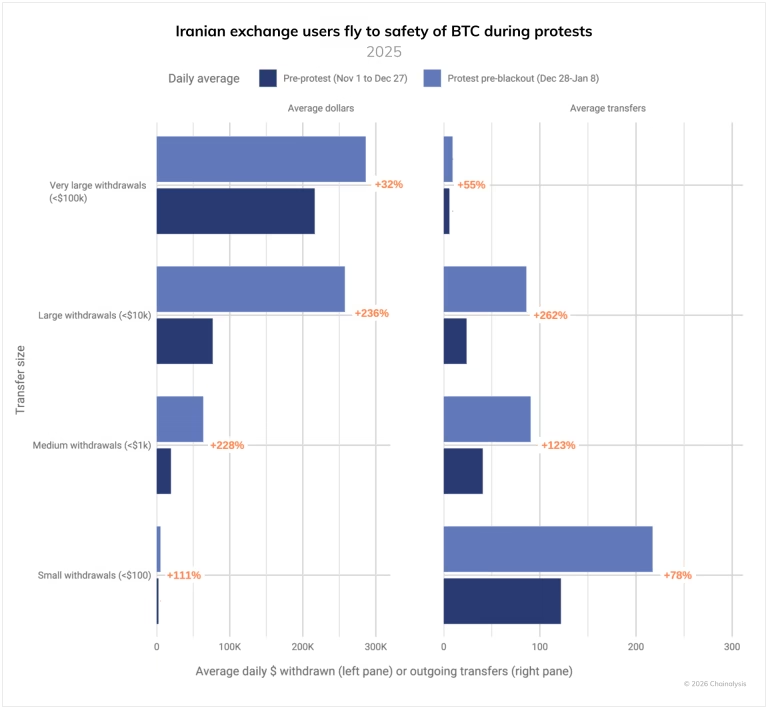
Iranians are withdrawing bitcoin from centralized exchanges at accelerated rates as nationwide internet blackouts, mass protests, and a collapsing rial force citizens to seek alternative stores of value, according to blockchain intelligence firm Chainalysis.
Daily transfers to self-custody wallets spiked significantly between Dec. 28, 2025, and Jan. 8, 2026, coinciding with the start of a nationwide internet shutdown and renewed political unrest. The trend suggests Iranians are using bitcoin not for speculation, but for financial survival as traditional banking becomes increasingly unreliable.
“When Iran’s blanket internet shutdown began, we saw daily transfers to self-custody wallets rise significantly,” Chainalysis said in a recent analysis. “This surge suggests Iranians are taking possession of Bitcoin at a markedly higher rate during protests than they were beforehand.”
Iran’s national currency has been under sustained pressure for months. The rial recently plunged to fresh all-time lows in open-market trading, losing ground against major currencies such as the euro and fueling viral claims online that its value has effectively fallen to “zero” against the U.S. dollar.
While those claims are exaggerated, economists agree the currency’s erosion has severely damaged household purchasing power. Inflation, sanctions, and capital controls have left many Iranians scrambling for alternatives.
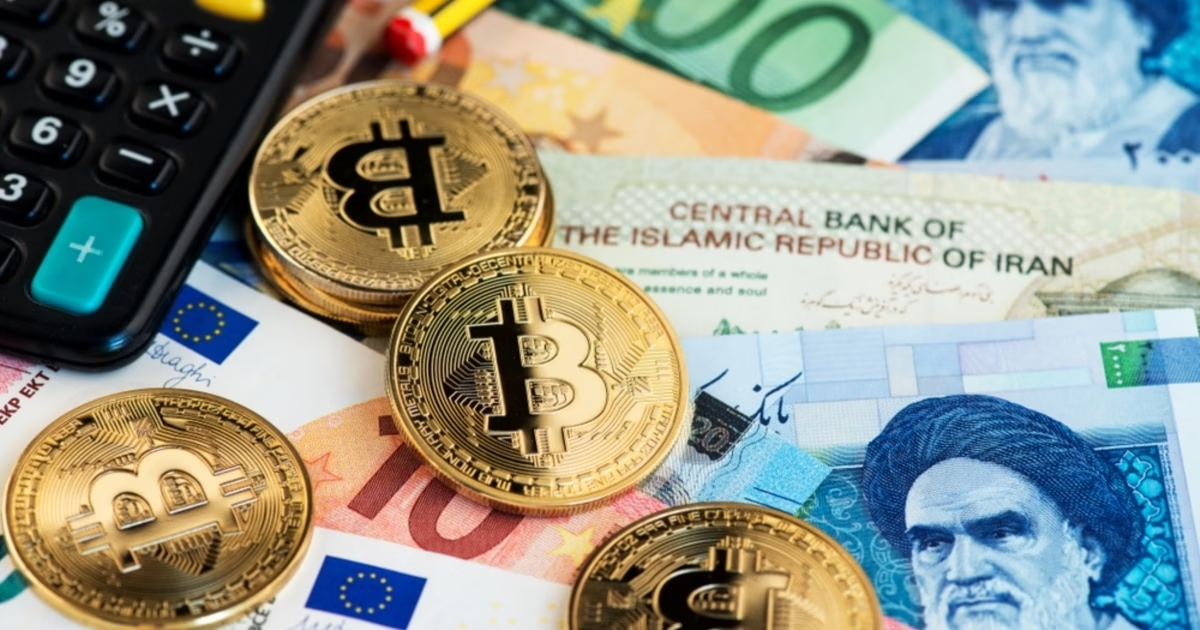
Within the Iran Crypto Landscape, Bitcoin has emerged as a hedge against currency debasement, offering portability and resistance to capital restrictions. Citizens withdrawing BTC into personal wallets appear motivated not by speculation, but by preservation.
“For many people, this is about survival, not profits,” said a Middle East-based digital assets researcher familiar with Iran’s informal economy. “Crypto offers a way to exit the rial without needing permission.”
Chainalysis noted that the behavioral patterns seen in Iran mirror trends observed in other countries experiencing conflict, economic breakdown, or political crackdowns.
“The pattern of increased BTC withdrawals during times of heightened instability reflects a global trend we’ve observed in regions facing war, economic turmoil, or government repression,” the firm said in its report.
This dynamic underscores how the Iran Crypto Landscape functions not just as a speculative market, but as an informal financial infrastructure during crises.
Iran’s authorities have historically oscillated between tolerance and restriction when it comes to digital assets. While domestic crypto trading has faced periodic crackdowns, enforcement remains inconsistent, particularly when economic pressures intensify.
Chainalysis also highlighted a less visible but increasingly dominant force shaping the Iran Crypto Landscape: the Islamic Revolutionary Guard Corps (IRGC).
According to the firm’s findings, the IRGC-linked entities accounted for roughly 50% of Iran’s crypto-related on-chain activity in the fourth quarter of 2025, reflecting the group’s outsized role in the broader economy.
“Iran’s crypto ecosystem reached over $7.78 billion in 2025, having grown at a notably faster pace compared to the year prior,” Chainalysis said, adding that institutional and quasi-state actors have become central to transaction flows.
The IRGC’s presence illustrates how crypto has become embedded at multiple levels of the Iran Crypto Landscape, from grassroots use by ordinary citizens to strategic adoption by powerful state-linked organizations.
The expanding scale of Iran’s crypto activity has not gone unnoticed abroad. Last week, two UK-based crypto exchanges reportedly processed close to $1 billion in transactions tied to IRGC-linked wallets, triggering renewed debate over compliance, sanctions enforcement, and the monitoring of cross-border crypto flows.
Western regulators have repeatedly warned that sanctioned entities may exploit digital assets to bypass financial restrictions. The Iran case is increasingly cited as a test of how effective blockchain transparency tools can be when state-linked actors are involved.
Despite this scrutiny, analysts say the broader Iran Crypto Landscape continues to grow due to persistent domestic demand.
Beyond institutions, many Iranians see crypto as an “element of resistance” in a tightly controlled economy. With access to foreign currency restricted and international payment systems largely closed, digital assets provide a rare outlet for cross-border value transfer.
Some reports have even indicated that Iran has explored using crypto in state-level transactions, including offers to accept digital assets in exchange for advanced weapons systems—an allegation that, while difficult to verify fully, underscores crypto’s strategic appeal under sanctions.
For everyday users, however, the motivation is more immediate: securing savings before they evaporate.
“People are moving fast because they don’t trust the rial to hold value even for weeks,” said a Tehran-based tech entrepreneur who asked not to be named.
As protests continue and economic pressures mount, the Iran Crypto Landscape is likely to remain volatile. Increased self-custody suggests a population bracing for further instability, while the growing involvement of powerful institutions adds complexity to enforcement and oversight.
What is clear is that Bitcoin and other digital assets are no longer fringe tools in Iran. They have become deeply woven into the country’s economic reality.
Whether authorities tighten controls or quietly tolerate this shift may determine the next phase of the Iran Crypto Landscape but for now, crypto remains one of the few financial escape valves available to millions of Iranians navigating an uncertain future.



Copyright © 2025 - The Bit Gazette.


