





- Trending
- Comments
- Latest

Morgan Stanley has applied to the Office of the Comptroller of the Currency for a federal trust charter that would allow it to custody digital assets, execute crypto transactions, and offer fiduciary staking services under a single national regulatory framework.
According to a public filing published by the Office of the Comptroller of the Currency, the regulator formally received Morgan Stanley’s application on February 18, 2026. If approved, Morgan Stanley Digital Trust would operate as a national trust bank under federal supervision, rather than navigating a fragmented state-by-state licensing regime.
The proposed entity—legally named Morgan Stanley Digital Trust, National Association—would focus on custody and transaction support for select digital assets, including execution of purchases, sales, swaps, and transfers. The filing also outlines plans to offer fiduciary staking services on behalf of clients, a capability increasingly sought by institutional investors.
A national trust charter from the OCC allows firms like Morgan Stanley Digital Trust to operate across the US under a single regulatory framework. For crypto services, this structure is widely viewed as the gold standard, offering legal clarity around custody, asset segregation, and fiduciary responsibility.
The application places Morgan Stanley among a growing list of crypto-focused firms pursuing OCC trust structures. In late 2025 and early 2026, the regulator granted conditional approvals to several major players, including Circle, Ripple, BitGo, Fidelity Digital Assets, and Paxos. More recently, Stripe, Crypto.com, and Protego also secured conditional green lights.
With pending applications from Coinbase and World Liberty Financial, the pipeline of national crypto trust banks continues to expand. The entry of Morgan Stanley Digital Trust stands out, however, due to the bank’s scale, legacy, and deep institutional client base.
The trust bank filing is not an isolated move. It fits into a broader digital asset strategy that Morgan Stanley has been quietly assembling over the past year. In January, the firm appointed Amy Oldenburg to a newly created role overseeing digital asset strategy, signaling an internal consolidation of crypto initiatives.
On the product side, Morgan Stanley has filed registration statements for exchange-traded funds tied to Bitcoin, Ether, and Solana. In parallel, the firm partnered with Zerohash to enable digital asset trading for clients of its ETrade platform, significantly expanding retail access to crypto through a mainstream brokerage channel.
If approved, Morgan Stanley Digital Trust would provide the infrastructure backbone for these efforts, allowing the bank to custody assets internally, execute transactions, and offer staking within a regulated fiduciary environment.
Market observers see the trust application as particularly meaningful for Bitcoin and XRP, both of which are central to institutional crypto narratives. Bitcoin remains the primary store-of-value asset for institutional portfolios, while XRP is closely tied to enterprise payments and settlement use cases.
Ripple’s payments network uses XRP as a bridge currency to enable near-instant cross-border transfers, contrasting sharply with the traditional SWIFT system, which can take days and relies heavily on intermediaries. By pursuing Morgan Stanley Digital Trust, the bank appears to acknowledge the efficiency gains that blockchain-based settlement tools can offer within global finance.
Industry analysts note that Wall Street adoption has historically validated crypto use cases faster than retail enthusiasm alone. The trust filing indirectly reinforces Ripple’s long-standing argument that XRP functions as financial infrastructure, not merely a speculative token.
Amy Oldenburg addressed these themes during an appearance at the Bitcoin For Corporations conference in Las Vegas in late February. In a fireside chat with Strategy CEO Phong Lee, she agreed with his assertion that Morgan Stanley could play a pivotal role in mainstreaming Bitcoin adoption.
“If there was a company that could ‘orange pill’ the world, it would be Morgan Stanley,” Le said during the discussion, highlighting the firm’s influence across institutional finance.
Oldenburg emphasized that regulated structures like Morgan Stanley Digital Trust are essential for bringing conservative capital into digital assets at scale, particularly from pension funds, endowments, and high-net-worth clients.
The bank has already taken steps to broaden crypto access internally. In October 2025, Morgan Stanley lifted previous restrictions that limited crypto exchange-traded products to clients with at least $1.5 million in assets and aggressive risk profiles. Financial advisors can now offer crypto ETPs to all clients, including those using retirement accounts.
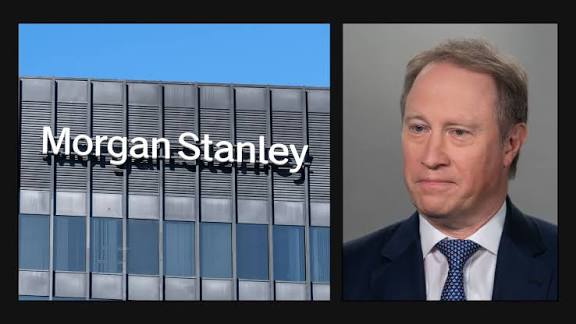
That policy shift, combined with the trust bank application, suggests Morgan Stanley is positioning itself for a future where digital assets are a standard portfolio component rather than a niche allocation.
The OCC will now review the Morgan Stanley Digital Trust application, a process that typically involves detailed scrutiny of governance, risk controls, capital adequacy, and cybersecurity frameworks. While approval is not guaranteed, recent regulatory momentum suggests that federally supervised crypto custody is becoming an accepted part of the US financial system.
If granted, Morgan Stanley Digital Trust would mark a milestone: one of Wall Street’s most powerful institutions operating a fully regulated digital asset trust bank. For Bitcoin, XRP, and the broader crypto market, the message is clear crypto is no longer knocking on the doors of traditional finance. It’s being built into the vaults.



Copyright © 2025 - The Bit Gazette.

