






- Trending
- Comments
- Latest

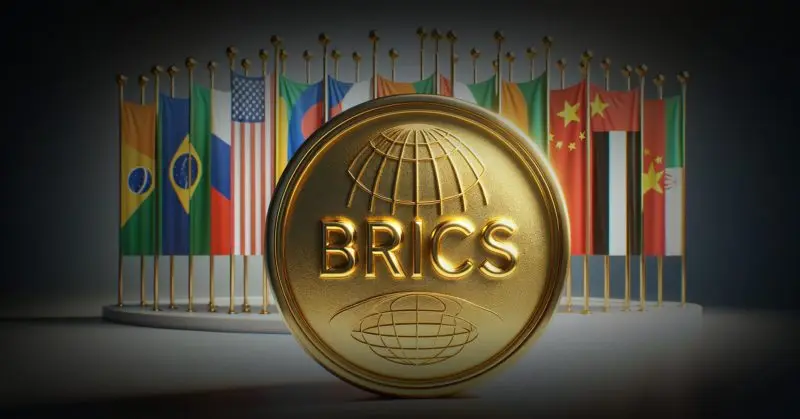
Russian Deputy Foreign Minister Sergey Ryabkov confirmed Saturday that BRICS member states are actively developing a dedicated precious metals exchange, framing the initiative as critical infrastructure to protect the bloc from U.S. financial controls that Washington can trigger “at the push of a button.”
The proposed BRICS Precious Metals Exchange comes at a moment of heightened volatility in global bullion markets. Gold prices have swung sharply in recent weeks after smashing record highs, reinforcing the appeal of hard assets—and the strategic importance of controlling how they are traded, settled, and priced.
Speaking to Russian state media TASS, Russian Deputy Foreign Minister Sergey Ryabkov said BRICS members are actively developing a dedicated trading platform for precious metals.
According to Ryabkov, the BRICS Precious Metals Exchange is being discussed alongside a broader set of initiatives, including a grain exchange and a common investment platform designed to operate within special economic zones across member states.
“There is also a recent, but very important, initiative to create an exchange of precious metals, along with a grain exchange,” Ryabkov said, according to excerpts of the interview published Saturday.
Russia, which chaired the bloc in 2024, has been a driving force behind several of these proposals. Officials in Moscow argue that the BRICS Precious Metals Exchange would strengthen economic cooperation while reducing reliance on Western financial infrastructure.
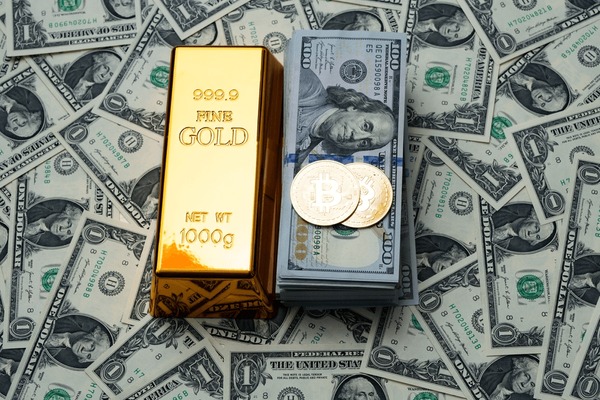
The renewed focus on a BRICS Precious Metals Exchange follows a year of dramatic moves in bullion markets. Gold surged past $5,600 per ounce in January before sliding sharply toward $4,600 in early February, only to rebound above $5,000 again later in the month, according to data from Trading Economics.
These swings have underscored gold’s dual role as both a safe haven and a volatile trading asset. For BRICS policymakers, that volatility strengthens the case for building their own exchange infrastructure—one that could offer alternative pricing mechanisms, settlement options in national currencies, and potentially digital rails.
Ryabkov insisted there are “all reasons and prerequisites for something tangible to emerge,” signaling confidence that the BRICS Precious Metals Exchange could move from concept to implementation.
The precious metals proposal aligns with earlier comments from Russian Foreign Minister Sergey Lavrov, who has publicly discussed the creation of both a grain exchange and a new investment platform within BRICS.
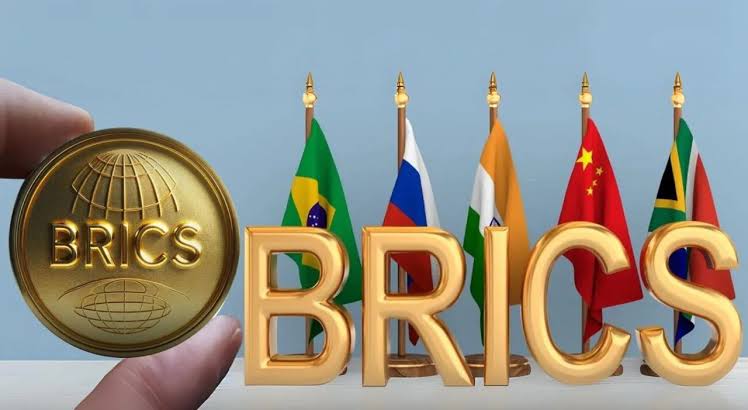
Together, these initiatives reflect a broader strategy: using commodities—especially gold and silver—as anchors for deeper financial integration. Supporters believe a BRICS Precious Metals Exchange could eventually complement efforts to expand trade settlements in national currencies and reduce exposure to sanctions.
Ryabkov was explicit about the geopolitical motivation behind the plan. He said BRICS aims to create alternatives to systems that the United States can shut down “at the push of a button.”
“I think no one is underestimating the risks associated with American policy, both sanctions and tariffs,” Ryabkov said. “But this doesn’t mean everyone is ready to succumb to pressure.”
In that context, the BRICS Precious Metals Exchange is being framed not just as a commercial venue, but as strategic infrastructure. By enabling precious metals trading outside dollar-centric systems, BRICS members hope to limit vulnerability to U.S. and allied financial controls.
Beyond physical bullion trading, Ryabkov highlighted the role of digital systems and national currencies in future BRICS initiatives. These elements could play a role in how the BRICS Precious Metals Exchange ultimately operates, particularly if digital settlement layers or tokenized representations of gold are introduced.
Last month, the Central Bank of India proposed linking digital currencies issued by BRICS nations to simplify cross-border trade. While not directly tied to the exchange, such ideas suggest the BRICS Precious Metals Exchange could eventually intersect with broader digital finance experiments within the bloc.
However, progress has not been frictionless. In November 2025, Russian Finance Minister Anton Siluanov acknowledged that efforts to build alternative settlement systems have been slowed by some partners’ continued reliance on the U.S. dollar.
Ryabkov also pointed to hard data supporting BRICS integration. He said trade growth among member states is outpacing global averages, reinforcing confidence in initiatives like the BRICS Precious Metals Exchange.
“Statistics show that trade growth among BRICS countries significantly exceeds both the overall growth rate of global trade and the trade growth between BRICS members and other partners,” he said.
That momentum, officials argue, provides the economic foundation needed to support new exchanges and platforms. While BRICS does not claim to be a “magic wand,” Ryabkov said the bloc can “truly help address challenges” if its potential is fully developed.
Originally formed by BRICS members Brazil, Russia, India, and China in 2009—with South Africa joining in 2010—the group has expanded significantly. Egypt, Ethiopia, Indonesia, Iran, and the United Arab Emirates are now full members.
That expansion increases the relevance of a BRICS Precious Metals Exchange, particularly given that several members are major gold producers, consumers, or reserve holders. A shared exchange could consolidate liquidity and amplify the bloc’s influence in global precious metals markets.
If realized, the BRICS Precious Metals Exchange would represent a meaningful shift in how gold and silver are traded globally. While London and New York remain dominant pricing centers, a BRICS-led platform could introduce alternative benchmarks and settlement norms.
For now, officials have offered few technical details, and timelines remain unclear. But repeated public endorsements suggest the idea is moving higher on the bloc’s agenda.
As gold volatility persists and geopolitical fragmentation deepens, the BRICS Precious Metals Exchange is increasingly being positioned as both an economic tool and a strategic statement—one aimed at reshaping how value is stored, traded, and protected in a multipolar world.



Copyright © 2025 - The Bit Gazette.

