





- Trending
- Comments
- Latest

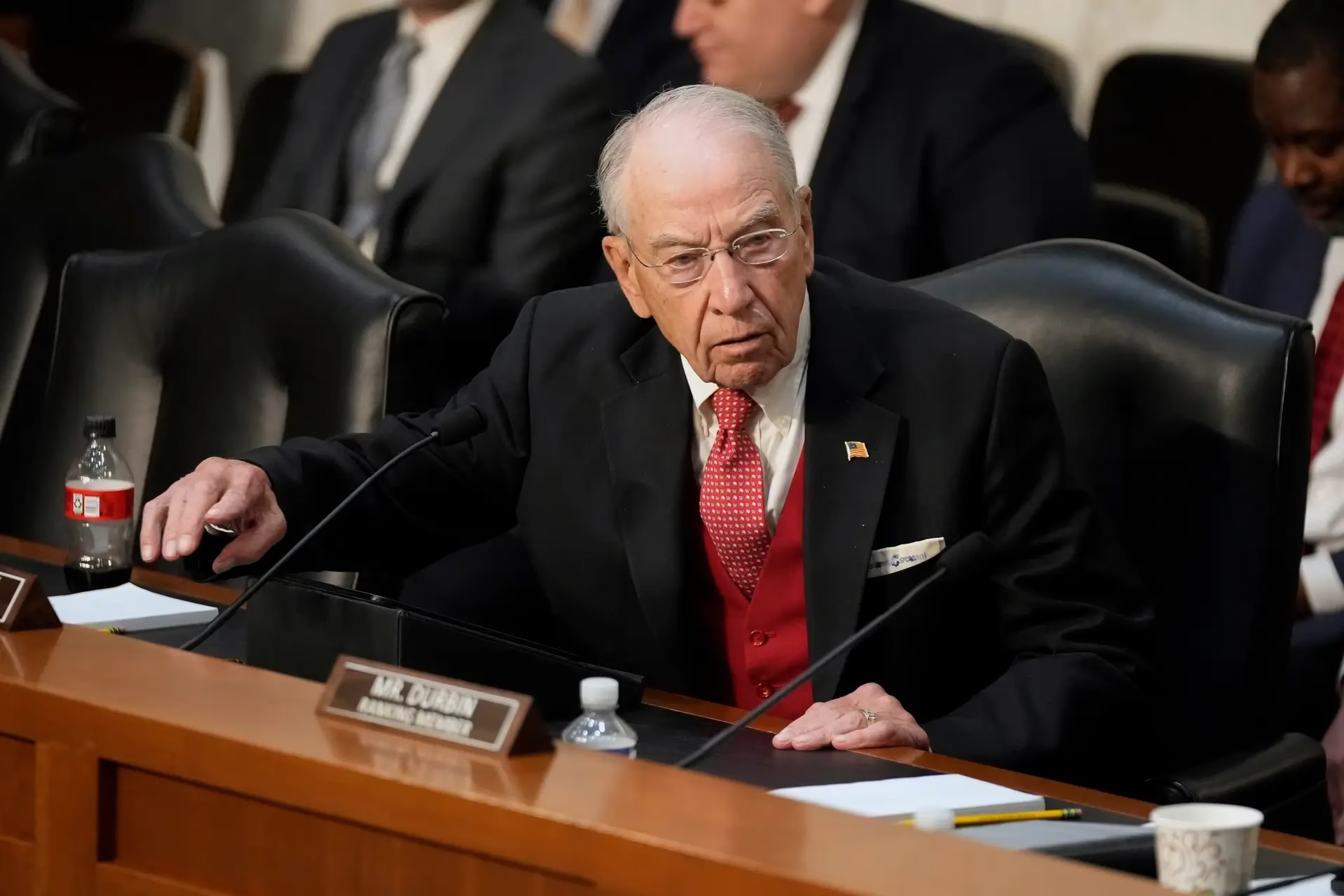
Senate Judiciary Committee leaders Chuck Grassley and Dick Durbin have warned that a provision in pending crypto market structure legislation could exempt money launderers from prosecution, citing the Tornado Cash case as an example of charges that might not be possible under the new framework.
In a private letter to Senate Banking Committee leadership obtained by Politico, the bipartisan pair said Section 604 of the bill—which would shield blockchain developers from money transmitting license requirements—falls under their committee’s jurisdiction and was advanced without consultation.
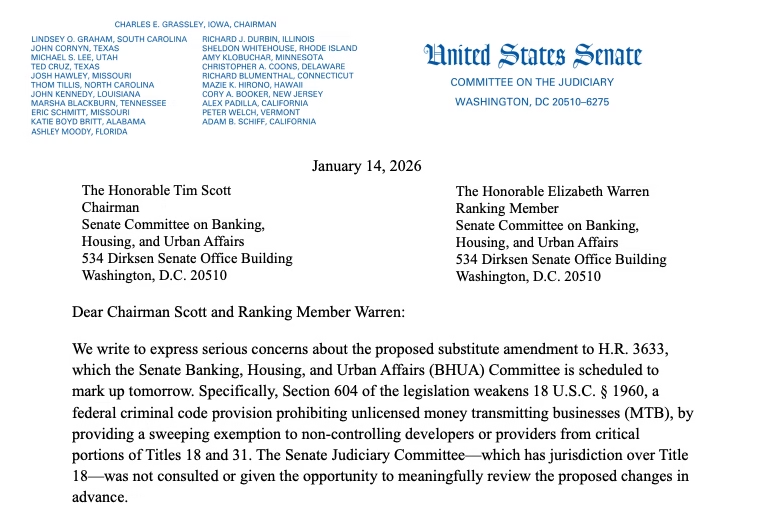
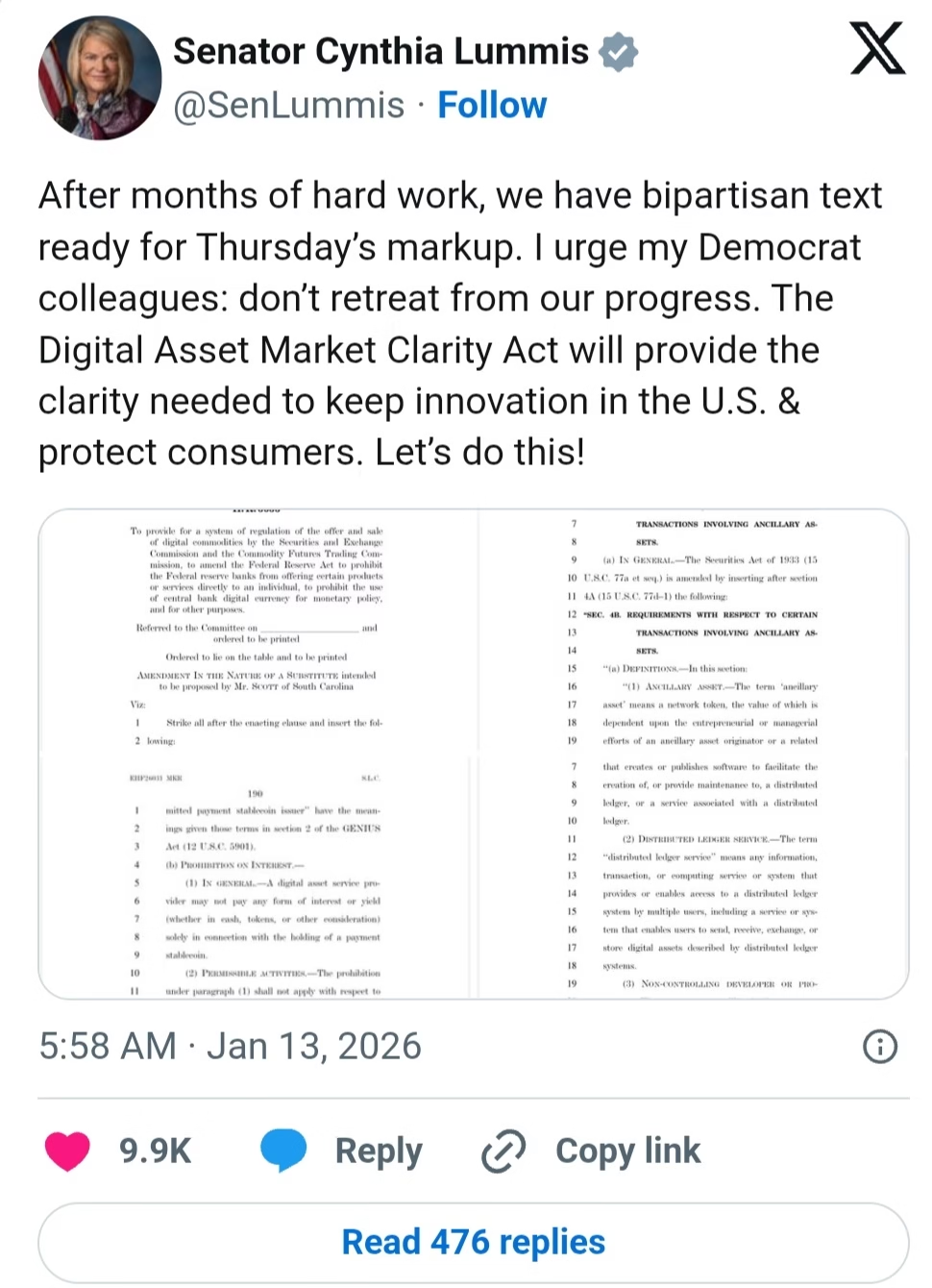
The section reflects the Blockchain Regulatory Certainty Act, a bipartisan initiative led by Senators Cynthia Lummis and Ron Wyden.
Grassley and Durbin cautioned that the provision would exempt a dangerously broad category of actors from criminal law treatment, potentially undermining prosecutions related to crypto money laundering.
They noted the measure could have likely precluded the government from bringing charges against the founder of Tornado Cash, a crypto mixer platform prosecutors alleged was used for crypto money laundering.
A co-founder was found guilty last year of operating an unlicensed money transmitting business though the conviction drew criticism from crypto proponents and congressional Republicans.
“This regulatory gap could attract illicit actorsbsuch as cartels and other highly sophisticated criminal networks to decentralized platforms.”
the senators wrote emphasizing that the bill could weaken tools used to combat crypto money laundering.
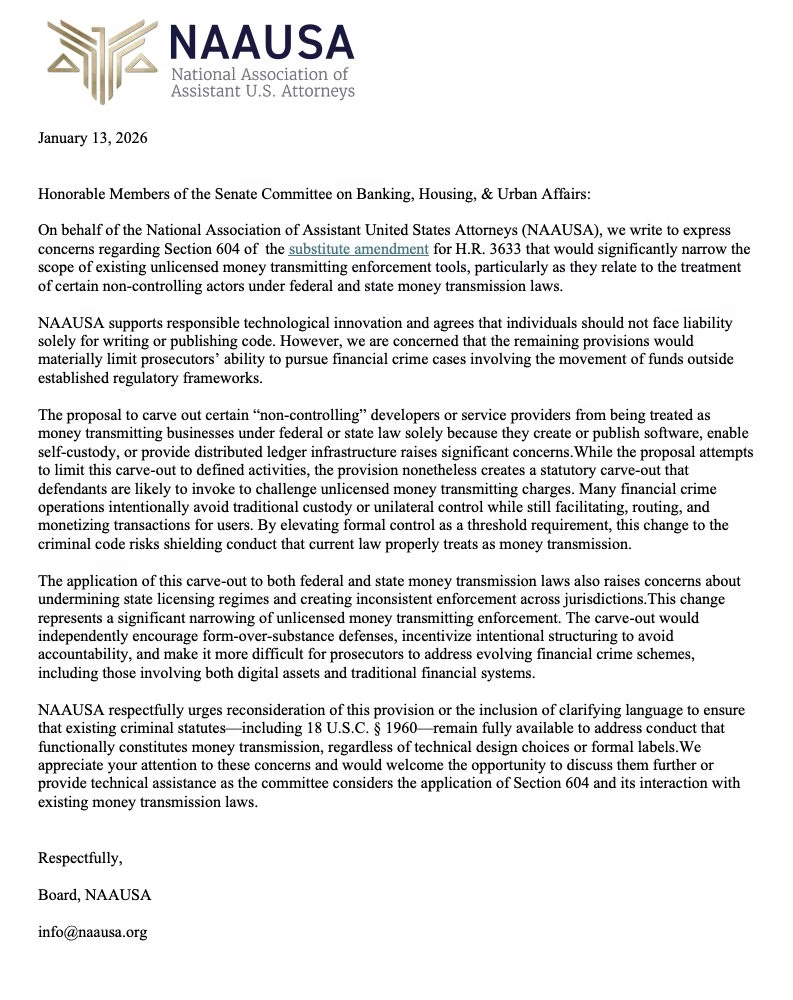
The National Association of Assistant United States Attorneys voiced similar concerns, warning that the bill could significantly restrict prosecutors’ ability to investigate financial crimes involving the transfer of funds abroad and established regulatory frameworks further complicating enforcement against crypto money laundering.
Senate Republicans defending the measure say the exemptions are vital for fostering blockchain innovation. A spokesperson for Scott said the senator A spokesperson for Senator Scott stated that the senator
“remains dedicated to safeguarding software developers while ensuring law enforcement retains the tools needed to prosecute genuine illegal money transmission activities.” including crypto money laundering cases.
The debate revolves around decentralized finance (DeFi) platforms that enable trading and lending without centralized intermediaries.
Democratic senators negotiating with Republicans have pushed to amend developer exemption language to close potential loopholes that could facilitate crypto money laundering.
Senator Lummis noted that, “Blockchain developers who solely create code and manage open source infrastructure have long been at risk of being mistakenly labeled as money transmitters.
This label is misguided when they never handle, control, or access user funds, and it unnecessarily stifles innovation”
highlighting the tension between innovation and preventing crypto money laundering.
 Organizations such as the Solana Policy Institute and SEC commissioners Paul Atkins and Hester Peirce have also called for clearer exemptions for developers who do not custody user assets arguing existing rules are poorly suited for DeFi systems which are frequently targeted for crypto money laundering by malicious actors.
The outcome of this legislation impacts thousands of blockchain developers across major ecosystems.
From January to September 2025, Ethereum added 16,181 new developers, Solana grew 83% year over year with 11,534 new developers, and Bitcoin onboarded 7,494 new contributors.
All operate in environments where crypto money laundering enforcement intersects with regulatory uncertainty.
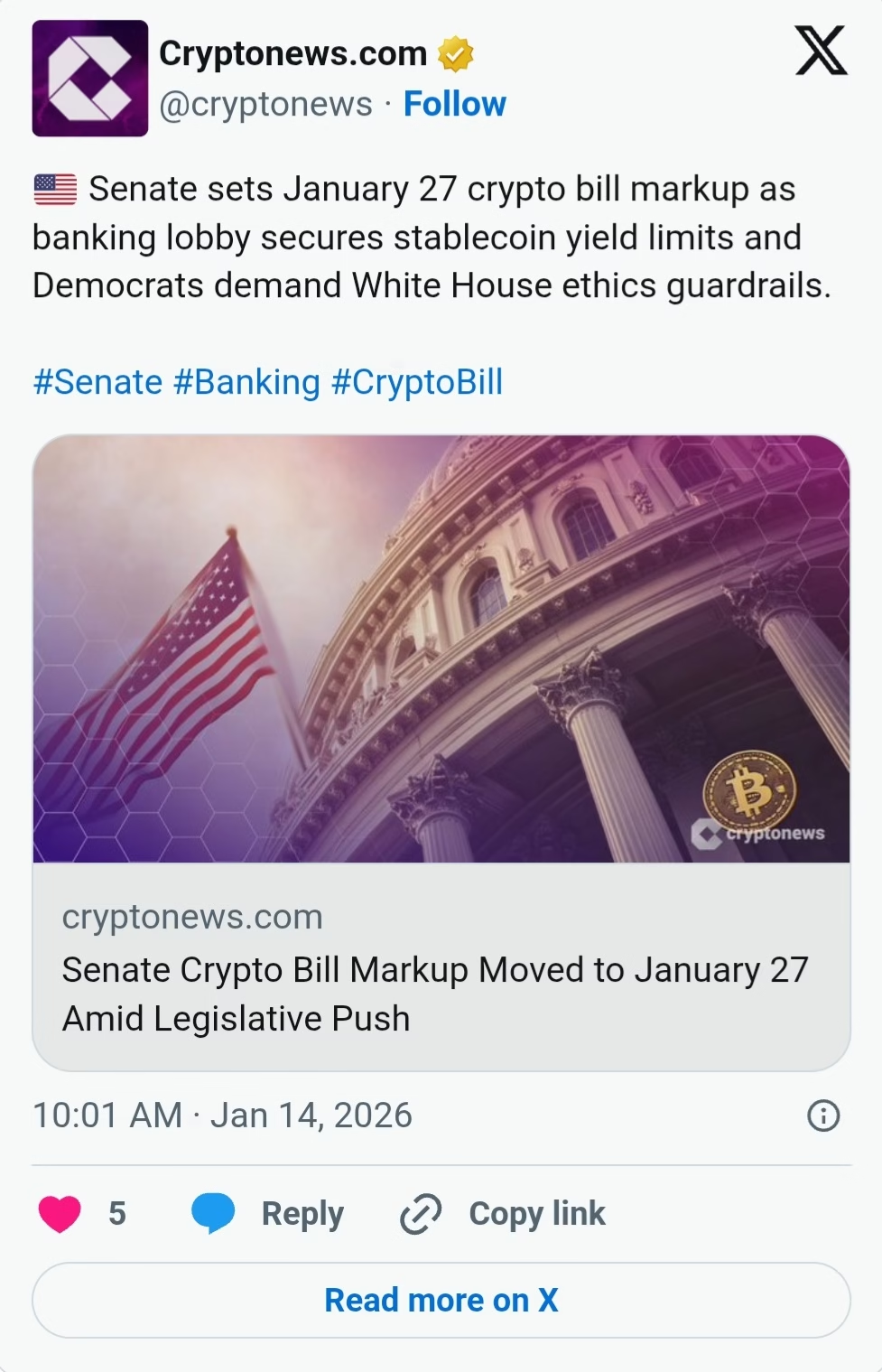
The Banking Committee markup has been postponed following Coinbase’s withdrawal of support for the broader market structure bill.
CEO Brian Armstrong described the draft as “catastrophic,” citing potential DeFi restrictions, tokenized equity bans and stablecoin yield limits are all measures that could indirectly affect crypto money laundering oversight.
 Galaxy Digital also warned the bill could grant Treasury “Patriot Act style” surveillance powers including authority to freeze transactions for up to 30 days without court orders and to flag foreign jurisdictions or transaction categories for crypto money laundering concerns.
As lawmakers weigh the balance between developer protections and law enforcement capabilities, the path forward remains uncertain with the committee jurisdiction disputes and industry opposition shaping the debate around crypto money laundering legislation.



Copyright © 2025 - The Bit Gazette.