






- Trending
- Comments
- Latest

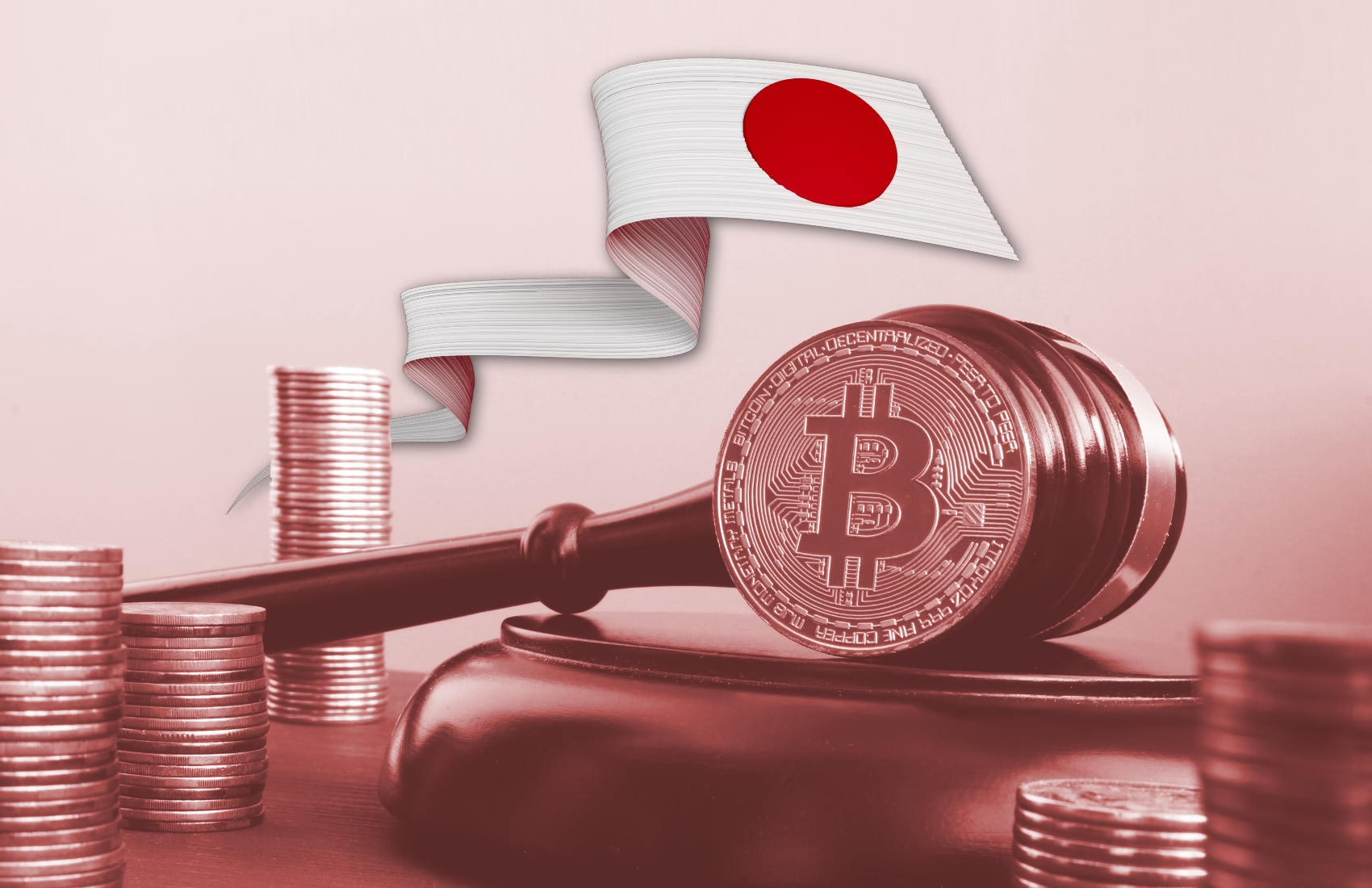
Japan’s Financial Services Agency is preparing to classify cryptocurrencies as eligible underlying assets for exchange-traded funds, paving the way for spot bitcoin and crypto ETFs to list on the Tokyo Stock Exchange.
The planned regulatory change, reported by Nikkei Asia on January 26, would give Japanese investors regulated access to digital assets through traditional brokerage accounts—marking one of the country’s most significant crypto policy shifts and positioning Japan alongside the U.S. and Hong Kong in approving spot products.
The push for spot crypto ETFs reflects a broader effort by Japanese regulators to lower entry barriers for individual investors while maintaining strict oversight.
Unlike direct cryptocurrency ownership, ETF structures eliminate the need for managing private keys, digital wallets, or on-chain transactions.
Investors would instead trade crypto-linked products using standard brokerage accounts, benefiting from existing custody, disclosure, and compliance frameworks.
This model has proven attractive in other jurisdictions. In the United States, spot Bitcoin ETFs have grown rapidly since their approval, with net assets reaching approximately $120 billion, according to public filings.
Pension funds, university endowments, and government-linked investors have increasingly incorporated these products into diversified portfolios, validating the ETF structure as a gateway for institutional adoption.
Japan’s regulator appears to be drawing lessons from these markets as it evaluates how spot crypto ETFs could function within the country’s highly regulated securities ecosystem.
Any products approved by the FSA would still require listing authorization from the Tokyo Stock Exchange, ensuring an additional layer of scrutiny before launch.
Major domestic financial groups are widely expected to play a leading role.
Nomura Holdings and SBI Holdings have both been cited by Nikkei Asia as potential early issuers, given their existing involvement in digital asset services and investment products.
Momentum for spot crypto ETFs is being reinforced by broader policy reforms aimed at integrating digital assets into Japan’s financial system.
In early January, Japan’s finance minister described 2026 as “Digital Year One,” outlining a policy vision that places digital assets alongside traditional financial instruments.
“2026 will be positioned as Digital Year One,” the finance minister said during a policy briefing, according to domestic media reports, signaling the government’s intention to modernize financial infrastructure and regulation.
Proposed measures under discussion include reducing taxes on cryptocurrency gains to a flat 20%, allowing banks and brokerage firms to hold and trade digital assets, and formally classifying major cryptocurrencies such as bitcoin and ether as financial products.
Taken together, these reforms would significantly narrow the gap between crypto markets and conventional finance.
Support for spot crypto ETFs is also building amid strong domestic demand.
Surveys consistently show that more than 60% of Japanese investors are interested in gaining crypto exposure, yet many remain cautious due to security concerns and regulatory uncertainty.
ETFs could provide a regulated bridge between investor demand and risk management.
Japan’s consideration of spot crypto ETFs is unfolding against an increasingly competitive regional backdrop.
South Korea has announced plans to introduce Bitcoin ETFs in 2026, while Hong Kong’s early approval of spot products has already attracted international capital flows.
Industry participants warn that delaying approval could see Japan fall behind other Asian financial centers in the race to become a hub for digital asset investment.
Regulators appear mindful of that risk, particularly as capital becomes more mobile and investors seek jurisdictions offering both innovation and legal certainty.
Approval of spot crypto ETFs would mark a clear departure from Japan’s historically cautious stance toward cryptocurrencies.
Over time, analysts say it could accelerate adoption among retail investors while providing institutions with a familiar, regulated structure for crypto exposure.
While no final timeline has been announced, the direction of travel is becoming clearer.
As global markets normalize crypto ETFs as a standard investment vehicle, Japan’s move toward spot crypto ETFs could reshape how digital assets are accessed across one of Asia’s most important financial markets.



Copyright © 2025 - The Bit Gazette.

