




- Trending
- Comments
- Latest

Curve Finance accused PancakeSwap on March 6, 2026, of violating open-source licensing terms by reusing its StableSwap algorithm in PancakeSwap Infinity without proper attribution.
Curve posted code evidence on X showing missing copyright notices required by the MIT license, triggering debate in the DeFi community over credit and compliance in open-source ecosystems.
Curve Finance, the protocol credited with pioneering efficient stablecoin trading on decentralized exchanges, said it discovered the issue during a review of PancakeSwap’s code repository.
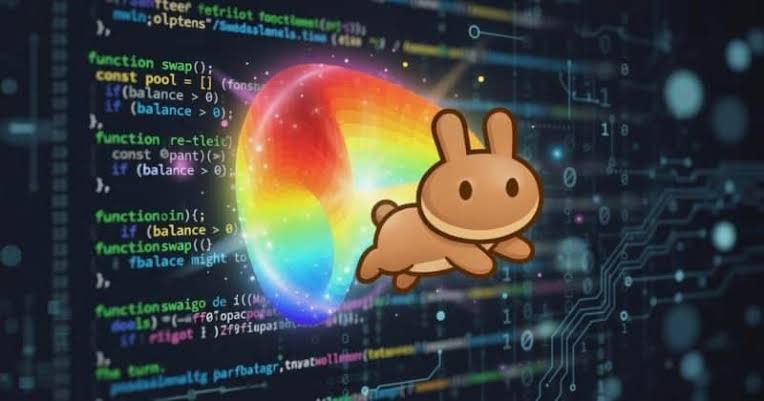
To illustrate the claim, the Curve team posted an image on the social platform X showing a file labeled “CLStableSwapHook.” According to Curve, the code appeared inside PancakeSwap’s repository but lacked the copyright notices required by the MIT open-source license.
That finding sparked the ongoing StableSwap code dispute, with Curve arguing that the omission violates the terms under which its software is shared.
“Open-source software allows people to build and innovate,” the Curve team wrote in a public message. “But the attribution requirements exist for a reason.”
Curve added that developers interested in using the algorithm could still work with the team directly.
“If you want to enjoy using stableswap without legal problems and to borrow some of our expertise to keep users SAFU – you still can contact us for licensing and collaboration,” the protocol said.
The technology at the heart of the StableSwap code dispute is central to how many DeFi platforms handle stablecoin trading.
When Curve launched in 2020, it introduced the StableSwap algorithm to solve a major problem in decentralized exchanges: how to swap assets with similar prices efficiently. Stablecoins such as USDT and USDC are designed to maintain near-identical values, meaning traditional automated market maker models were inefficient for trading them.
Curve’s algorithm drastically reduced slippage and fees for these swaps, making it one of the most influential innovations in the DeFi landscape.
Today, several platforms rely on similar approaches, which is why the StableSwap code dispute has drawn significant attention from developers and analysts.
PancakeSwap, the dominant DeFi platform on the BNB Chain ecosystem, acknowledged the concerns and said its team had begun contacting Curve to address the issue.
In response to the StableSwap code dispute, PancakeSwap said it was open to discussing the matter and clarifying the implementation details.
While the exchange has not publicly admitted wrongdoing, the team indicated it intends to resolve the matter collaboratively.
Industry observers say that approach could prevent the StableSwap code dispute from escalating into a broader legal conflict.
The controversy also highlights the technical ambitions behind PancakeSwap’s latest upgrade.
The Infinity release introduced a system of programmable “hooks,” which are modular smart-contract extensions that allow developers to customize trading logic. These hooks enable new features such as dynamic fee structures, automated strategies, and on-chain limit orders.
However, according to Curve, the StableSwap code dispute arose when one of those hooks appeared to replicate the core mechanics of the StableSwap algorithm.
If the code was indeed reused without attribution, it could violate the MIT License governing Curve’s open-source software. While that license allows competitors to reuse and modify code for commercial purposes, it requires that original copyright and permission notices remain intact.
The StableSwap code dispute has reignited a broader conversation about how open-source principles should function within a highly competitive DeFi industry.
Many protocols rely on shared code libraries, but developers emphasize that attribution rules are critical to maintaining transparency and trust.
“Open-source licenses are very permissive, but they still require acknowledgment,” said Andrej Karpathy in previous commentary about open-source ecosystems. “Removing attribution undermines the collaborative spirit that open-source depends on.”
Though Karpathy was speaking generally about open-source software, his remarks reflect a common view among developers observing the StableSwap code dispute.
Despite the attention surrounding the StableSwap code dispute, the market reaction has remained relatively muted.

PancakeSwap’s native token, CAKE, dropped nearly 4% within 24 hours of the accusations becoming public. However, the token remains up roughly 8% over the past week, suggesting traders see the issue as manageable rather than existential.
Data from DeFiLlama shows PancakeSwap currently holds about $2 billion in total value locked, making it the second-largest decentralized exchange globally behind Uniswap.
That scale means the outcome of the StableSwap code dispute could set an important precedent for other DeFi platforms building on open-source infrastructure.
For now, the StableSwap code dispute appears headed toward negotiation rather than litigation.
Curve has signaled it is open to resolving the issue through licensing discussions, while PancakeSwap has expressed willingness to engage with the protocol’s team.
Still, the incident underscores the growing pains of decentralized finance, where innovation moves quickly but legal and ethical frameworks sometimes struggle to keep up.
As DeFi protocols race to add features and capture liquidity, the StableSwap code dispute serves as a reminder that even in open-source ecosystems, credit and compliance remain essential.



Copyright © 2025 - The Bit Gazette.

