






- Trending
- Comments
- Latest

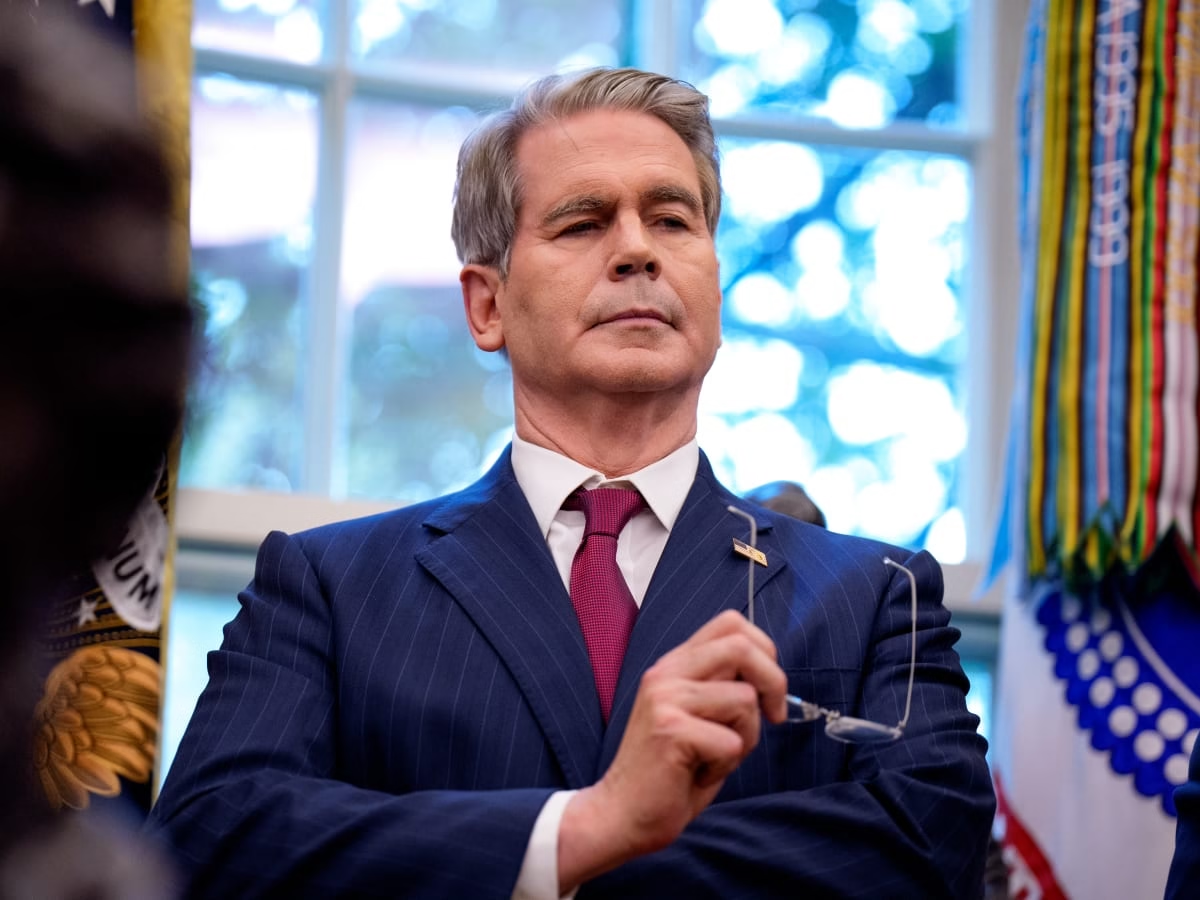
U.S. Treasury Secretary Scott Bessent told lawmakers Tuesday that the federal government lacks legal authority to bail out Bitcoin or force banks to purchase cryptocurrencies, drawing a clear line against any taxpayer-funded intervention in digital asset markets.
The remarks came during a House Financial Services Committee hearing as digital asset markets face renewed volatility and mounting political scrutiny.
Bessent’s testimony addressed longstanding questions about how far the U.S. government could go in stabilizing crypto markets during sharp downturns.
His response underscored a clear legal boundary: unlike traditional financial institutions, Bitcoin falls outside the scope of federal rescue mechanisms.
The Bitcoin bailout discussion surfaced after Representative Brad Sherman of California questioned whether the Treasury Department or the Financial Stability Oversight Council (FSOC) could intervene if Bitcoin prices collapsed.
Sherman asked whether taxpayer funds or emergency financial tools could be deployed to support the asset during a crisis.
Bessent responded unequivocally, stating that such actions are not permitted under existing law.
“I am Secretary of the Treasury, I do not have the authority to do that, and as chair of FSOC, I do not have that authority,” — Scott Bessent, U.S. Treasury Secretary, House Financial Services Committee hearing.
The statement effectively shut down any speculation about a future Bitcoin bailout similar to emergency interventions seen during the 2008 financial crisis or the COVID-era market shock.
Bessent clarified that while federal agencies may oversee risks posed by crypto markets, they cannot directly support asset prices.
He further explained that the government’s involvement with Bitcoin is limited to assets acquired through legal processes, such as seizures linked to criminal cases.
According to Bessent, the U.S. government currently holds approximately $500 million in seized Bitcoin, which has appreciated to more than $15 billion while in custody.
Bessent’s testimony highlighted the structural differences between crypto assets and regulated financial institutions.
A Bitcoin bailout, he said, would require explicit congressional authorization authority that Treasury officials do not possess.
The secretary also stressed that the government cannot instruct banks to purchase Bitcoin or hold crypto assets on their balance sheets as a form of market support.
Such mandates, he noted, would conflict with existing banking laws and regulatory frameworks.
The comments arrive as U.S. policymakers continue to debate the appropriate level of oversight for digital assets.
While regulators have expanded enforcement actions against crypto firms, Bessent’s remarks signaled that enforcement does not equate to financial backstopping.
The hearing also touched on concerns surrounding World Liberty Financial, a decentralized finance and crypto venture associated with President Donald Trump.
Representative Gregory Meeks urged Bessent to commit to halting or intensifying scrutiny of any bank charter applications linked to the project until potential conflicts of interest and foreign influence concerns are reviewed.
Bessent declined, explaining that the Office of the Comptroller of the Currency is the agency responsible for approving bank charters operates independently of the Treasury Department.
“I do not control the OCC. It is an independent regulator,” — Scott Bessent, U.S. Treasury Secretary.
The exchange reinforced the administration’s position that regulatory authority over crypto-related banking matters is distributed across multiple agencies, further limiting the possibility of a coordinated Bitcoin bailout.
The renewed focus on a Bitcoin bailout comes amid a sharp downturn in crypto markets.
Bitcoin’s price fell nearly 8% over a 24-hour period, pushing the asset to its lowest level since early November 2024.
The sell-off has been fueled by broader market uncertainty, tightening financial conditions, and reduced risk appetite among investors.
Market participants say Bessent’s remarks remove any lingering expectations that the federal government might step in during extreme volatility.
For investors, the message was clear: Bitcoin remains subject to market forces without a public safety net.
While some crypto advocates argue that the absence of a Bitcoin bailout reinforces Bitcoin’s independence from state control, others warn that sharp downturns could have spillover effects for firms, funds, and retail investors with significant exposure.
Still, Bessent’s testimony reflects a consistent policy stance. The U.S. government may regulate crypto activity, pursue enforcement actions, and manage seized digital assets, but it will not underwrite market losses.
As volatility persists, the firm rejection of a Bitcoin bailout sets expectations for how Washington will respond to future crypto market stress with oversight and regulation, not rescue.



Copyright © 2025 - The Bit Gazette.