


- Trending
- Comments
- Latest

Tokenised collateral has entered production-grade deployment across global financial institutions, marking the end of the proof-of-concept era and the beginning of mainstream infrastructure integration, according to Coinbase UK CEO Keith Grose.
The shift is being accelerated by central bank engagement and sustained institutional appetite, with 62% of Coinbase’s institutional clients maintaining or increasing crypto exposure despite market volatility since October.
“When central banks start talking seriously about tokenised collateral, it’s a sign the technology has moved beyond experimentation,” Grose said. “It’s becoming part of the core infrastructure that supports modern financial markets.”
For much of the past decade, tokenised collateral existed primarily in proof-of-concept programs and regulatory sandboxes. That phase is now giving way to live deployment. Grose explained that institutions are shifting focus from whether tokenisation works to how quickly it can be scaled safely within existing risk and compliance frameworks.
Coinbase data underscores this transition. According to figures cited by Grose, 62% of institutional clients have either maintained or increased their crypto exposure since October, despite ongoing market volatility. That resilience, he said, reflects a deeper change in institutional strategy.
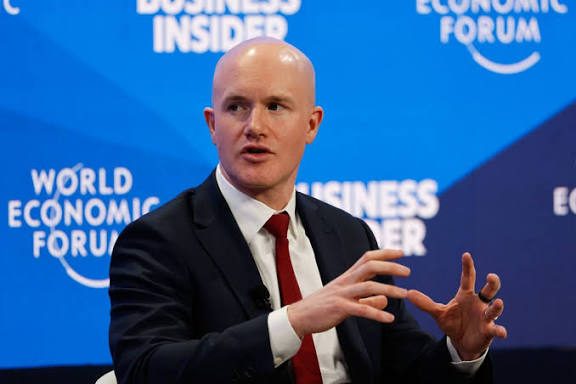
“This isn’t about speculative positioning anymore,” Grose noted. “Institutions are looking at tokenised collateral as an operational tool—something that improves capital efficiency and liquidity management rather than a trade to time.”
Tokenised collateral allows real-world assets—such as cash, government bonds, or commodities—to be represented on a blockchain and used seamlessly across financial workflows. For institutions, this can mean faster settlement, reduced counterparty risk, and more efficient use of balance sheets.
Grose said these benefits are driving demand for institutional-grade infrastructure. Coinbase is seeing increased interest in custody, derivatives, and stablecoin services, all of which play a critical role in supporting tokenised collateral at scale.
“When clients ask for these services together, it tells us something important,” he said. “It shows the market is building for real-world use, not theory.”
As tokenised collateral matures, Grose expects it to become a standard component of daily liquidity operations rather than a specialised digital asset use case.
Stablecoins are emerging as a key pillar in the tokenised collateral ecosystem. Grose explained that stablecoins, when combined with tokenised assets, enable near-instant settlement and continuous liquidity across markets.

Over the next two years, he expects tokenised collateral and stablecoins to evolve from conceptual tools into everyday instruments for collateral management, margining, and settlement. This shift, he said, will define the next phase of market development through 2026 as infrastructure improves and regulatory clarity increases.
“Once you can move collateral 24/7 with predictable settlement and clear ownership, the entire market structure starts to change,” Grose said.
Regulation remains a decisive factor in how quickly tokenised collateral scales. Grose highlighted the UK as a critical jurisdiction, noting that while progress has been made on digital asset frameworks, policy decisions around stablecoins could either accelerate or stall adoption.
“In the UK, to grow tokenisation, we need no artificial limits or blocking of stablecoin rewards,” Grose said. “If capital is allowed to circulate freely within the digital economy, you unlock a truly liquid, always-on tokenised marketplace.”
He argued that clear, supportive regulation would encourage institutions to allocate more capital to tokenised collateral strategies, strengthening the UK’s position as a global financial hub.
Perhaps the strongest signal of tokenised collateral’s rise is the increasing involvement of central banks. According to Grose, when monetary authorities begin exploring blockchain-based collateral frameworks, it validates tokenisation as a long-term structural upgrade rather than a passing trend.

Central banks are examining how tokenised collateral could improve settlement efficiency, reduce operational risk, and enhance transparency in financial markets. Their participation, Grose said, sends a powerful message to private institutions considering large-scale adoption.
“With central banks engaged and institutions already deploying capital, tokenised collateral is positioning itself as a foundational layer of modern finance,” he said.
Tokenisation is the process of representing real-world assets on a blockchain. These assets can include financial instruments like stocks, bonds, and cash, as well as non-financial assets such as real estate, art, royalties, or commodities like gold.
By using blockchain as a shared, verifiable ledger, tokenisation enables transparent ownership records and faster, more secure transfers. When applied to collateral, this technology can significantly reduce friction in markets that currently rely on slow, manual processes.
As tokenised collateral adoption expands, its implications for risk management, market infrastructure, and capital efficiency are becoming increasingly clear.
Despite lingering perceptions that tokenisation is a crypto-adjacent experiment, Grose believes the narrative is outdated. Tokenised collateral, he said, is steadily embedding itself into the systems that underpin global finance.
“As institutions move from testing to deploying tokenised collateral in live environments, adoption naturally accelerates,” he said. “At that point, it stops being a crypto story and becomes a market story.”
With institutional exposure holding firm, central banks stepping in, and infrastructure rapidly maturing, tokenised collateral is no longer on the fringe. It is emerging as a core component of the financial system’s next evolution—quietly reshaping how liquidity, risk, and capital move across global markets.



Copyright © 2025 - The Bit Gazette.