





- Trending
- Comments
- Latest

The United States has imposed sanctions on Iran-linked crypto exchanges for the first time, signaling a sharp escalation in Washington’s efforts to disrupt Tehran’s access to alternative financial channels. The move expands the scope of US sanctions beyond banks and shipping firms into the digital asset sector, reflecting growing concern over crypto’s role in sanctions evasion.
In a statement released Friday, the Treasury Department’s Office of Foreign Assets Control (OFAC) said the action against Iran-linked crypto exchanges forms part of a broader sanctions package targeting Iranian officials and financial networks accused of human rights abuses and illicit financing.
OFAC said the measures were aimed at individuals and entities linked to Iran’s internal security apparatus, which US officials accuse of violently suppressing domestic dissent while secretly routing money through unconventional financial systems, including Iran-linked crypto exchanges.
Among those sanctioned was Eskandar Momeni Kalagari, Iran’s minister of the interior, who oversees the country’s Law Enforcement Forces. Treasury Secretary Scott Bessent said the sanctions reflect Washington’s intent to hold Iranian leaders accountable.
> “Treasury will continue to target Iranian networks and corrupt elites that enrich themselves at the expense of the Iranian people,” Bessent said.
OFAC also designated Babak Morteza Zanjani, a controversial Iranian businessman previously convicted of embezzling billions of dollars in oil revenue from Iran’s national oil company. US officials say Zanjani was later released and repurposed by the Iranian state to help move and launder funds.
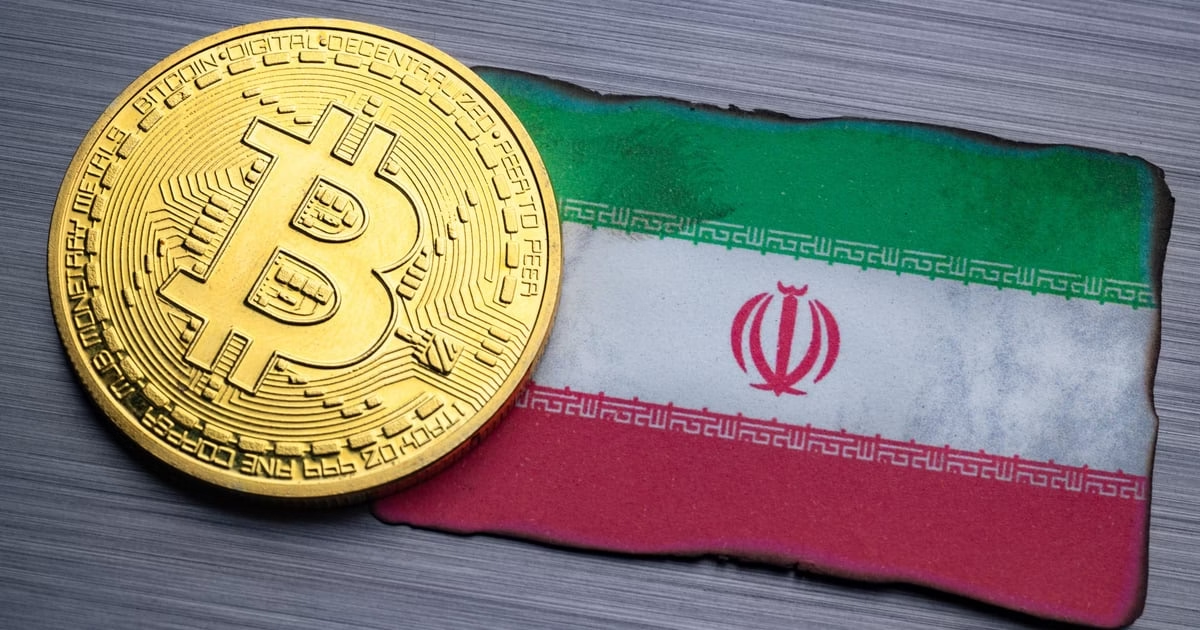
According to the Treasury, Zanjani provided financial support to projects connected to the Islamic Revolutionary Guard Corps (IRGC), using a web of intermediaries that included Iran-linked crypto exchanges operating outside Iran’s borders.
The sanctions break new ground by extending to two UK-registered firms—Zedcex Exchange Ltd. and Zedxion Exchange Ltd.—which US authorities say were tied to Zanjani’s network. OFAC alleges the firms processed large transaction volumes linked to IRGC-affiliated actors through Iran-linked crypto exchanges.
Treasury officials said Zedcex alone has handled more than $94 billion in transactions since its registration in 2022, raising red flags about oversight and compliance standards.
“This marks OFAC’s first designation of a digital asset exchange for operating in the financial sector of the Iranian economy,” the Treasury said, underscoring the precedent-setting nature of the action against Iran-linked crypto exchanges.
The move reflects increasing scrutiny of crypto platforms that operate across jurisdictions while servicing sanctioned economies, a challenge regulators say has grown alongside global crypto adoption.
Bessent accused Iranian authorities of channeling oil revenues into weapons development and militant proxies instead of supporting citizens facing economic hardship. He said Washington would continue to dismantle networks that use Iran-linked crypto exchanges to bypass sanctions and finance destabilizing activities.
“We will not allow digital assets to become a safe haven for illicit finance,” Bessent said.
Beyond the crypto-related designations, OFAC also sanctioned senior IRGC commanders and provincial security officials. The Treasury cited evidence of live-fire attacks on protesters, forced burials without funerals, and systematic intimidation campaigns.
US officials said profits routed through Iran-linked crypto exchanges helped sustain these security operations, making financial disruption a central pillar of the sanctions strategy.
The sanctions come amid heightened attention on Iran’s use of stablecoins. Last week, blockchain analytics firm Elliptic reported that Iran’s central bank accumulated more than $500 million worth of Tether’s USDt during a period of severe economic stress.
Elliptic suggested the funds may have been used to stabilize the collapsing rial or facilitate trade, potentially intersecting with flows connected to Iran-linked crypto exchanges.
According to Elliptic, the accumulation occurred as the rial lost roughly half its value over eight months. The firm said Iran’s central bank appeared to use USDT on local platforms such as Nobitex to buy rials—mirroring traditional currency interventions through crypto rails rather than banks.
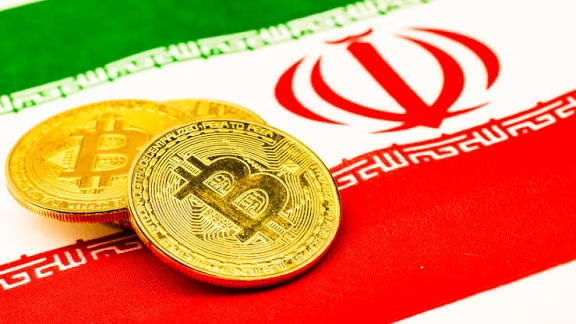
Such activity, analysts warn, highlights how Iran-linked crypto exchanges can blur the line between retail trading and state-level financial operations.
Policy experts say the move marks a turning point in US sanctions enforcement, demonstrating that digital asset platforms are no longer beyond reach. By targeting Iran-linked crypto exchanges, Washington is signaling that compliance failures will carry geopolitical consequences.
As sanctions regimes adapt to the realities of blockchain-based finance, regulators are expected to intensify pressure on exchanges worldwide—especially those suspected of facilitating state-backed sanctions evasion.



Copyright © 2025 - The Bit Gazette.