Gold has been a store of value for thousands of years. Commodity-backed tokens are the attempt to put it, and assets like silver and oil, on a blockchain. The pitch to crypto investors is simple: the stability of a physical asset, without the vault, the insurance, or the logistics.
At their core, Commodity-Backed Tokens represent ownership or exposure to tangible resources such as gold, silver, or oil. Each token is typically pegged to a fixed quantity of the underlying asset—like one ounce of gold—stored in secure facilities. This model places Commodity-Backed Tokens within the broader category of asset-backed crypto, where blockchain mirrors real-world value.
According to Chainlink, these tokens “combine the stability of tangible resources with the efficiency and programmability of blockchain technology,” highlighting their growing relevance in modern finance.
How Commodity-Backed Tokens Work
Commodity-Backed Tokens rely on tokenization, the process of converting physical assets into blockchain-based units. First, a commodity is stored in a secure, audited vault. Then, digital tokens are issued to represent ownership of that asset.
These tokens can be traded on crypto platforms just like other digital currencies. In some cases, holders of Commodity-Backed Tokens can redeem them for the physical commodity, reinforcing the link between digital and real-world value.
This structure allows investors to access commodities without the burden of storage, logistics, or insurance—one of the key reasons Commodity-Backed Tokens are gaining traction globally.
Gold Dominates Commodity-Backed Tokens Market
Gold-backed assets lead the Commodity-Backed Tokens sector, reflecting investor demand for safe-haven assets. Several projects illustrate this trend.
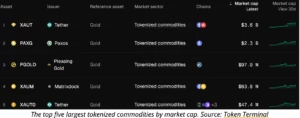
Tether Gold (XAUT) assigns each token to one troy ounce of gold held in Swiss vaults. Paxos Gold (PAXG) operates under regulatory oversight and provides audited reserves. Meanwhile, Kinesis integrates Commodity-Backed Tokens into a payments ecosystem, allowing users to transact in gold digitally.
Data from binance shows gold-backed tokens dominate market share, with analysts pointing to rising demand for inflation-resistant assets. As economic uncertainty grows, Commodity-Backed Tokens tied to gold are increasingly viewed as digital safe havens.
Why Commodity-Backed Tokens Are Rising
Several factors explain the surge in Commodity-Backed Tokens adoption. First is stability. Because their value is anchored to physical assets, Commodity-Backed Tokens are generally less volatile than traditional cryptocurrencies.
Second is fractional ownership. Investors can buy small portions of expensive commodities, lowering entry barriers and expanding participation.
Third is accessibility. Commodity-Backed Tokens can be traded globally, 24/7, without reliance on traditional financial institutions.
Finally, their integration into decentralized finance is expanding use cases. Commodity-Backed Tokens can serve as collateral, be lent out, or used in yield-generating strategies, increasing their utility within the crypto ecosystem.
Risks Facing Commodity-Backed Tokens
Despite their advantages, Commodity-Backed Tokens carry risks. Custody remains a key concern, as investors depend on issuers to securely hold the underlying assets.
Transparency is another issue. While some projects provide regular audits, others lack clear verification, raising trust concerns. A report by Reuters flagged issues around ownership rights and transparency, particularly during market stress.
Regulation also varies widely across jurisdictions, creating uncertainty for issuers and investors alike. Additionally, liquidity constraints can affect pricing, meaning Commodity-Backed Tokens may not always perfectly track the value of their underlying commodities.
Commodity-Backed Tokens
Commodity-Backed Tokens are part of a broader shift toward tokenizing real-world assets. From commodities to real estate and bonds, blockchain is increasingly being used to digitize traditional markets.
At the same time, Commodity-Backed Tokens are gaining attention as alternatives to fiat-backed stablecoins, offering value tied to physical resources rather than currencies.
As adoption grows and infrastructure improves, Commodity-Backed Tokens could play a central role in the next phase of crypto evolution—bringing tangible assets fully into the digital economy.