
- Trending
- Comments
- Latest

A jet engine in Dublin can now be owned in fractions by investors in Lagos, Karachi, and São Paulo, no broker, no minimum investment, no waiting. That is what real world asset tokenization looks like in practice, and it is expanding fast.
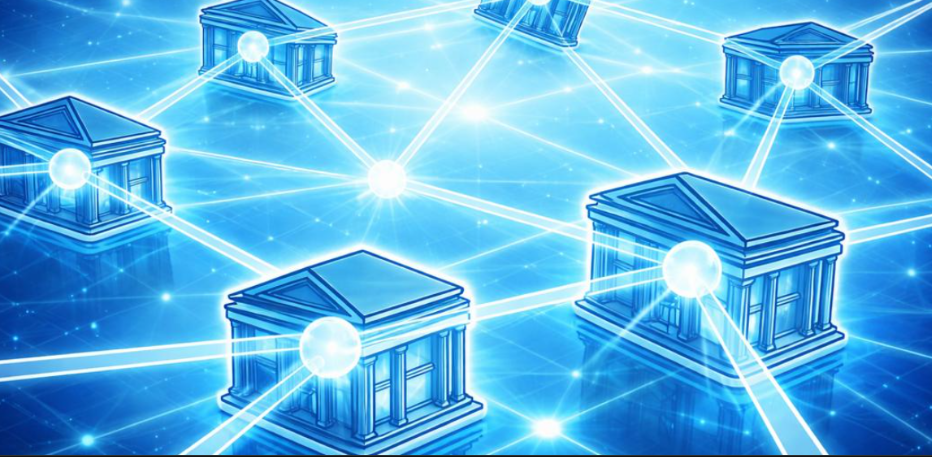
Real World Assets refer to tangible or financial assets such as stocks, bonds, real estate, or commodities that are represented digitally on a blockchain. Through a process called tokenization, ownership of these assets is converted into blockchain-based tokens that can be traded, divided, or transferred.
This shift allows Real World Assets to move beyond traditional financial systems, enabling fractional ownership and global accessibility. Instead of requiring large capital to invest in assets like equities or infrastructure, users can now gain exposure through smaller, tokenized units.
The concept is gaining traction as both retail and institutional investors seek more stable, yield-generating opportunities within crypto ecosystems.
Real World Assets operate by linking blockchain tokens to underlying off-chain assets held by custodians. Each token typically represents a claim on a real asset, backed 1:1 and governed by legal agreements.
For example, tokenized jet engine offering shows how aviation infrastructure is being brought on-chain. In that case, investors can purchase fractional ownership in leased aircraft engines, with returns tied to real-world lease payments.
Similarly, platforms like global RWA investment platform allow users to buy tokenized U.S. stocks using local currencies, lowering barriers to entry for global investors.
These models demonstrate how Real World Assets combine blockchain settlement with traditional financial backing, enabling faster transactions, improved liquidity, and broader participation.
The rise of Real World Assets is closely tied to a broader shift in crypto markets—from speculative trading toward real utility and income generation.
Bit Gazette reporting shows that institutional players are increasingly moving into tokenization. For instance, robinhood chain testnet launch highlights efforts to bring stocks and ETFs fully on-chain, signaling growing confidence in Real World Assets as a long-term infrastructure play.
At the same time, Ethereum continues to dominate this sector. As reported in ethereum stablecoin transfer growth, the network accounts for a majority share of tokenized asset activity, reinforcing its role as the primary settlement layer for Real World Assets.
This momentum reflects a broader convergence between crypto and traditional finance, where blockchain is no longer just a speculative layer but an operational backbone for real economic value.
Despite their promise, Real World Assets introduce new complexities. One major challenge is regulatory uncertainty, as tokenized assets often fall under securities laws depending on jurisdiction.
Infrastructure limitations also remain. Fragmentation across blockchain networks can reduce efficiency, as highlighted in ethereum layer-2 fragmentation framework, where scaling issues risk trapping liquidity across isolated systems.
Additionally, the reliance on off-chain custodians introduces counterparty risk. If the entity holding the underlying asset fails, the value of the corresponding token may be compromised.
Real World Assets are no longer a niche experiment they are becoming a central pillar of crypto’s evolution. As tokenization expands across asset classes, the success of Real World Assets will depend on how effectively the industry balances accessibility, regulation, and infrastructure at scale.



Copyright © 2025 - The Bit Gazette.